
Investors Pour $30 Billion into Emotionally Intelligent Tech: Can a Feelings Engine Really Power Startups?
By StartupKorea Business Desk | Apr 27, 2026 Emotion Meets Investment: A Revolution or a Ruse?In a move that has left industry analysts both bewildered and amused, a consortium of venture capitalists has committed a staggering $30 billion t...

By StartupKorea Business Desk | Apr 27, 2026
Emotion Meets Investment: A Revolution or a Ruse?
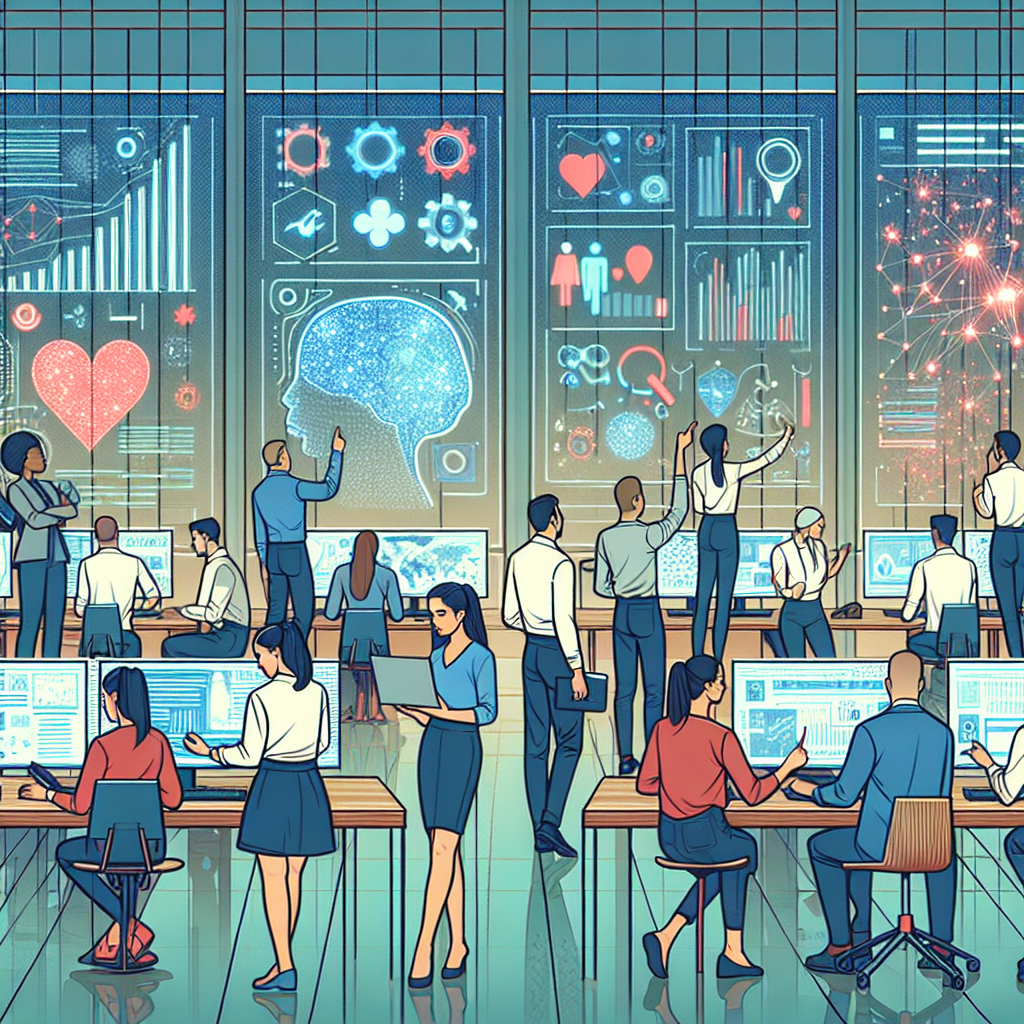
In a move that has left industry analysts both bewildered and amused, a consortium of venture capitalists has committed a staggering $30 billion to a startup specializing in an emotional tone synthesis engine. This unexpected influx of capital comes amid an economy where businesses are increasingly judged by their emotional IQ rather than traditional financial metrics.
Riding the Emotional Wave
As businesses grapple with the complex task of humanizing their brands, the new technology claims to track and manipulate emotional data lineage with surgical precision. Founded by a team of psychologists and computer scientists, the startup, aptly named "Emotionary," aims to develop algorithms that can detect and synthesize emotional responses in real-time.
CEO Jane Doe commented on the investment, stating, "In an age where businesses must be more than just profit machines, our emotional tone synthesis engine offers a pathway to authentic customer engagement. We’re not just selling products; we’re selling feelings."
Market Context: A Surge in Emotional Intelligence
The investment comes at a time when the market for emotional analytics is projected to reach $1 trillion by 2028, with a compound annual growth rate (CAGR) of 35%. This astonishing growth is largely fueled by the increasing acknowledgment that emotional intelligence can enhance customer loyalty and brand recognition.
- Projected market growth: $1 trillion by 2028
- CAGR: 35%
Analyst John Smith remarked, "Investing in emotional intelligence is not just a fad; it’s a necessity. Companies that ignore this trend do so at their peril. But the question remains—can you truly quantify feelings?"
A Glorious Investment or a Recipe for Disaster?
Despite the optimism, skeptics continue to raise eyebrows. Critics argue that the very notion of quantifying emotions is fraught with challenges. Can a machine truly understand the intricacies of human feelings, or are we simply building a digital house of cards?
"It's all well and good for investors to throw their money at a startup promising the world, but what happens when the algorithm misinterprets a customer's emotional state?" questioned Emily White, a behavioral economist. "Are we really prepared for a future where businesses can 'feel'?"
The Risks of Emotional Overload
The potential pitfalls of such an investment are numerous. Firstly, there’s the risk of over-reliance on technology that may struggle to grasp the subtleties of human emotion. Secondly, the ethical implications of manipulating emotions for profit cannot be overstated. Will this lead to a new era of emotional exploitation?
And then there’s the data privacy concern. If companies can track and analyze our feelings, where do we draw the line between engagement and invasion?
What’s Next for Emotionary?
In the coming months, Emotionary plans to roll out a beta version of its emotional engine, aiming to partner with major brands in retail and entertainment. The pressure is on, as both investors and consumers eagerly await to see if this venture will indeed revolutionize the way we perceive emotional engagement or if it will crash and burn under the weight of its own lofty aspirations.
As the marketplace for emotional analytics continues to evolve, the line between genuine connection and calculated manipulation will likely remain a topic of heated debate. For now, one thing is clear: investing in feelings, much like investing in cryptocurrencies, is a high-stakes gamble. And as always, the house—whether it’s a venture capitalist or an emotion engine—tends to win.
What's Your Reaction?
 Like
0
Like
0
 Dislike
0
Dislike
0
 Love
0
Love
0
 Funny
0
Funny
0
 Angry
0
Angry
0
 Sad
0
Sad
0
 Wow
0
Wow
0


![[Jeon Hwa-seong's Startup Morning Coffee #1210] Startup Innovation Leading the Future](https://www.startupkorea.kr/uploads/images/202512/167_4a76beeb6f7d4.png)