

Can Emotional Analysis of Git Commits Save the World? Startup Launches $5 Million Tool for Code Feelings
By StartupKorea Business Desk | Feb 18, 2026 Emotional Intelligence Takes Center Stage in Software DevelopmentIn an era where code is king, a fledgling startup has dared to ask the unthinkable: Could Git commit sentiment analysis hold the k...

By StartupKorea Business Desk | Feb 18, 2026
Emotional Intelligence Takes Center Stage in Software Development
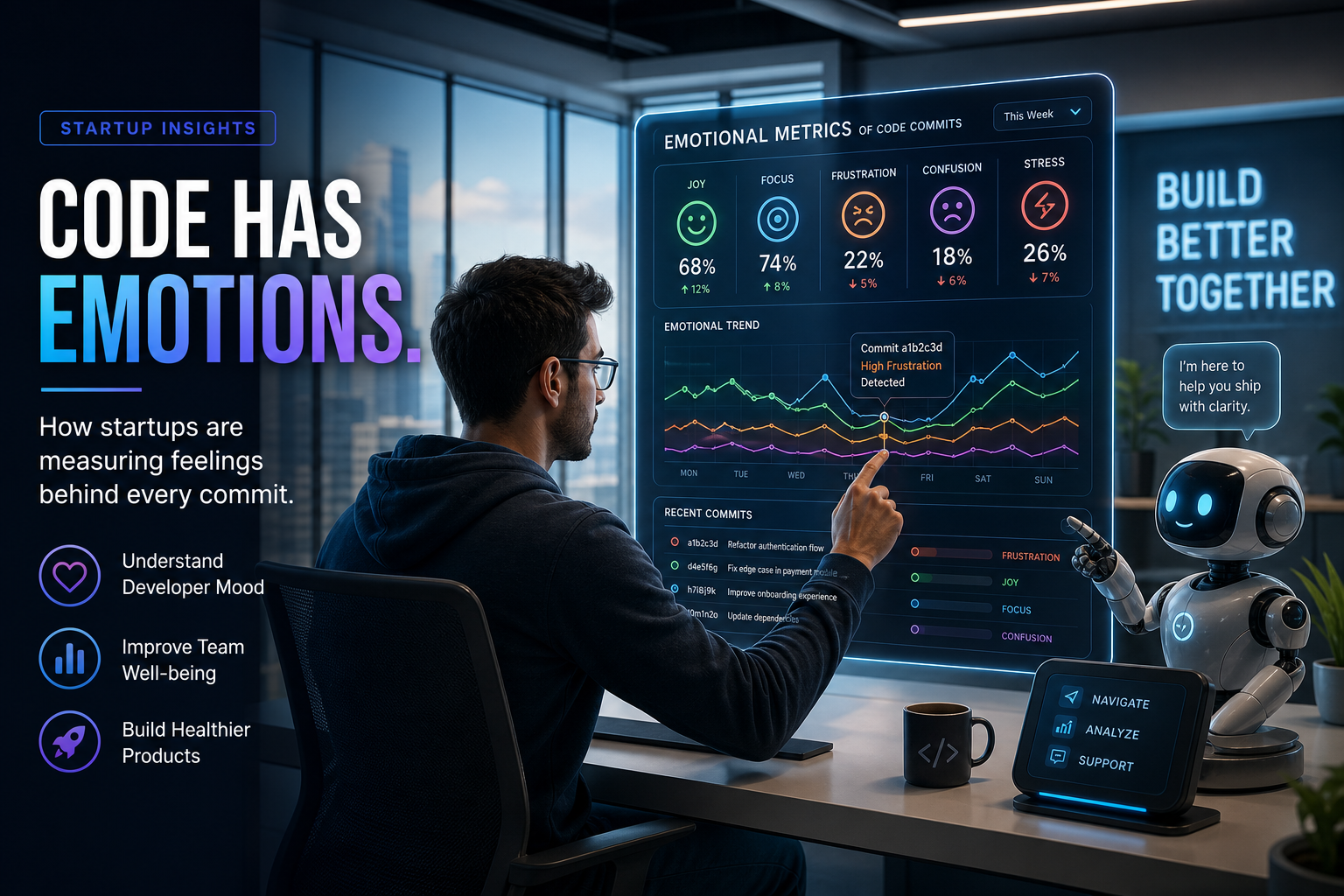
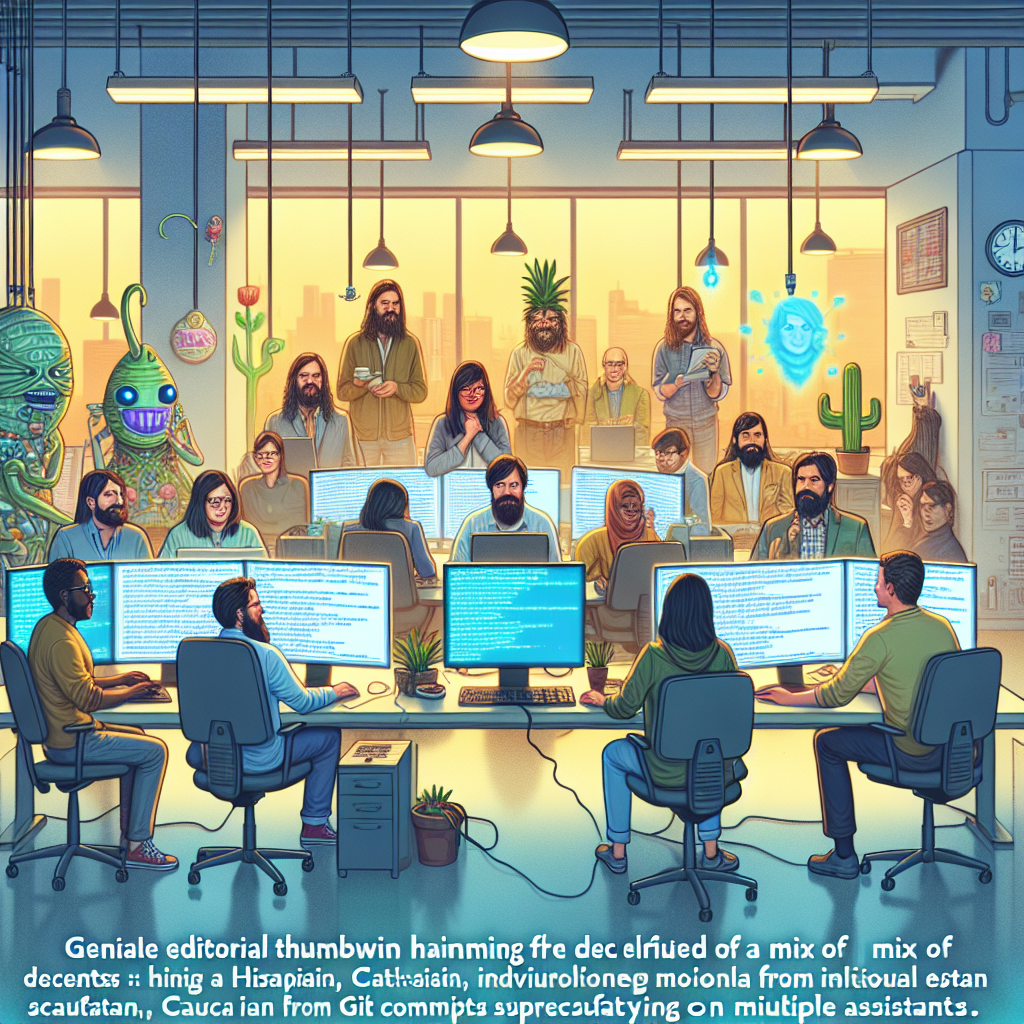
In an era where code is king, a fledgling startup has dared to ask the unthinkable: Could Git commit sentiment analysis hold the key to a new horizon in software development? Launching with a bold $5 million investment from Corporate Venture Capitalists Inc., EmotionCode Inc. has unveiled its future-oriented Human-Computer Interaction (HCI) experimental platform on February 18, 2026, positioning itself at the intersection of programming and feelings.
The Emotional Landscape of Code
Using advanced machine learning algorithms, EmotionCode Inc. claims to analyze the emotional state of developers based on their Git commits. The premise is deceptively simple: if developers feel positive as they code, they will produce higher quality software—right? According to CEO Jane Smirk, “If we can detect when a developer is writing code while feeling particularly elated or alarmingly despondent, we might just revolutionize how software is built. Who knew feelings could impact functionality?”
A Market Awash in Sentiment
The global software development tools market was valued at approximately $670 billion in 2023, with predictions estimating it will reach $1 trillion by 2028. As demand for innovative solutions grows, investors like Corporate Venture Capitalists Inc. are betting that EmotionCode’s unique approach could capture a niche segment of this burgeoning market. Senior Analyst Tom Wry observes, “In a world where applications are built on code, emotions could be the next big stack.”
Investing in the Unquantifiable
While the investment appears promising, the rationale behind pouring significant capital into emotional analytics raises eyebrows. Critics argue that emotional state is as volatile as the stock market, and software quality may not be dictated by feelings alone. “Next, they’ll be suggesting developers drink herbal tea and listen to whale sounds before pushing code,” quips industry skeptic Clara Cynic.
Despite the skepticism, the venture capital landscape has seen a pronounced rise in interest in unconventional technologies, with funding for AI-driven tools soaring by 70% since 2022. Some analysts are dubbing this the “Sentiment Surge,” where capital flows toward anything that even remotely touches on the emotional spectrum.
Risks and Realities
However, as with any bold new venture, pitfalls loom large. The primary risk involves the inherent subjectivity in emotional analysis. As developers become aware of the scrutiny on their emotional states, their performance could suffer—a phenomenon known as the “emotional performance paradox.”
Additionally, the sheer complexity of human emotions defies quantification. As Wry pointedly notes, “We’re talking about programming professionals here, not psychic mediums.” With the potential for misinterpretation, the stakes could lead to disastrous outcomes: Who wants to deploy a product built on the whims of a tearful Tuesday?
Riding the Emotional Rollercoaster
In a twist of irony, while developers may soon be asked to articulate their feelings about their code, the fear of expressing vulnerability in a culture that glorifies stoicism remains present. Will developers inundate EmotionCode's platform with their deepest existential crises, or will they navigate the emotional landscape with the deftness of the Iron Man suit?
As the technology progresses, it raises another question: Will software engineers soon need to pass a “feelings test” alongside technical assessments? Perhaps future job applications will require candidates to submit their most emotionally charged Git commit alongside a dissertation on their feelings toward semicolons.
A Future Defined by Emotions
The future of software development may well depend on the emotional states of its creators. Whether EmotionCode Inc. ultimately leads this charge, or if it's merely a fleeting trend, remains to be seen. But if this startup captures even a fraction of developers’ emotional undercurrents, it could redefine how projects are managed and executed.
As we inch closer to this brave new world of emotionally intelligent code, the only certainty is that software development is on the precipice of a psychological revolution. And who knows? Perhaps an AI that encourages developers to embrace their feelings might just be the therapy they never knew they needed.
What's Your Reaction?
 Like
0
Like
0
 Dislike
0
Dislike
0
 Love
0
Love
0
 Funny
0
Funny
0
 Angry
0
Angry
0
 Sad
0
Sad
0
 Wow
0
Wow
0