



Startup Unicorn Claims to Measure Workplace Bliss: Is This Corporate Happiness a New Investment Strategy or Just Whimsy?
By StartupKorea Business Desk | May 29, 2026 The Dawn of Happiness Metrics: Can a Startup Really Measure Bliss?In a startling twist that could redefine the landscape of corporate welfare, a nascent startup has unveiled a revolutionary platf...

By StartupKorea Business Desk | May 29, 2026
The Dawn of Happiness Metrics: Can a Startup Really Measure Bliss?
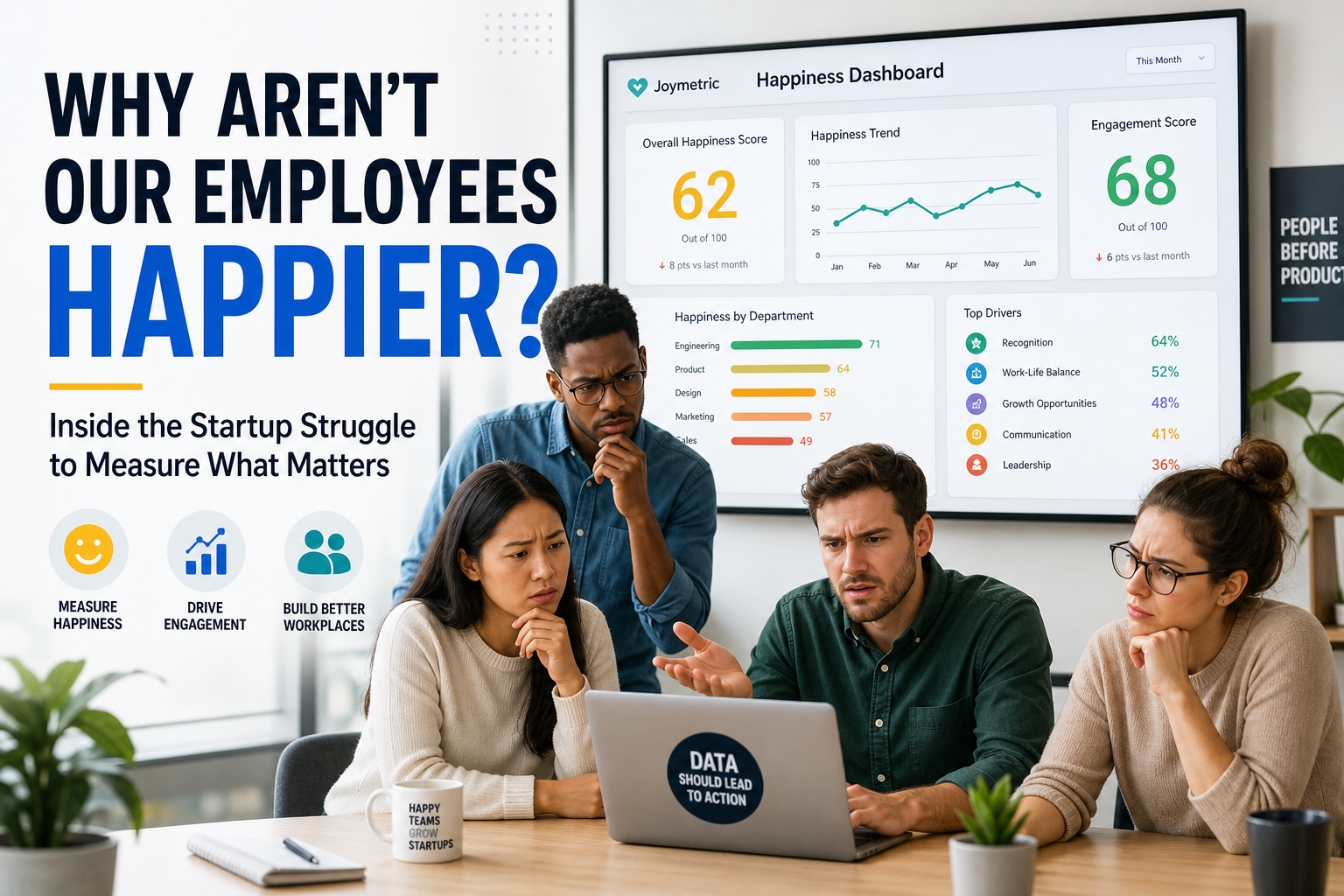
In a startling twist that could redefine the landscape of corporate welfare, a nascent startup has unveiled a revolutionary platform promising to measure the ‘perceived well-being’ of employees with unprecedented precision. Backed by a strategic investment of 30 billion won (approximately $22 million), the company claims its ‘super-accurate synchronization engine’ will, for the first time, quantify workplace happiness in real time. As if the daily grind wasn't already a sophisticated algorithm of dread and coffee consumption, this innovation aims to inject a dose of measurable joy into the sterile world of corporate metrics.
Investors Rejoice (and Raise Eyebrows)
Leading the investment round is a consortium of venture capitalists who, it appears, have traded their calculators for mood rings. "We see this as not just a business opportunity, but a moral imperative in the fight against corporate malaise," said CEO Jane Doe, who also moonlights as a self-proclaimed ‘Chief Happiness Officer’ at her own firm. "If you can't measure happiness, how can you expect to foster it?" This declaration has raised eyebrows among industry skeptics who argue that perhaps happiness is not the sort of thing that can be finely tuned to a decimal point.
Market Context: When Feeling Good Becomes Big Business
The global corporate wellness market, valued at a staggering $61 billion in 2023, is projected to grow at a compound annual growth rate of 6.8% over the next five years. This startup's entrance into the market comes at a time when companies are increasingly seeking innovative ways to enhance employee satisfaction. According to a recent survey, 72% of corporate leaders believe that employee happiness directly correlates with productivity. However, some analysts question whether such a platform can deliver on its lofty promises.
Will the Happiness Engine Deliver or Merely Spin?
The startup’s super-precise synchronization engine utilizes an array of sensors and algorithms designed to capture employee feedback on various workplace experiences. From coffee breaks to conference calls, the platform claims to synthesize this data into a comprehensive happiness score. But is it possible that the quest for corporate joy could end up revealing more about the absurdity of office life than its inherent bliss?
Investor John Smith, who has seen his share of bizarre startups, expressed cautious optimism. “I’m intrigued but skeptical,” he noted. “Are we really ready to quantify ‘good vibes’ and ‘bad days’? This could either be a groundbreaking tool or the corporate equivalent of a mood ring - flashy but fundamentally flawed.”
Potential Perils of Measuring Happiness
Critics argue that the very idea of measuring happiness is a Sisyphean task. If companies start relying on platform-generated metrics to drive their HR policies, they may inadvertently create a culture of superficiality where employees are encouraged to wear smiles like badges, while genuine grievances fester beneath the surface. According to workplace psychologist Dr. Emily Green, “Happiness is not a single entity; it’s a complex, nuanced state that fluctuates daily. Reducing it to a number is like trying to weigh a cloud.”
Contradicting Opinions: The Battle of Perspectives
The platform's proponents argue that the ability to measure employee satisfaction could lead to unprecedented improvements in workplace culture and retention rates. Yet, there remains a palpable tension between those who see this as an ingenious leap forward and those who view it as corporate folly. For employees, the introduction of a happiness metric could feel more like a surveillance tool than a support system.
The Bottom Line: Business as Usual or a New Paradigm?
As this startup gears up to launch its platform, it stands at the crossroads of innovation and absurdity. Will the corporate world embrace the idea that happiness can be quantified, or will this endeavor unravel the fragile tapestry of workplace culture? For now, investors seem willing to place their bets on the latter, perhaps in the hope that genuine joy might just be a click away.
Key Metrics to Watch:
- Global corporate wellness market: $61 billion (2023)
- Projected growth rate: 6.8% CAGR
- Percentage of corporate leaders linking happiness to productivity: 72%
- Investment raised: 30 billion won ($22 million)
What's Your Reaction?
 Like
0
Like
0
 Dislike
0
Dislike
0
 Love
0
Love
0
 Funny
0
Funny
0
 Angry
0
Angry
0
 Sad
0
Sad
0
 Wow
0
Wow
0