




Business Closure: Not Failure, But a Trust Management Process; The End Also Completes Entrepreneurship
Amidst the increasing number of startup closures during the harsh winter season, the 'Startup Closure Guidebook' was unveiled through a press conference, aiming to fill the information gap regarding the 'closing' process that founders often...
Editorial context: This article is part of Startup Korea's original market analysis coverage. It is written to explain startup trends, business model risks, and technology adoption signals for general information, not as investment advice.

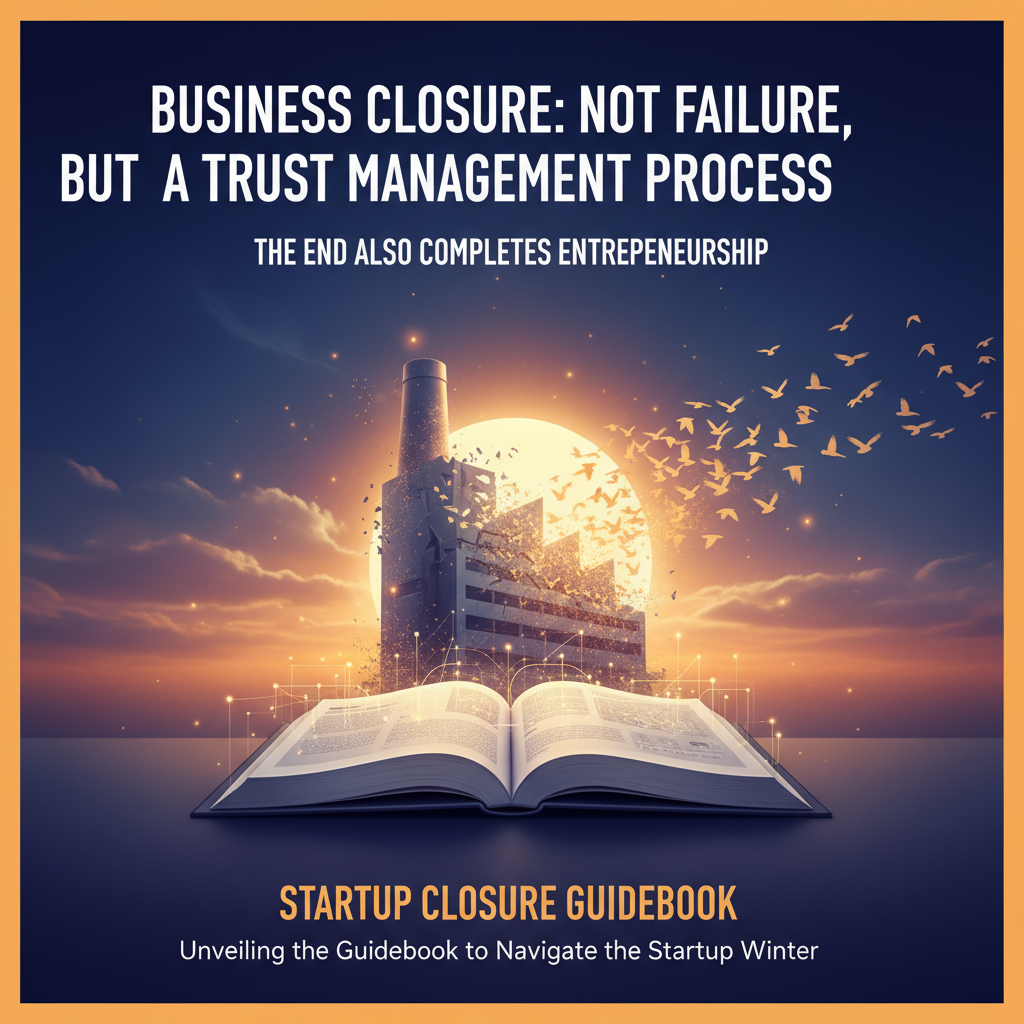
Amidst the increasing number of startup closures during the harsh winter season, the 'Startup Closure Guidebook' was unveiled through a press conference, aiming to fill the information gap regarding the 'closing' process that founders often had to manage alone. Co-published by Startup Alliance and Asan Nanum Foundation, this guidebook defines closure not as a mere failure, but as a process of safely dismantling trust with investors, employees, and customers, emphasizing the importance of a transparent and responsible closing. This aims to foster an ecosystem that embraces failure and re-挑戦 for a sustainable startup environment.
Jeong Nam-i, Executive Director of Asan Nanum Foundation, emphasized that trust can only be maintained by viewing closure in a value-neutral way and following transparent procedures. Lee Ki-dae, head of Startup Alliance, described the guide as a 'survival manual.' Attorney Kim Seong-hoon pointed out the realistic limitations of legal procedures, such as the impossibility of rehabilitation due to a lack of cash-generating ability and insufficient advance payments for corporate bankruptcy. Kim Young-woong, a CEO with closure experience, revealed that transparent communication became the driving force for his re-startup. Lee Ha-young, a former CEO, criticized the harshness of the ecosystem, lamenting secondary damages like restricted access to institutional loans after closure. Investor Park Hee-deok highlighted the structural problem that makes it difficult for a founder alone to mediate conflicts among stakeholders. Many pointed out that the domestic startup ecosystem entails enormous personal burdens upon closure, such as founders becoming credit defaulters and being excluded from economic activities.
Experts urged for policy improvements such as easing excessive sanctions on policy finance and venture capital funds, tolerating eventual failures, and establishing guidelines for re-挑戦. The guidebook focuses on reducing trial and error by providing detailed practical advice, including specific voluntary dissolution procedures at the individual founder and company level, stakeholder management, legal and tax procedures, as well as wages, customer refunds, and data transfer. The Asan Nanum Foundation stated that it views closure as part of a natural cycle and hopes for a society where the closing process is also respected. This press conference served as an occasion to confirm the ecosystem's commitment to removing the stigma associated with failure and expanding opportunities for recovery.
What's Your Reaction?
 Like
0
Like
0
 Dislike
0
Dislike
0
 Love
0
Love
0
 Funny
0
Funny
0
 Angry
0
Angry
0
 Sad
0
Sad
0
 Wow
0
Wow
0