

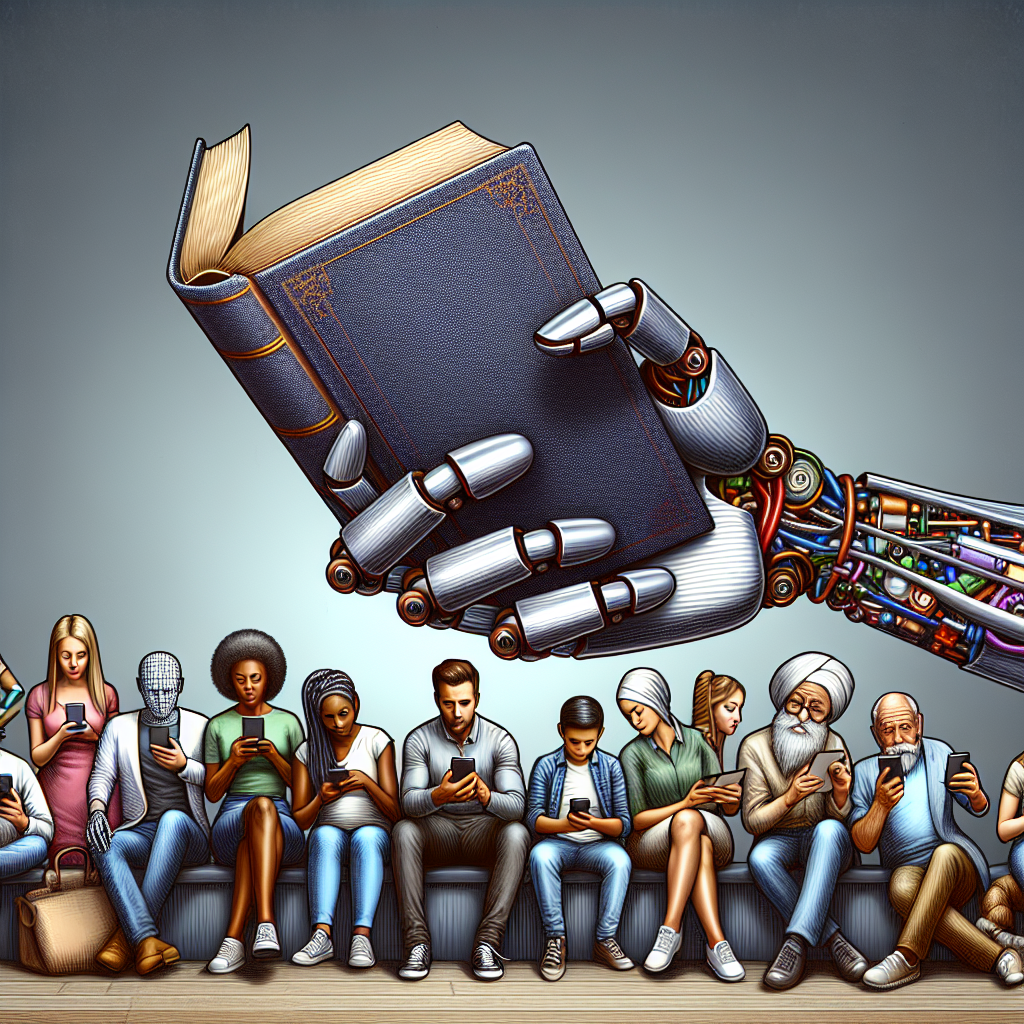


Meet the World's First Autonomous Business Translator: The $30 Million Startup That Thinks Your Meeting Needs an Interpreter
By StartupKorea Business Desk | Apr 29, 2026 A New Era of Corporate Communication?In an unprecedented move that can only be described as a corporate renaissance—or a midlife crisis in disguise—business translation startup, LinguaBot, has se...


By StartupKorea Business Desk | Apr 29, 2026
A New Era of Corporate Communication?
In an unprecedented move that can only be described as a corporate renaissance—or a midlife crisis in disguise—business translation startup, LinguaBot, has secured a strategic investment of $30 million to launch its groundbreaking autonomous data refinement system. The timing, experts suggest, couldn't be more perfect as global companies grapple with the daunting task of understanding both their own jargon and that of their overseas branches.
Investors Bet Big on Translation Technology
LinguaBot's CEO, Jane Doe, confidently stated, "In a world where the only thing more complex than financial reports is the language they’re in, we are poised to revolutionize corporate communication." While some may argue that actual understanding might be a more effective strategy, Doe insists that the world is ready for a device that translates not only words but also the nuances of corporate bull.
The $30 million investment comes during a period of heightened interest in language technology, with the global market expected to reach $56 billion by 2025, according to industry analysts. This could be a symptom of a broader trend where businesses are becoming increasingly aware that communication barriers are the real culprits behind missed quarterly targets.
The Autonomy of Incompetence?
LinguaBot's technology promises an end to the vague responses and bureaucratic double-speak that have long haunted boardrooms. Utilizing an autonomous data refinement system, it claims to process and translate business communications in real-time. Yet, one must wonder: how does a machine interpret the difference between "Let's circle back on this" and "I have no idea what I'm talking about"?
Financial analyst John Smith commented, "While this sounds like a miracle for HR departments, I can't help but wonder if we're investing in a glorified thesaurus. If there's one thing we've learned from technology, it's that sometimes, the more we automate, the more we realize nothing has changed at all."
The Risks: Lost in Translation
Despite the enthusiasm from investors, the startup faces a litany of challenges. Critics argue that the success of such technology is contingent on a level of semantic understanding that might be too sophisticated for even the most advanced AI. Past attempts at similar innovations have led to disasters, including a famous incident where a translation service confused "merger" with "murder," sending a company into an existential crisis.
The primary concern is that while the technology touts autonomous capabilities, it may inadvertently promote a culture of miscommunication where the complexity of language is distilled into bland corporate speak. This could lead to a situation where employees, finally freed from the burden of interpreting their company's convoluted messages, become entirely disengaged.
What Do the Numbers Say?
To illustrate the stakes, consider that companies that invest in effective communication strategies see a 47% higher return on investment and a 19% higher employee engagement score. However, if LinguaBot's technology fails to deliver, it could serve as a cautionary tale for future investors looking to dive into the choppy waters of tech-driven solutions.
A Future of Fluent Nonsense?
The question remains whether LinguaBot will redefine the landscape of business translation or simply usher in a new era of fluent nonsense. As the startup gears up for its product launch in 2027, one must ponder: Are we on the brink of a linguistic renaissance, or are we simply formatting our miscommunications in a sleek, automated interface?
Only time will tell if LinguaBot's ambitious endeavor will be a triumph of technological progress or yet another commentary on our alarming unwillingness to learn from our own mistakes.
- Investment: $30 million
- Expected market growth: $56 billion by 2025
- Potential ROI increase: 47%
- Employee engagement boost: 19%
What's Your Reaction?
 Like
0
Like
0
 Dislike
0
Dislike
0
 Love
0
Love
0
 Funny
0
Funny
0
 Angry
0
Angry
0
 Sad
0
Sad
0
 Wow
0
Wow
0



![[Jeon Hwa-seong's Startup Morning Coffee #1210] Startup Innovation Leading the Future](https://www.startupkorea.kr/uploads/images/202512/167_4a76beeb6f7d4.png)