




Is Your Mental Health Safe? Startup Secures $300 Million for Robotic Vision Navigation to 'Protect' Your Mind
By StartupKorea Business Desk | Apr 23, 2026 Robot Eyes on Mental Health: A $300 Million Investment in AbsurdityIn a bold, if not entirely sane, move to protect the fragile minds of today's workforce, startup MindGuard Robotics announced a...

By StartupKorea Business Desk | Apr 23, 2026
Robot Eyes on Mental Health: A $300 Million Investment in Absurdity
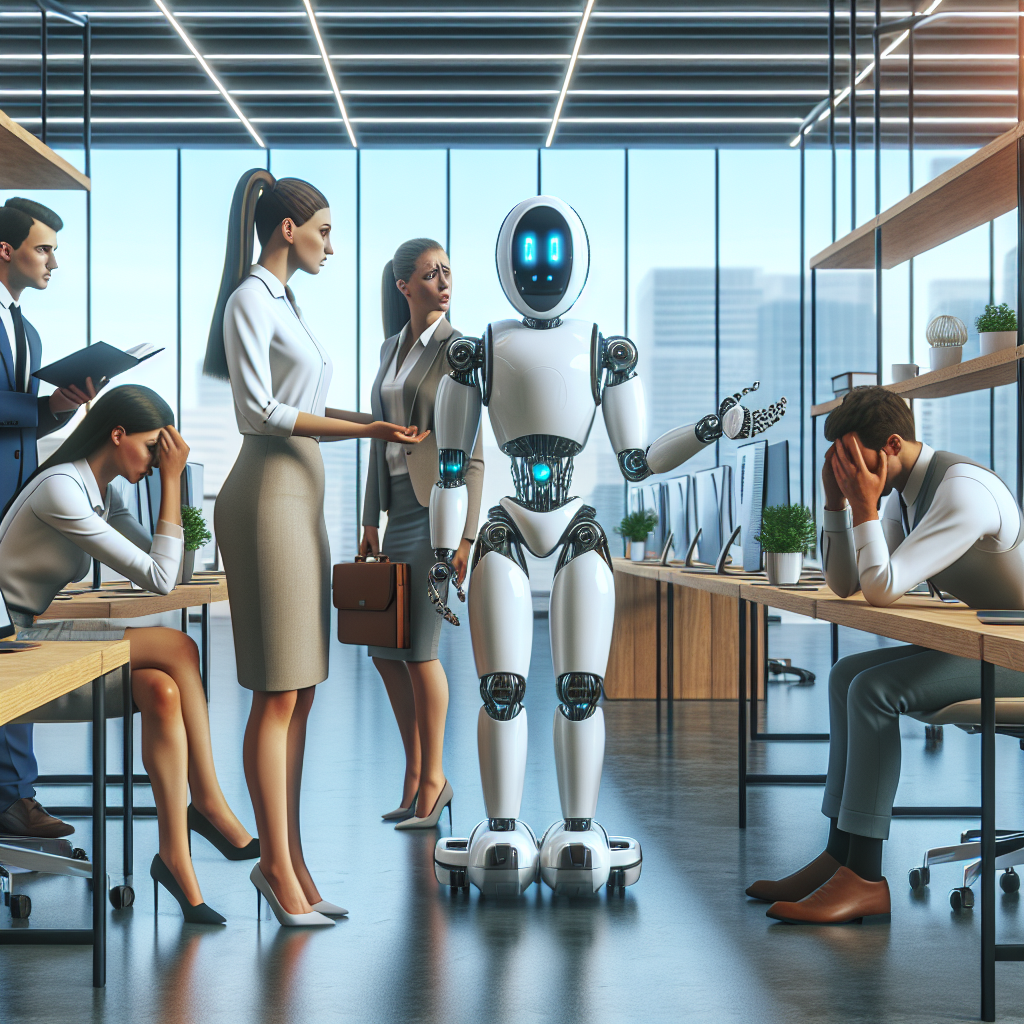
In a bold, if not entirely sane, move to protect the fragile minds of today's workforce, startup MindGuard Robotics announced a staggering $300 million in strategic investments aimed at enhancing its revolutionary robotic vision navigation technology. The funding, made public on April 23, 2026, promises to usher in a new era for mental health solutions. But does anyone really think a robot can save us from ourselves?
The Visionary Behind the Madness
CEO Jane Botwright, a self-proclaimed "mental health warrior," expressed her enthusiasm for the project, stating, "In a world where emotional well-being is often overlooked, our robots will navigate through your mental blocks just like they navigate through office hallways. It's time we treat emotional roadblocks like physical ones!" It’s a comforting thought: a robot that sees through your emotional turmoil while dodging the water cooler.
A Market in Crisis? Or a Crisis in Market?
According to industry analysts, the global mental health solutions market is projected to reach $600 billion by 2027—a figure that makes the $300 million investment seem like pocket change for enthusiastic backers. However, skeptics argue that a significant portion of that market will find itself singing the blues as more companies opt for "smart" solutions rather than addressing the root causes of distress.
- Global mental health solutions market: $600 billion by 2027
- Investment secured: $300 million
- Average growth rate: 10% per year
- Projected rise of tech-based solutions: 30% over the next five years
The Risks of Autopilot Therapy
Critics are quick to point out that relying on robotic vision to "navigate" one's mental health is not only misguided but downright dangerous. Dr. Albert Mindfull, a leading psychologist and noted skeptic, quipped, "If I wanted my therapy session to be analyzed by a robot, I would have just taken my cat to group therapy. At least it would have been more entertaining."
Investors Bet Big on the Absurd
The investment frenzy surrounding MindGuard is not uncommon in the tech startup world. Venture capitalists eager to ride the wave of mental health innovations appear willing to back even the most far-fetched ideas. Investor Tom Cashmore stated, "While some may view this as a stretch, we believe the future of mental health lies in technology. If our robots can guide people through their mental labyrinths, then why not?"
Opposing Viewpoints: Are We Losing the Human Touch?
Many in the mental health community worry that technology could overshadow the invaluable human touch in therapy. The prevailing sentiment is that while robots may be useful tools, they can't replace the depth of human understanding. A recent survey found that 72% of mental health professionals believe personal interaction is irreplaceable, even in the age of increasingly sophisticated algorithms.
Conclusion: A Brave New World or a Cautionary Tale?
As MindGuard Robotics prepares to roll out its latest offering, one can't help but wonder whether society is ready to cede such intimate aspects of life to a machine. The company’s mission could either herald a new dawn in mental health solutions or serve as a cautionary tale: a reminder that sometimes the best protection for the mind is simply a good friend and, perhaps, a cup of coffee.
What's Your Reaction?
 Like
0
Like
0
 Dislike
0
Dislike
0
 Love
0
Love
0
 Funny
0
Funny
0
 Angry
0
Angry
0
 Sad
0
Sad
0
 Wow
0
Wow
0




![[Jeon Hwa-seong's Startup Morning Coffee #1210] Startup Innovation Leading the Future](https://www.startupkorea.kr/uploads/images/202512/167_4a76beeb6f7d4.png)