


Welcome to the Future: Gene Editing Meets Cross-Border Mergers in a Startup Wonderland
By StartupKorea Business Desk | Mar 18, 2026 The Future of Work: Gene Editing and Corporate Takeovers CollideIn a move that has left both Silicon Valley and Wall Street raising an eyebrow, the ambitious startup Future Jobs Lab has announced...

By StartupKorea Business Desk | Mar 18, 2026
The Future of Work: Gene Editing and Corporate Takeovers Collide
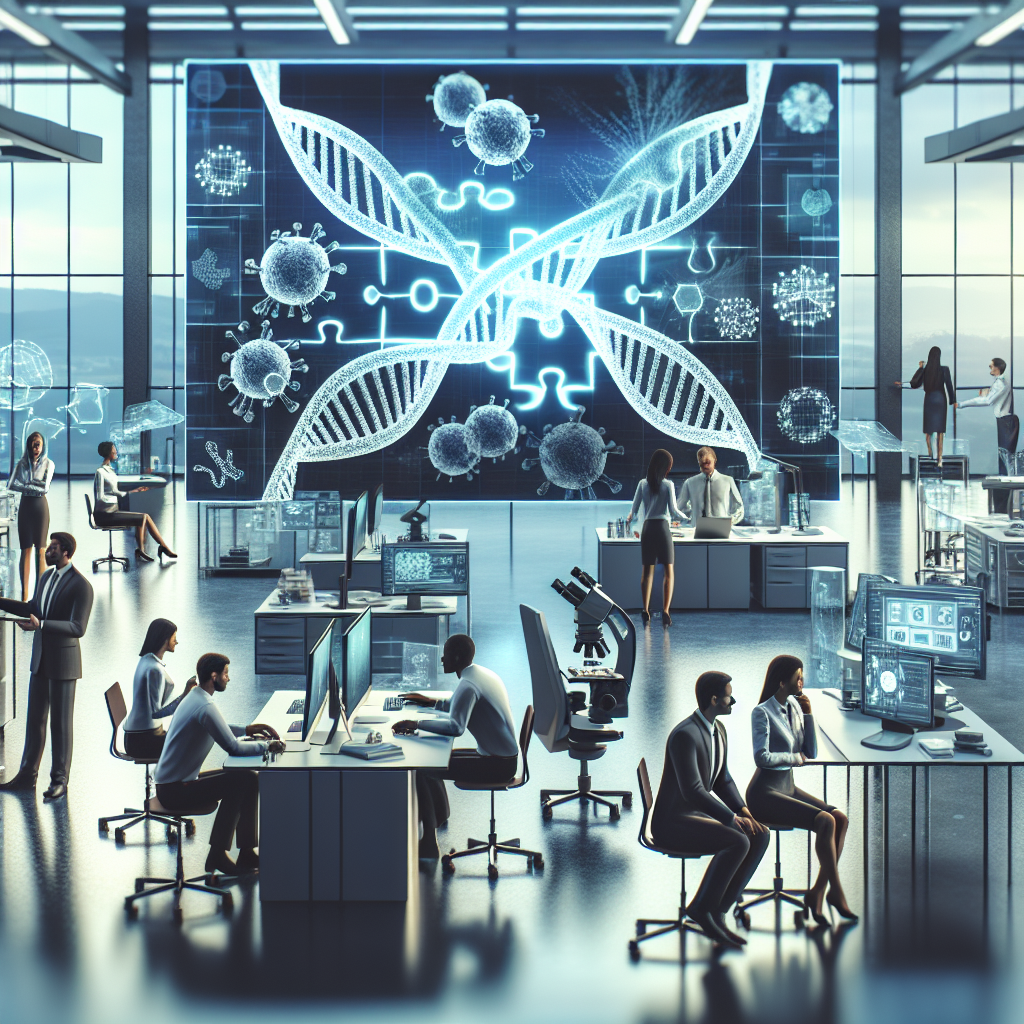
In a move that has left both Silicon Valley and Wall Street raising an eyebrow, the ambitious startup Future Jobs Lab has announced a groundbreaking investment of $200 million into an automated gene editing system designed to redefine the workforce. This revolutionary technology aims not just to enhance human capabilities but to create a new category of jobs that experts are dubbing 'Genetically Enhanced Employment Opportunities.' With the announcement made on March 18, 2026, investors are buzzing with anticipation—or perhaps just confusion.
The Automation of Ambition
Future Jobs Lab’s CEO, Maxine Webber, stated, "Our goal is not just to automate labor but to redefine what work means. Why stop at improving efficiency when you can synapse-burst your way to superhuman success?" Her vision, while ambitious, raises the question: Are we ready for a world where genetic modifications become the norm in meeting corporate demands?
Investment Trends: A Biotech Bonanza
The investment landscape is already showing signs of disruption. Last year, the global gene editing market was valued at approximately $4 billion, with projections suggesting it could surge to $15 billion by 2030. Analysts are watching closely as Future Jobs Lab plans to establish a series of cross-border mergers with biotech firms in Europe and Asia, further complicating the global economic tapestry.
- Current global gene editing market: $4 billion
- Projected market growth by 2030: $15 billion
- Future Jobs Lab investment: $200 million
Risks and Ethical Quandaries
While the allure of gene editing may be enticing, experts are quick to point out the myriad risks involved. Dr. Helen Carter, a leading bioethicist, warns, "We are teetering on the edge of a genetic arms race. What happens when companies start competing for the most desirable genetic traits in their workforce?" The possibility of 'genetic privilege' raises significant ethical questions, casting a shadow over the bright promise of innovation.
Moreover, the potential backlash from regulatory bodies could pose a threat to Future Jobs Lab's ambitious plans. As it stands, only a handful of countries have a clear framework governing gene editing technologies, leaving much to interpretation—and speculation.
Opposing Viewpoints: The Naysayers
Critics of the project have been vocal about their concerns. Tom Baker, an investor with a penchant for traditional sectors, stated bluntly, "This is a dystopian fantasy masquerading as progress. We're talking about altering human DNA to meet the whims of corporate America. Have we really thought this through?" His skepticism reflects a growing divide in the investment community, where the promise of biotech innovations clashes with timeless ethical considerations.
What Lies Ahead?
As Future Jobs Lab embarks on this grand adventure into the unknown, the implications extend far beyond the boardroom. If successful, the initiative could pave the way for a new era of employment—or spark a backlash that leads to intense regulatory scrutiny. Either way, one thing is certain: the future of work is set to be anything but ordinary.
In a world where corporate acquisitions and biotechnological advancements collide, the question remains: are we ready to embrace a future where your job depends on the whims of genetic algorithms? Only time will tell, but one can’t help but chuckle at the irony of it all.
What's Your Reaction?
 Like
0
Like
0
 Dislike
0
Dislike
0
 Love
0
Love
0
 Funny
0
Funny
0
 Angry
0
Angry
0
 Sad
0
Sad
0
 Wow
0
Wow
0