



The Emerging Market for AI Hallucination Insurance: Trends and Considerations
By Startup Korea Research Desk | May 19, 2026 The insurance landscape is undergoing significant transformation as emerging technologies create new risk profiles. One of the most intriguing developments is the concept of AI hallucination insuranc...

By Startup Korea Research Desk | May 19, 2026
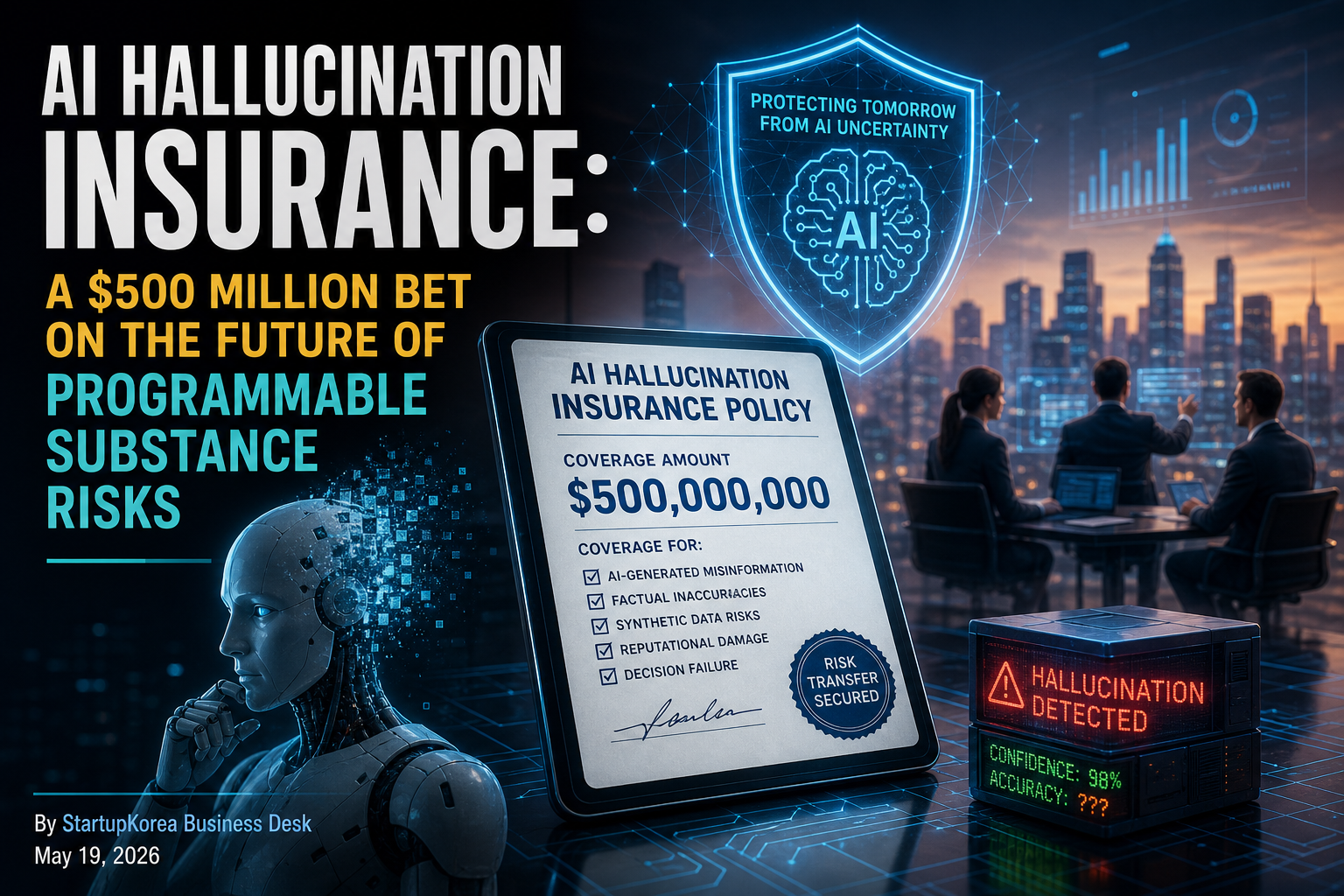
The insurance landscape is undergoing significant transformation as emerging technologies create new risk profiles. One of the most intriguing developments is the concept of AI hallucination insurance, a niche market that aims to address the unforeseen consequences of artificial intelligence and programmable substances. This analysis explores the market dynamics, potential business models, and the associated risks for investors and founders in this innovative sector.
Market Dynamics and Growth Potential
The market for programmable substances, which includes a range of AI-driven products and experiences, is projected to grow substantially, with estimates suggesting it could reach $20 billion by 2030. This growth is fueled by advancements in AI and the increasing integration of technology into everyday life. As consumers adopt these technologies, the potential for unexpected incidents—referred to as "AI hallucinations"—is also rising.
Current data indicates that AI-related incidents account for approximately 15% of insurance claims in related sectors. This statistic highlights a growing need for specialized insurance products that can mitigate the risks associated with these new technologies. Investors are beginning to recognize the potential of this market, leading to increased interest and funding for startups focused on AI insurance solutions.
Business Model Considerations
Startups entering the AI hallucination insurance market must carefully consider their business models. Traditional insurance frameworks may not be directly applicable due to the unique nature of the risks involved. Companies will need to develop innovative underwriting processes that account for the unpredictable nature of AI interactions and the subjective experiences of users.
- Risk Assessment: Startups must establish robust methodologies for assessing the risks associated with AI hallucinations. This may involve leveraging data analytics and machine learning to predict potential incidents based on user behavior and technology usage patterns.
- Policy Design: Crafting insurance policies that clearly define coverage parameters will be crucial. This includes outlining what constitutes an AI hallucination and the circumstances under which claims can be made.
- Consumer Education: Given the novelty of this insurance type, educating consumers about the nature of AI hallucinations and the benefits of coverage will be essential for market adoption.
Investment Risks and Diligence
While the potential for high returns in the AI hallucination insurance market is appealing, investors must conduct thorough due diligence. The novelty of the concept presents several challenges:
- Regulatory Uncertainty: The insurance industry is heavily regulated, and new products must comply with existing laws. Startups must navigate these regulations while advocating for the acceptance of new insurance categories.
- Market Acceptance: The success of AI hallucination insurance hinges on consumer acceptance. Investors should assess market readiness and the willingness of consumers to embrace this type of coverage.
- Technological Evolution: As AI technology continues to evolve, so too will the risks associated with it. Investors should consider the adaptability of startups to changing technology landscapes and emerging risks.
Founder Strategies for Success
For founders in this space, developing a clear strategy is vital for navigating the complexities of the AI hallucination insurance market. Key strategies may include:
- Partnerships: Collaborating with technology companies and AI researchers can provide valuable insights and enhance credibility in the market.
- Agile Development: Startups should adopt agile methodologies to quickly respond to market feedback and evolving consumer needs.
- Thought Leadership: Establishing the company as a thought leader in AI risk management can help build trust and attract customers.
Conclusion
The concept of AI hallucination insurance represents a fascinating intersection of technology and risk management. As the market for programmable substances expands, the demand for innovative insurance solutions will likely grow. However, both investors and founders must approach this emerging market with caution, considering the unique challenges and risks involved. By developing thoughtful business models and strategies, stakeholders can position themselves to capitalize on this evolving landscape.
Editor's note: This analysis is original market research and should not be considered investment advice.
What's Your Reaction?
 Like
0
Like
0
 Dislike
0
Dislike
0
 Love
0
Love
0
 Funny
0
Funny
0
 Angry
0
Angry
0
 Sad
0
Sad
0
 Wow
0
Wow
0