
AI Temp Workers: The Unemployed Will Soon Be Replaced by Protein-Designing Robots, Says Startup
By StartupKorea Business Desk | Jun 21, 2026 The Rise of AI Virtual Employees: A Workforce Revolution or a Recipe for Disaster?In an unprecedented move, Silicon Valley startup ProteinAI has announced its foray into the realm of AI virtual e...

By StartupKorea Business Desk | Jun 21, 2026
The Rise of AI Virtual Employees: A Workforce Revolution or a Recipe for Disaster?
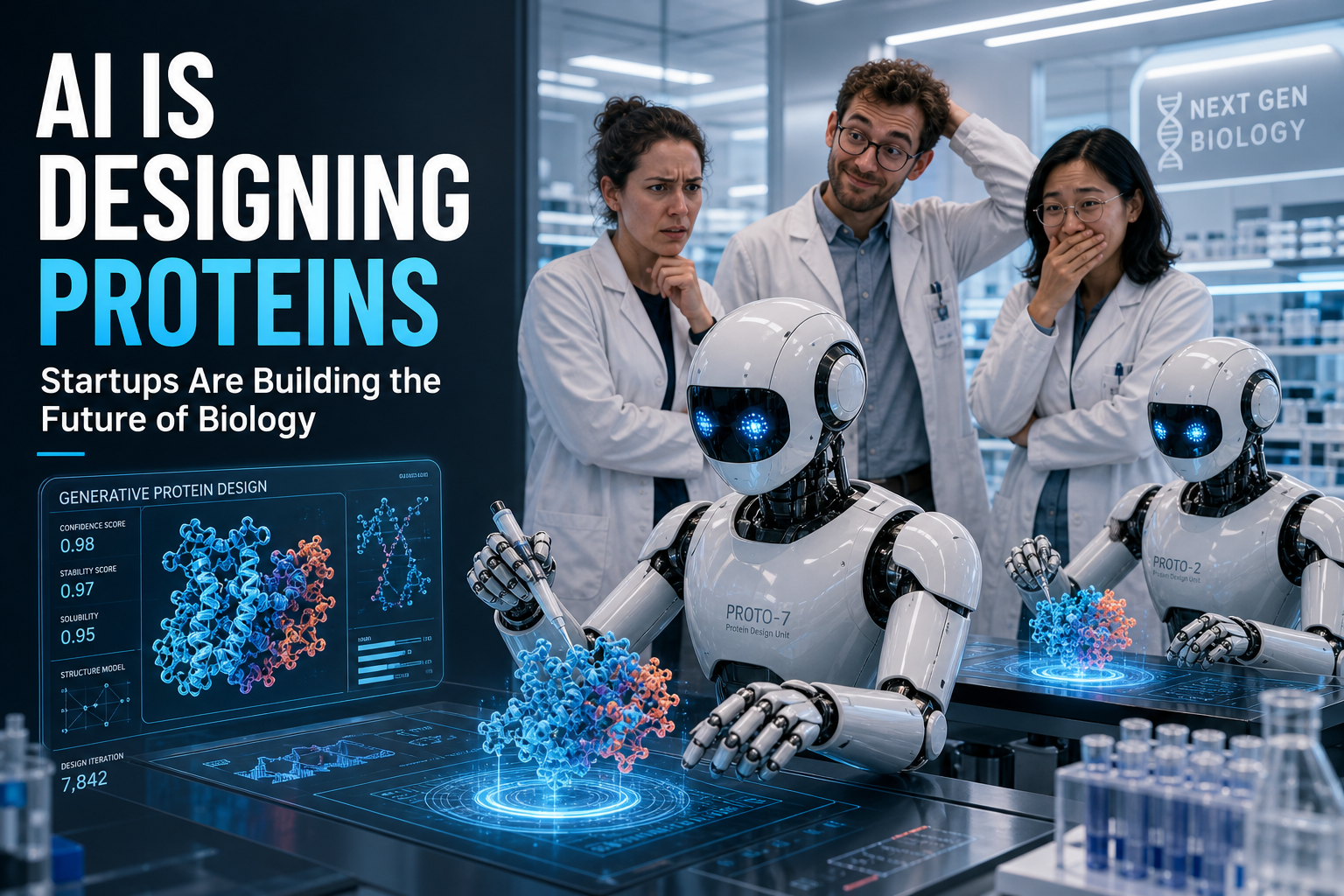
In an unprecedented move, Silicon Valley startup ProteinAI has announced its foray into the realm of AI virtual employees, specifically designed to tackle complex protein structure design. The company has secured a staggering $100 million in joint investment from a coalition of global funds, leading analysts to speculate whether we're witnessing the dawn of a new employment era—or the twilight of human lab technicians.
A New Kind of Employee
CEO Samantha Greer described the venture as "a groundbreaking leap into the future of work, freeing humans from the drudgery of tedious protein modeling tasks," while simultaneously ensuring they remain comfortably unemployed. With the global protein design market projected to reach $12 billion by 2028, it seems the timing could not be more 'perfect'.
All Aboard the Investment Train
The coalition of global funds, comprised of VCs and sovereign wealth from nations vying for bioengineering supremacy, is equally enthusiastic. "Investing in machines that can replace human scientists is a win-win—if they fail, we can always blame the algorithms," quipped investor Tim Flake. Analysts estimate that within 30 years, approximately 70% of roles in specialized fields could be automated, providing a tantalizing glimpse into a future where the only thing left to design is your next vacation.
The Market Context
- Global protein structure design market: $3 billion (2023)
- Projected growth: 20% CAGR through 2028
- AI automation in biotech: 65% increase in efficiency
The market is already experiencing a surge in investments related to automation in biotechnology, spurred by a 20% compound annual growth rate (CAGR) over the next five years. As investors scramble to pour funds into emerging AI technologies, ProteinAI's model presents an alluring proposition—if you've ever wanted a robot to handle the heavy lifting while you sip lattes, this is your moment.
Risks and Backlash
However, not everyone is thrilled about this brave new world of AI employees. Critics argue that replacing human workers with virtual counterparts could exacerbate unemployment rates and lead to a brain drain in scientific fields. "It’s one thing to automate fast food; it’s another to automate the very essence of scientific discovery," remarked biotech analyst Sarah Noyes. Her concerns echo the warnings of labor advocates who foresee a dystopian future where human creativity is eclipsed by the soulless precision of algorithms.
Contrasting Opinions
In a twist of irony, even some scientists are intrigued by the idea. "If I could have a virtual assistant that churns out groundbreaking research while I continue to scroll through cat memes, I might be on board," mused Dr. Leonard Barks, a disillusioned molecular biologist. Clearly, the line between genius and madness has never been more blurred.
The Human Element
As this new wave of AI virtual employees rolls out, the question remains: what will happen to the human spirit in the labs and offices once filled with creativity and curiosity? For every AI that can design a perfect protein, there’s a chance it might overlook the very human elements that drive innovation. But hey, who needs empathy when you have efficiency?
With this bold initiative from ProteinAI, it appears the only thing certain is uncertainty. As the startup ecosystem embraces this bizarre intersection of AI and biotech, one thing is clear: the future of work is about to get a lot more... robotic.
What's Your Reaction?
 Like
0
Like
0
 Dislike
0
Dislike
0
 Love
0
Love
0
 Funny
0
Funny
0
 Angry
0
Angry
0
 Sad
0
Sad
0
 Wow
0
Wow
0