

Tech-Savvy Workers Replaced by Algorithm: The Rise of the Employee Retention Forecasting System
By StartupKorea Business Desk | Jun 20, 2026 Forecasting the Future of Employee Satisfaction: When Algorithms Replace Human EmpathyIn a bold move that feels like the ultimate betrayal of trusting relationships, Silicon Valley startup Retain...

By StartupKorea Business Desk | Jun 20, 2026
Forecasting the Future of Employee Satisfaction: When Algorithms Replace Human Empathy
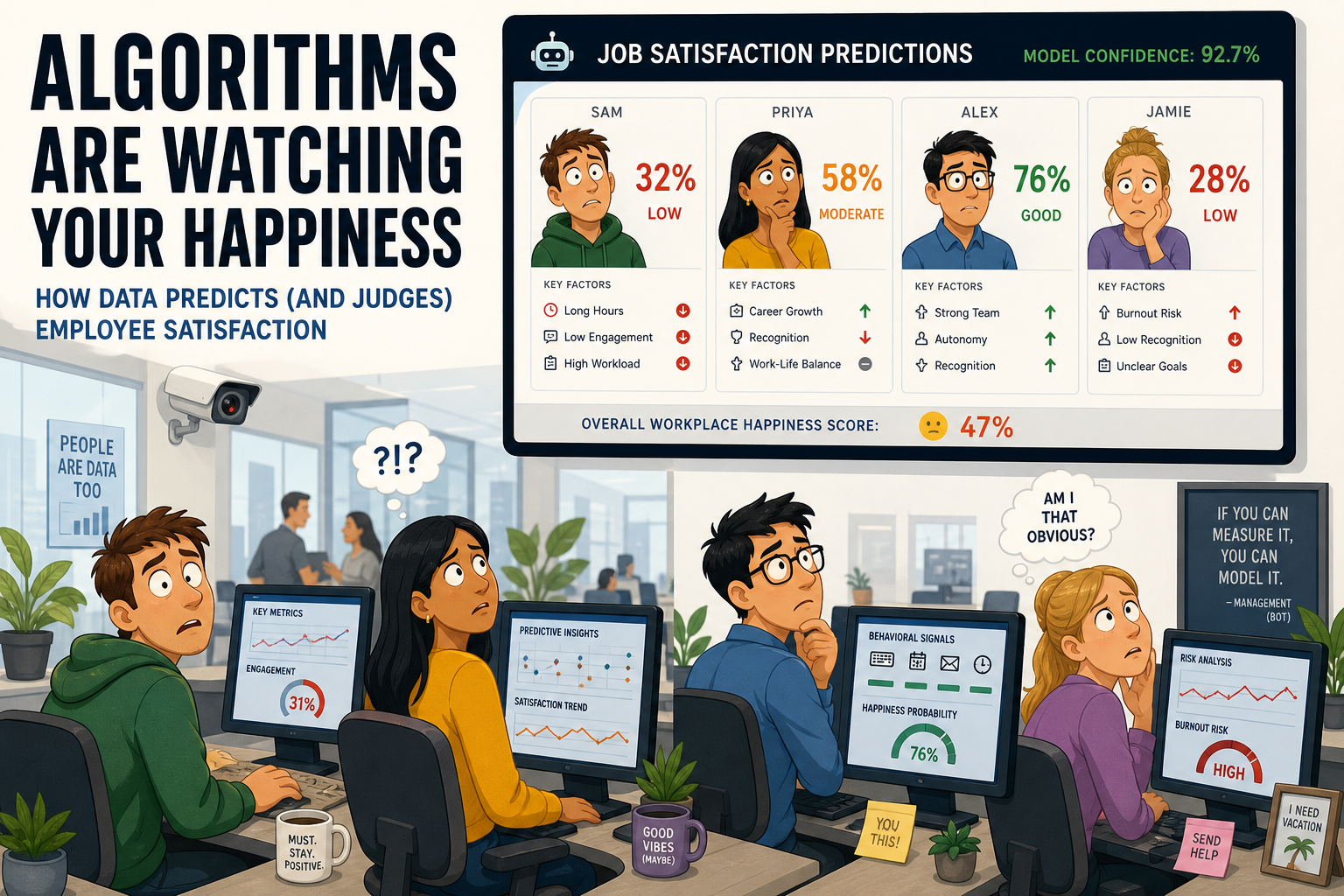
In a bold move that feels like the ultimate betrayal of trusting relationships, Silicon Valley startup RetainIQ has announced a staggering $30 million strategic investment to launch its revolutionary Employee Retention Forecasting System (ERFS). This ambitious project promises to predict employee resignations with the same accuracy one might expect from a weather app predicting the imminent arrival of a rainstorm—only, this time, the storm is your entire workforce packing up their desks.
Who Needs Human Resources When You Have Data?
The ERFS will utilize cutting-edge V2G (Vehicle-to-Grid) power trading protocols to analyze employee satisfaction metrics, predict turnover rates, and ultimately—no surprise here—replace human resource personnel with algorithms that have all the warmth of a refrigerator. “We’re excited to usher in a new era of workplace analytics,” said RetainIQ CEO Charlotte Fields, a self-proclaimed ‘data oracle’ who now views emotional intelligence as an obsolete pastime.
Investors Jumping on the Bandwagon—But at What Cost?
The $30 million investment comes amid a growing trend of venture capitalists pouring funds into tech solutions that promise to solve the unsolvable: keeping employees happy. “In a world where everyone is a potential flight risk, we believe ERFS will give businesses an edge over those still relying on traditional HR practices,” stated investor Raj Patel, whose LinkedIn profile boasts more buzzwords than actual work experience.
The Numbers: A Market Analysis
The global market for employee retention technologies is projected to reach $15 billion by 2028, growing at a compound annual growth rate (CAGR) of 20%. As companies scramble to throw money at ‘employee engagement,’ ERFS could be the golden ticket to keeping that turnover figure low—if it can somehow convince employees that being analyzed by an algorithm isn’t the creepiest thing since the last corporate retreat.
Risks and Reality Checks
However, the rollout of such a mechanized approach to retention does not come without its own set of risks. Critics argue that relying on an algorithm to gauge employee sentiment could lead to grave miscalculations, akin to trusting a fortune cookie with your life decisions. “You can’t replace the human touch with cold data,” cautioned workplace analyst Diana Wu. “What happens if the algorithm suggests a popular employee is unhappy when in fact they are simply developing a taste for existential dread?”
Opposing Views: The Human Element
While support for ERFS grows, a counter-movement of HR professionals is pushing back against the idea that algorithms can understand the complexities of human emotion. “Data can tell us what might happen, but it can’t show us why it happens,” said HR veteran Tom Richards. “If we wanted to be replaced by robots, we would have become accountants.”
A Brave New World of Employee Engagement
As RetainIQ prepares for its grand unveiling, one can’t help but wonder: are we on the brink of a dystopian future where algorithms become our only means of understanding a workforce that has become increasingly disillusioned with tech-driven workplace culture? The bright side suggests that at least we won’t have to deal with awkward water cooler conversations anymore, as a simple app notification will suffice for all required human interaction.
Conclusion: A Future of Data-Driven Happiness?
In conclusion, if ERFS succeeds, it might just redefine the employee experience—by replacing human relationships with a cold, calculated output. The irony, of course, is that in a bid to enhance employee retention, we may only be fostering an environment that drives talent away faster than a poorly coded app on launch day. As the workplace evolves into a data-driven utopia, one can only hope that employees still find ways to enjoy their jobs amidst the looming specter of digital oversight.
What's Your Reaction?
 Like
0
Like
0
 Dislike
0
Dislike
0
 Love
0
Love
0
 Funny
0
Funny
0
 Angry
0
Angry
0
 Sad
0
Sad
0
 Wow
0
Wow
0