


Startup Revolutionizes Laziness with $300 Million Investment in AI-Powered Battery Diagnosis Platform
By StartupKorea Business Desk | Jun 20, 2026 Innovative Solutions for the Uninspired: The Rise of Convenience EconomicsIn a daring move that has left both investors and technology enthusiasts scratching their heads, the newly minted startup...

By StartupKorea Business Desk | Jun 20, 2026
Innovative Solutions for the Uninspired: The Rise of Convenience Economics
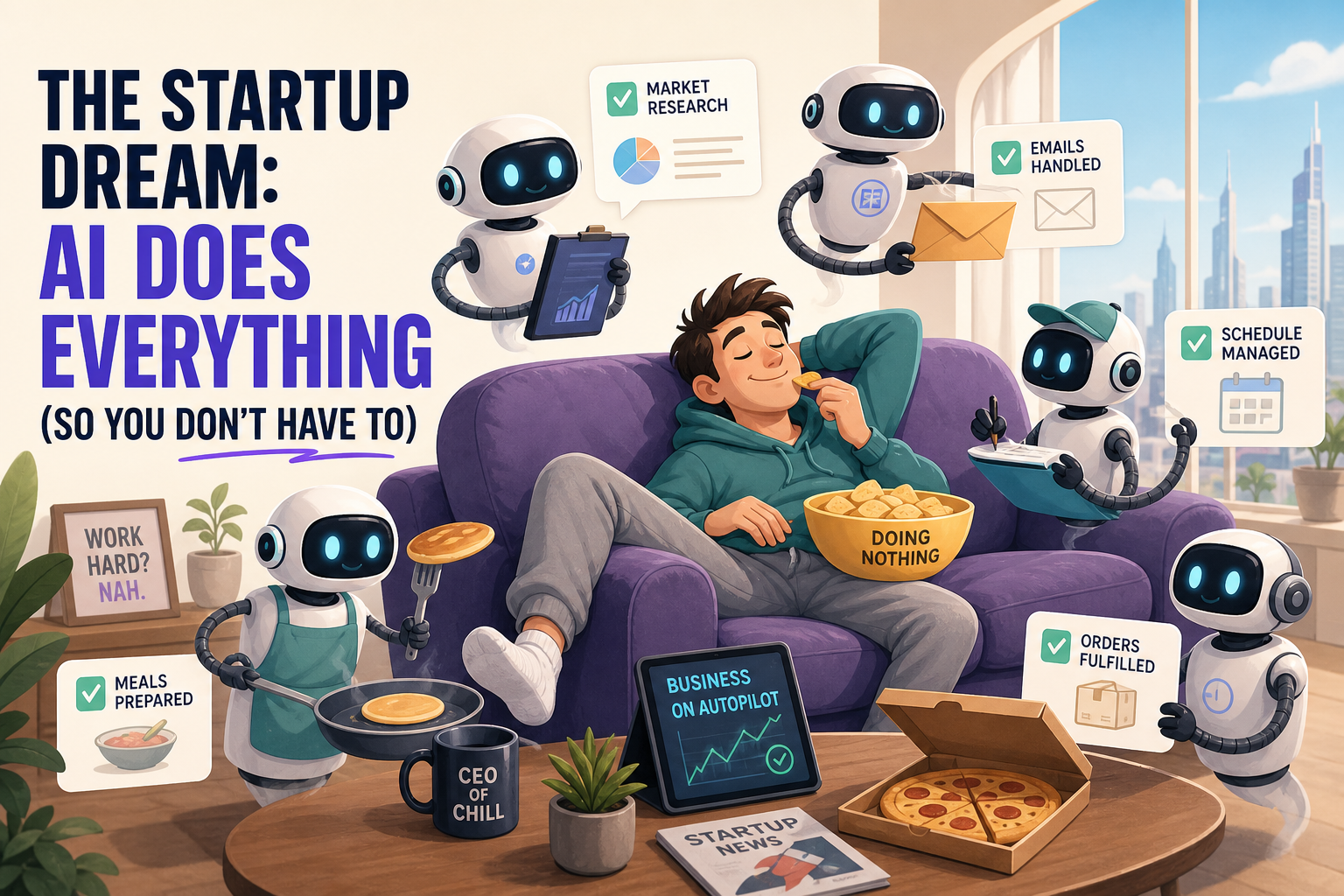
In a daring move that has left both investors and technology enthusiasts scratching their heads, the newly minted startup, EasyDoze, announced today a staggering $300 million investment aimed at launching its revolutionary "laziness outsourcing" platform. The venture, aptly named "Concierge for All Things Mundane," promises to automate the most trivial tasks through a sophisticated AI diagnostics system dedicated to solid-state battery technology.
A Match Made in Silicon Heaven
According to EasyDoze CEO, Fiona Sloth, the platform is designed to cater to a unique clientele: the perpetually busy but blissfully indifferent. "We’re not just selling convenience; we’re selling the right to do nothing while our AI does it for you," Sloth proclaimed, possibly while reclining on a plush chaise lounge. "It’s as if your own personal assistant has a personal assistant, except that assistant is AI and, let’s be honest, more competent than most humans on their best day."
Investors Bet on the Absurd: A Market Analysis
While many in the industry view this venture with a raised eyebrow, investors appear to be placing their bets on the absurd. The global market for convenience-driven applications is projected to hit $150 billion by 2028, growing at a compound annual growth rate (CAGR) of 20%. This suggests that people are indeed willing to pay for their laziness, a phenomenon that could only be described as the American Dream in reverse.
"It’s a bold strategy," says market analyst Ted Gritch. "If they can convince the world that taking a nap while your car charges itself is a necessity, then they might just redefine laziness as a lifestyle choice. The irony is delicious, isn't it?"
The AI Angle: Diagnosing the Future of Batteries
The technology underpinning this venture is no less ambitious. EasyDoze's AI leverages data from solid-state batteries to identify inefficiencies, thereby streamlining the process of battery management while simultaneously encouraging users to do absolutely nothing productive. The potential applications are vast, but perhaps the most enticing is the assurance that someone else will manage your batteries while you binge-watch yet another series.
"We are on the cusp of revolutionizing how people interact with their technology," said CTO Max Ease, who was last seen scrolling through social media while waiting for the coffee maker to finish its cycle. "If we can make charging your car feel effortless, we can make anything seem effortless. What’s next? An AI that picks your Netflix options based on your mood? Oh wait, we’re already there."
Risks and Ridiculousness: A Closer Look
However, not all experts are convinced that this investment will pay off. Critics argue that the allure of convenience may lead to a collective societal decline in productivity, enthusiasm, and overall engagement. "What happens when we outsource everything?" questioned behavioral economist Dr. Elle Void. "Will we become a society of passive observers, forever waiting for our AI overlords to take care of our every need? It’s a slippery slope to couch potato-dom, and I, for one, am not keen to be the first to test that hypothesis."
Moreover, the dependence on AI for even the most mundane tasks raises questions about privacy and data security. Can consumers trust a system that could potentially know them better than they know themselves? Will EasyDoze offer a refund if your AI accidentally signs you up for a yoga class instead of a nap? These are pressing issues that investors like Gritch are eager to contemplate. "If they can solve those problems, they might just be onto something," he mused, although his expression suggested he was still pondering whether he should invest in a personal trainer instead.
A Leisurely Future Awaits?
As the launch date nears, the industry eagerly watches to see whether EasyDoze can indeed turn the art of laziness into a profitable venture. With a $300 million investment backing their absurdity, the startup is poised to either become the poster child for economic innovation or the ultimate case study in the dangers of excess convenience.
In any case, it seems the future is bright—for those who prefer to do nothing while their batteries charge themselves. The only question left is whether American consumers are ready to embrace a life where even their laziness has been outsourced.
What's Your Reaction?
 Like
0
Like
0
 Dislike
0
Dislike
0
 Love
0
Love
0
 Funny
0
Funny
0
 Angry
0
Angry
0
 Sad
0
Sad
0
 Wow
0
Wow
0