




Procrastination Meets Precision: The Digital Twin Revolution for Soil—Can We Afford to Wait?
By StartupKorea Business Desk | Mar 21, 2026 The Intersection of Procrastination and Precision in AgricultureIn an unexpected twist of irony, the newly minted startup, 할 일 미루기 분석 연구소 (Procrastination Analysis Institute), has announced a pio...

By StartupKorea Business Desk | Mar 21, 2026
The Intersection of Procrastination and Precision in Agriculture
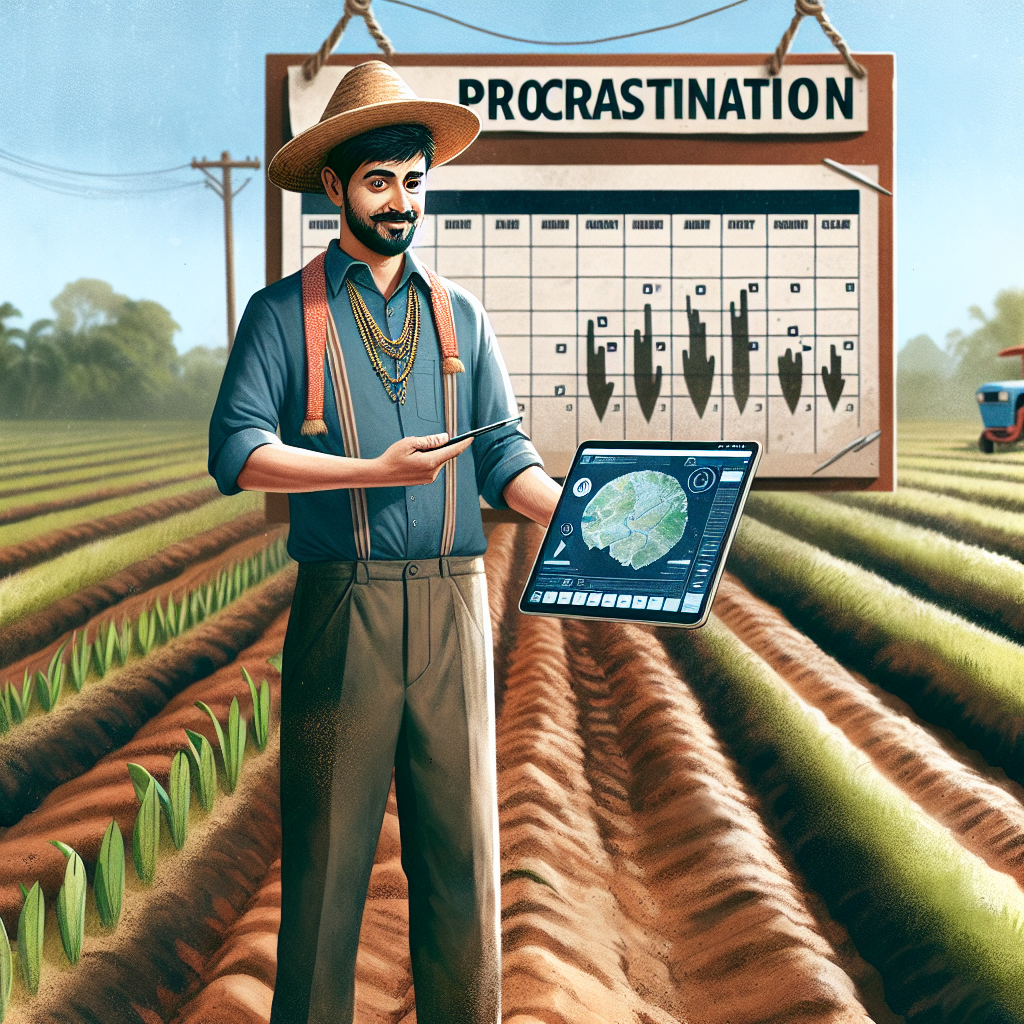
In an unexpected twist of irony, the newly minted startup, 할 일 미루기 분석 연구소 (Procrastination Analysis Institute), has announced a pioneering investment in soil digital twin technology. The venture aims to create virtual replicas of agricultural land, promising to enhance crop yields while giving farmers an invaluable excuse to delay actual farming until the technology matures—presumably around 3026.
CEO Jae-Min Choi, with a flair for the dramatic, stated, “Why rush into the dirt when we can analyze it from a safe, virtual distance? After all, good things come to those who wait—especially when it’s soil-related.” According to insiders, the startup has raised a daring $5 million in this seed round, seemingly in a race against the clock to revolutionize how we approach farming—one procrastinated decision at a time.
Market Context: Are We Digging Deep Enough?
The global agricultural technology market is projected to reach $22 billion by 2027, growing at a staggering rate of 10.5% CAGR. However, the irony that a startup focused on procrastination is entering this field raises some eyebrows. Investors, however, remain unfazed, as the concept of digital twins is steadily gaining traction, particularly in precision agriculture.
As analyst Sara Lee quipped, “This startup’s approach is oddly refreshing. After all, who could argue with getting advanced insights into soil health while simultaneously enjoying a leisurely round of golf?”
Investment Opportunities and Risks—A Delicate Balance
With the backing of global funds eager to invest in agricultural innovation, the startup is poised to attract substantial attention. Joint investments from top-tier venture capitalists amounting to $15 million highlight the industry's faith in digital twin technology. Yet, the risks are not negligible. Procrastination, as a business model, often leads to missed deadlines and dilapidated plans.
Industry expert Mark Thompson warned, “While the idea of a digital twin has potential, we must consider whether its users will prioritize the actual farming needed to apply these insights. Too much virtual reality may lead to forgetting the tangible world.”
The Conundrum of Delayed Gratification
Despite the optimism surrounding digital twin technology, several farmers remain skeptical. Traditionalists argue that reliance on digital solutions could lead to further procrastination—an epidemic in a field that requires constant attention. As one farmer lamented, “If I had a dollar for every time I heard about a ‘revolutionary’ piece of tech that didn’t pan out, I’d be sitting on my own digital twin farm right now.”
Whether this venture can successfully navigate the waters of agricultural urgency—where timing is everything—remains to be seen. The startup's business model seems to hinge on the idea that farmers can wait indefinitely while their virtual soil gets the premium treatment.
Looking Ahead: Could This Be the Future of Farming?
As we gaze into the crystal ball of agricultural technology, the paradox becomes clearer: Can we afford to wait for technology to catch up, or has the procrastination gotten out of hand? With the promise of enhanced crop yields through soil digital twins, one can only wonder how long farmers will hold off on getting their hands dirty.
While the initial reception of the Procrastination Analysis Institute remains cautiously optimistic, it’s evident that the startup is pioneering a brave new frontier—one where procrastination is not just an excuse, but a business strategy. Whether this model is sustainable in a field where immediacy is often the key to survival may ultimately dictate the fate of this venture.
- Projected agricultural tech market: $22 billion by 2027
- Growth rate: 10.5% CAGR
- Startup funding: $5 million raised
- Projected joint investments: $15 million
As the agricultural world buzzes about this strategy, one must consider: is it a precautionary plan for the future—or just another excuse to keep putting off the inevitable?
What's Your Reaction?
 Like
0
Like
0
 Dislike
0
Dislike
0
 Love
0
Love
0
 Funny
0
Funny
0
 Angry
0
Angry
0
 Sad
0
Sad
0
 Wow
0
Wow
0