



Memory Economy Startup Secures $30 Million to Tackle Aging Population's Forgetfulness: Genius or Just Forgettable?
By StartupKorea Business Desk | Jun 01, 2026 Memory Economy Startup Secures $30 Million to Tackle Aging Population's Forgetfulness: Genius or Just Forgettable?In a move that has stunned the investment community and raised eyebrows among beh...

By StartupKorea Business Desk | Jun 01, 2026
Memory Economy Startup Secures $30 Million to Tackle Aging Population's Forgetfulness: Genius or Just Forgettable?
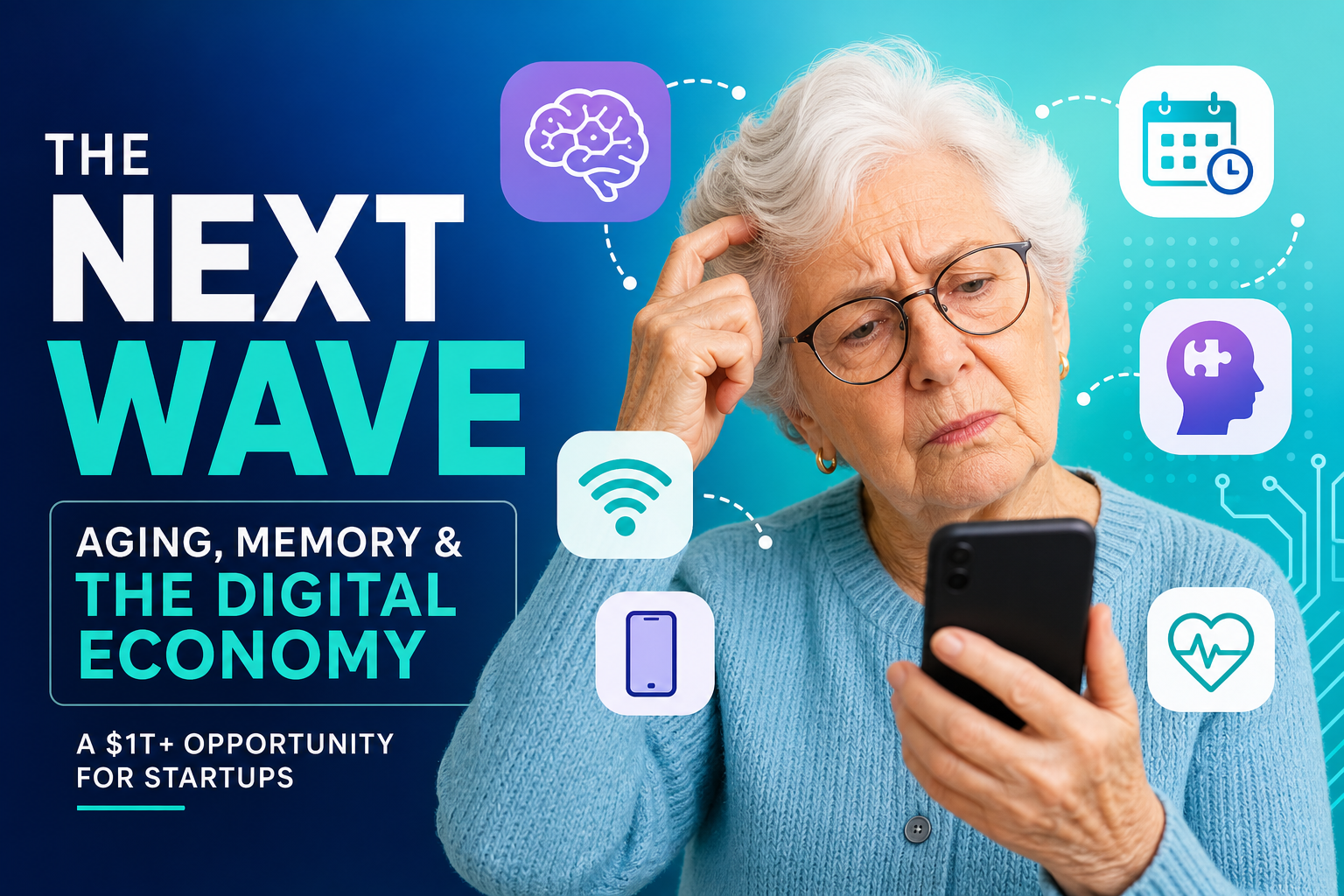
In a move that has stunned the investment community and raised eyebrows among behavioral economists, ForgetMeNot Inc., a burgeoning startup focused on creating a memory economy platform, has announced it has secured $30 million in strategic investment. The timing is impeccable, as the world grapples with the impending realities of a hyper-aged society, where the ability to remember where one left their glasses could be worth its weight in gold.
Investors Bet Big on Memory Solutions
ForgetMeNot's founders assert that their platform will utilize behavioral economics experiments to not only preserve memories but also monetize forgetfulness itself. "We see an opportunity to capitalize on a demographic that has forgotten to capitalize on their own memories," said CEO Nora Nott, an enthusiastic advocate for turning cognitive decline into a thriving economic sector.
In a world where the memory of yesterday's breakfast can be lost to the abyss, ForgetMeNot promises to provide practical solutions, thereby creating a new niche market in the process. Investors are lining up, and as venture capitalist Tom B. Wright quipped, "If you forget to invest, you might just forget your future too!"
A Growing Market with Infinite Potential
The global population aged 65 and above is projected to reach 1.5 billion by 2050, representing a staggering 16% of the total population. The World Health Organization estimates that cognitive disorders will affect over 8% of this demographic. With these statistics in mind, ForgetMeNot's potential market share stands at roughly $8 billion annually, should its memory-enhancing platform take off.
According to senior analyst Clara V. Wise, "The memory economy is not just a passing trend; it's a necessity. As people continue to forget names, faces, and even the last time they took their medication, a platform that can help them remember—or at least monetize their forgetfulness—is bound to succeed."
Risks and Opposing Views: Is This a Viable Business Model?
However, the concept of a memory economy is not without its critics. Some industry experts argue this platform may be a classic case of overreach, or worse, a distraction from the more pressing needs of the elderly population. "While ForgetMeNot’s intentions are noble, we must remember that technology can’t replace genuine human connection or caregiving," cautioned Dr. Susan P. Care, a gerontologist.
Moreover, the startup's reliance on behavioral economics raises questions about ethics. Are we really helping people by monetizing their forgetfulness? Or are we simply profiting off their declining cognitive health? As Dr. Care put it, "We must tread carefully; exploiting memory loss could lead us down a slippery slope, where the only thing we remember is our own greed."
The Financial Landscape of ForgetMeNot
ForgetMeNot's strategic investment of $30 million is backed by a consortium of venture capitalists who see the potential golden egg in the aging population's memory crisis. Yet, with great potential comes great skepticism. The startup is expected to face stiff competition from established players in the health tech market, as well as regulatory hurdles that accompany innovative health solutions.
- Projected market size of the memory economy: $8 billion by 2050
- Global population aged 65+: 1.5 billion by 2050
- Estimated cognitive disorders affecting this demographic: over 8%
Despite the skepticism, ForgetMeNot's approach to monetizing memory could very well revolutionize how we perceive aging and cognitive decline. If successful, it could pave the way for a new economic paradigm where forgetfulness is not just a problem to be solved but a resource to be mined.
The Future: A New Era in the Memory Economy?
As ForgetMeNot prepares to roll out its platform next year, it remains to be seen whether memory will truly become the next currency. Will society embrace the absurdity of a memory economy, or will this startup be but a fleeting thought in the annals of startup history? Only time—and perhaps a few extra reminders—will tell.
What's Your Reaction?
 Like
0
Like
0
 Dislike
0
Dislike
0
 Love
0
Love
0
 Funny
0
Funny
0
 Angry
0
Angry
0
 Sad
0
Sad
0
 Wow
0
Wow
0