




From Earth to Orbit: The $30 Billion Bet on Autonomous Space Delivery Robots
By StartupKorea Business Desk | Feb 12, 2026 Revolutionizing Space Logistics: Is the Future of Delivery Out There?In an audacious leap towards the cosmos, AstroLogistics Inc. has secured a staggering $30 billion in strategic investment to l...

By StartupKorea Business Desk | Feb 12, 2026
Revolutionizing Space Logistics: Is the Future of Delivery Out There?
In an audacious leap towards the cosmos, AstroLogistics Inc. has secured a staggering $30 billion in strategic investment to launch its space logistics platform, which promises to revolutionize interplanetary shipping through autonomous collaboration robots. This announcement has sent shockwaves through both the space and startup economies as investors scramble to position themselves in what may be the most over-hyped venture since the dawn of the dot-com era.
The Vision: A Delivery Service for the Final Frontier
AstroLogistics envisions a future where autonomous robots not only navigate the complexities of a Martian landscape but also outsmart their earthly counterparts in the highly competitive world of delivery services. CEO Jane Stellar, speaking at the launch event, declared, "If Amazon can deliver your package in two days, just wait until we do it in two weeks—on Mars!"
Investment Surge: Riding the Cosmic Wave
The $30 billion investment, led by Nebula Capital, is reportedly fueled by soaring interest in space logistics and the growing market for extraterrestrial resources. Market analysts estimate the interplanetary shipping sector could skyrocket to $100 billion by 2030, provided we don't run out of oxygen first. Investor Bob Cosmic noted, "This is just the beginning; we might soon see lunar farms shipping back moon cheese!"
Autonomous Robots: The New Space Cowboys?
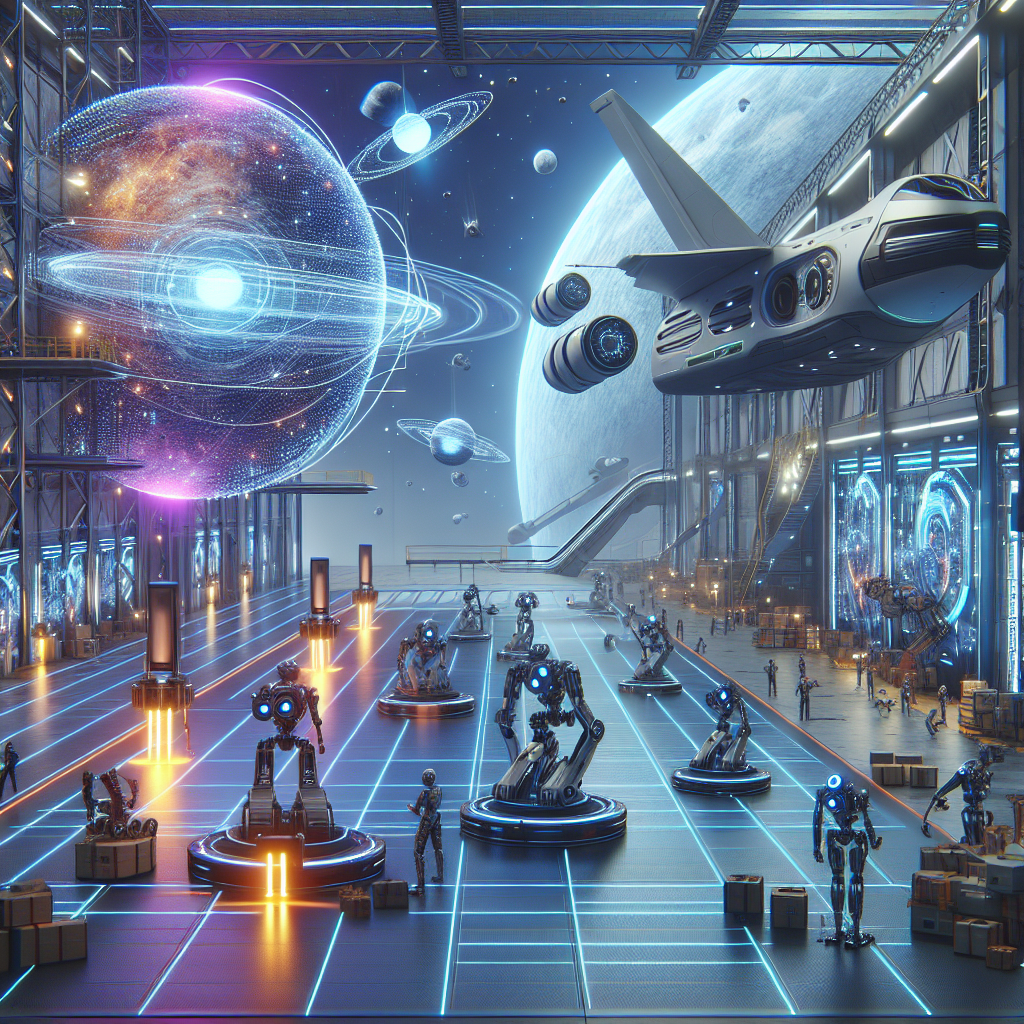
The technology behind AstroLogistics' platform hinges on cutting-edge autonomous collaboration robots. Designed to work together without human oversight, these robots are programmed to execute complex tasks, such as avoiding asteroids while simultaneously arguing over the best pizza toppings. Technology analyst Sid Quasar commented, "If anyone can make robots negotiate their tasks, it’s AstroLogistics. Who wouldn’t want their robot to have a personality?"
Market Context: A Space Race Reimagined
The global logistics market is currently valued at around $8 trillion, with a growing segment dedicated to space-related services. While traditional cargo shipping has its challenges, the notion of sending goods across the solar system brings a whole new level of complexity. Experts predict that as Earth-bound logistics struggles with supply chain issues, the allure of a new frontier will only grow.
- Current global logistics market value: $8 trillion
- Expected value of the interplanetary shipping market by 2030: $100 billion
Risks and Constraints: The Galaxy Isn’t All Sunshine and Rainbows
However, the path to a fully operational space logistics platform is not without treacherous asteroids. Critics of AstroLogistics have raised concerns regarding the feasibility of such ambitious plans. Can robots truly operate autonomously in the uncharted territory of space? Industry veteran Karen Milkyway warned, "There are risks involved—like sending a robot to Mars and realizing it prefers to watch Netflix instead of working. Good luck with that."
The Skeptics: Voices of Dissent
Moreover, some analysts argue that the $30 billion investment could be better utilized in solving pressing terrestrial issues, such as food supply and climate change. Environmental economist Lisa Green stated, "While we're busy dreaming of cosmic delivery systems, we should perhaps focus on fixing our planet first. It’s hard to ship moon rocks when your house is underwater."
The Bottom Line: Are We Dreaming Too Big?
As AstroLogistics embarks on this journey to redefine logistics through space and autonomous technology, one must wonder whether this is the next giant leap for mankind or just another pricey fantasy. With a $30 billion price tag, the stakes are undoubtedly high, but the feasibility remains as murky as the void between the stars. As the saying goes, aim for the moon—if you miss, you might just hit a satellite.
What's Your Reaction?
 Like
0
Like
0
 Dislike
0
Dislike
0
 Love
0
Love
0
 Funny
0
Funny
0
 Angry
0
Angry
0
 Sad
0
Sad
0
 Wow
0
Wow
0