
Elevator Etiquette and Digital Innovation: Analyzing the Market Potential of Smart Elevator Solutions
Elevator Etiquette and Digital Innovation: Analyzing the Market Potential of Smart Elevator Solutions By Startup Korea Research Desk | May 18, 2026 The intersection of technology and urban living has given rise to innovative solutions aimed at e...

Elevator Etiquette and Digital Innovation: Analyzing the Market Potential of Smart Elevator Solutions
By Startup Korea Research Desk | May 18, 2026
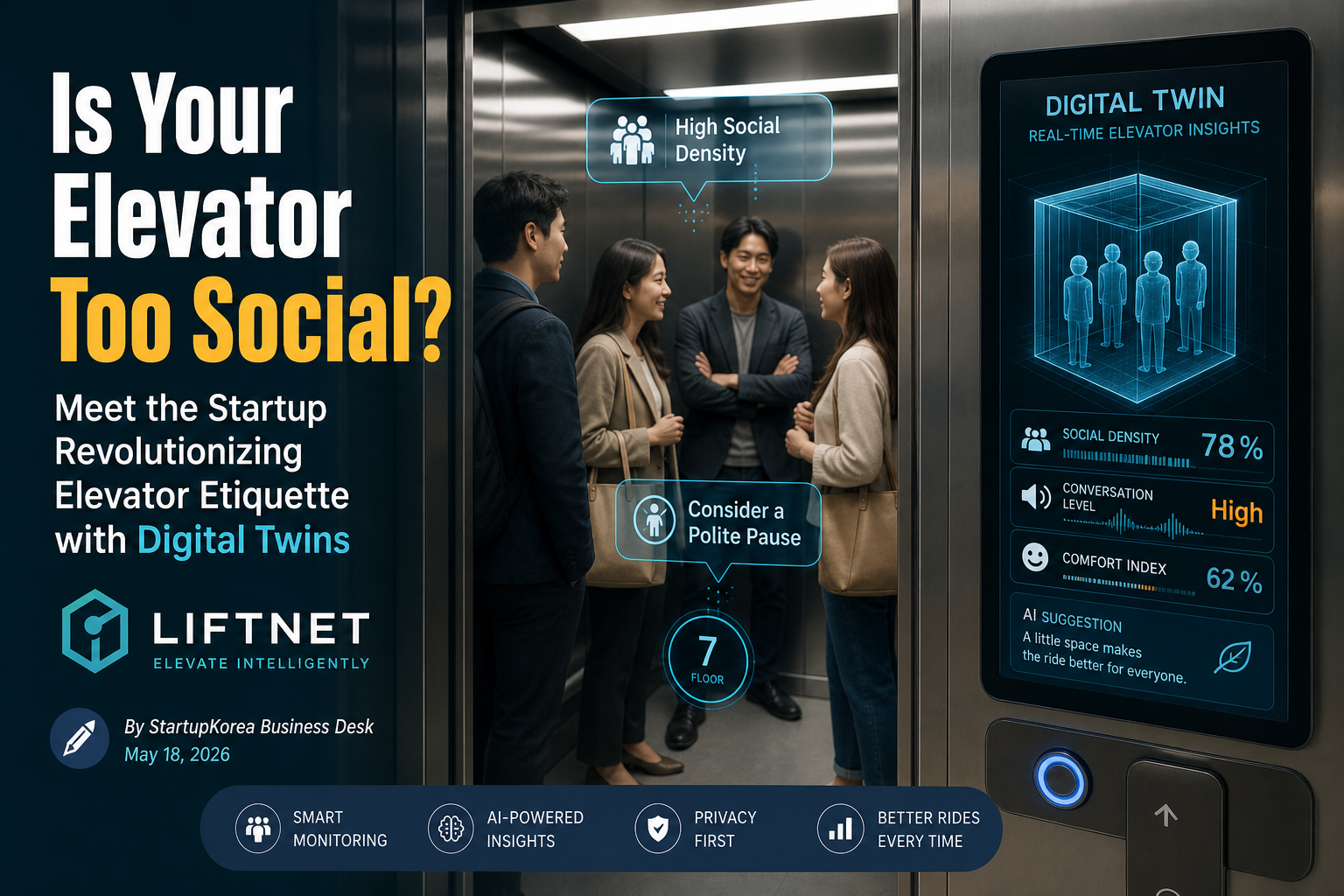
The intersection of technology and urban living has given rise to innovative solutions aimed at enhancing the quality of life in densely populated areas. One such emerging trend is the development of smart elevator systems that leverage digital twin technology to improve user experience and address social dynamics in confined spaces.
The Rise of Smart Elevators
As urban environments continue to grow, the demand for efficient and user-friendly transportation systems within buildings is becoming increasingly critical. Smart elevators, equipped with advanced technologies, are designed to optimize the flow of people while addressing the evolving expectations of users regarding privacy and comfort.
Digital twin technology, which creates virtual replicas of physical systems, is at the forefront of this innovation. By simulating real-world scenarios, these systems can enhance operational efficiency and user experience. The global smart city market is projected to reach $1.5 trillion by 2028, with the digital twin sector anticipated to grow at an annual rate of 40%. This growth indicates a significant opportunity for startups focusing on smart urban solutions.
Understanding User Needs
Recent societal shifts have highlighted a growing preference for privacy and personal space, particularly in public settings. This trend has prompted startups to explore how technology can facilitate more comfortable interactions in shared environments, such as elevators. Solutions that minimize social interactions, while still providing essential services, are gaining traction.
For instance, some companies are developing systems that allow users to customize their elevator experiences. Features such as 'silent mode' or 'anti-social mode' can be programmed to create a more comfortable atmosphere, reducing the potential for awkward social exchanges. This customization aligns with broader consumer trends favoring personalization and user control.
Investment Landscape
The venture capital landscape is increasingly recognizing the potential of urban comfort solutions. Recent funding rounds indicate a shift in investor focus toward technologies that enhance quality of life in urban settings. Investors are keen to support innovations that promise to alleviate common urban challenges, including social discomfort in public spaces.
However, while the investment interest is robust, it is essential for investors to conduct thorough due diligence. The practicality and scalability of such solutions must be critically assessed. Questions regarding user adoption, integration with existing infrastructure, and long-term viability are crucial considerations for stakeholders.
Challenges and Adoption Risks
Despite the promising market potential, several challenges could hinder the widespread adoption of smart elevator technologies. One significant risk is the potential resistance from users who may be accustomed to traditional elevator experiences. Changing user behavior and perceptions will require effective marketing strategies and education about the benefits of these innovations.
Moreover, the integration of advanced technologies into existing elevator systems poses technical challenges. Ensuring compatibility with various building infrastructures and maintaining safety standards will be critical for successful implementation.
Strategic Considerations for Founders
For founders in this space, developing a clear value proposition that resonates with both users and investors is essential. Building partnerships with urban planners and property developers can facilitate smoother market entry and enhance credibility. Additionally, focusing on user feedback during the development phase can help refine offerings and ensure alignment with market needs.
Furthermore, addressing privacy concerns transparently will be vital. As users become more aware of data privacy issues, startups must prioritize secure and ethical data handling practices to build trust and foster adoption.
Conclusion
The emergence of smart elevator solutions represents a significant trend in the intersection of technology and urban living. As cities continue to evolve, the demand for innovative solutions that enhance user experience and address social dynamics will likely grow. While challenges remain, the potential for market disruption and improvement in urban comfort is substantial.
Editor's note: This article presents original market analysis and does not constitute investment advice.
What's Your Reaction?
 Like
0
Like
0
 Dislike
0
Dislike
0
 Love
0
Love
0
 Funny
0
Funny
0
 Angry
0
Angry
0
 Sad
0
Sad
0
 Wow
0
Wow
0