





Domestic Ventures: 10-Year Accelerated Shift from Manufacturing to Services
The domestic venture ecosystem has undergone a significant transformation over the past decade, shifting from a traditional manufacturing-centric model to one led by advanced service industries, according to an analysis. According to a repo...
Editorial context: This article is part of Startup Korea's original market analysis coverage. It is written to explain startup trends, business model risks, and technology adoption signals for general information, not as investment advice.

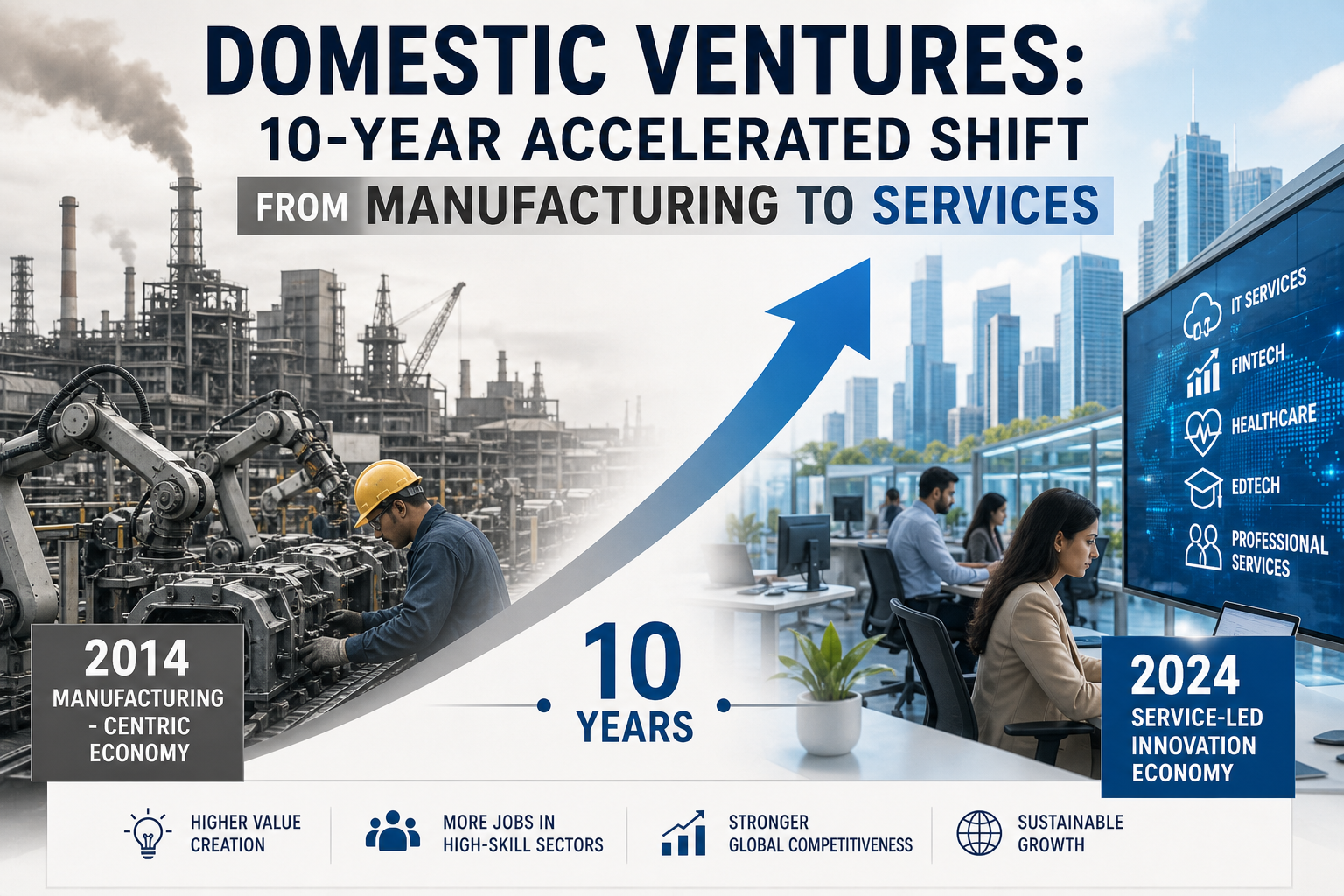
The domestic venture ecosystem has undergone a significant transformation over the past decade, shifting from a traditional manufacturing-centric model to one led by advanced service industries, according to an analysis. According to a report by the Korea Venture Business Association, the number of domestic venture companies increased by 45.5% from 24,636 in 2014 to 35,857 in 2024. Notably, venture companies in the service industry grew at an average annual rate of 7.4%, developing more than four times faster than those in manufacturing (1.6%).
Due to this change, the proportion of manufacturing venture companies decreased by 13.1 percentage points from 67.6% in 2014 to 54.5% in 2024, while the service industry saw a sharp increase of 12.3 percentage points from 30.3% to 42.6%. This suggests that technology-based service industries, such as IT and software, have established themselves as new growth engines for the venture ecosystem.
In terms of industrial advancement, advanced industry venture companies grew at an average annual rate of 4.0%, surpassing the proportion of general industry within all venture companies starting in 2021. Particularly, the advanced service sector, represented by software development and IT-based services, rose by 6 percentage points from 20% in 2014 to 26% in 2024, driving industrial transformation.
The sector showing the most remarkable growth was research and development services, which surged 5.7 times (an average annual increase of 19.1%) from 301 companies in 2014 to 1,726 in 2024. Specifically, medical and pharmaceutical R&D, and business consulting led this growth, while wholesale and retail trade (from 247 to 1,085 companies, a 4.4-fold increase), boosted by the activation of digital commerce, also recorded high growth.
However, signs of declining vitality in the venture ecosystem have also been observed. The number of new venture companies peaked at 6,079 in 2020 and then decreased for four consecutive years, reaching 4,708 in 2024. Notably, new manufacturing venture companies sharply declined by 35.5% compared to 2020, raising concerns about the weakening foundation for venture entry.
By region, the concentration in the Seoul metropolitan area intensified, with 66.7% of venture companies located there in 2024. There was also a clear trend of top industries by region shifting from manufacturing to software development. The concentration of venture companies in the three core industries (software development, information and communication, and other services) deepened, showing signs of structural entrenchment.
Unlike the overall industry, venture companies are concentrating on technology-based, high value-added industries such as manufacturing, information and communication, and professional, scientific, and technical services, driving the innovative growth of our economy. Song Byung-joon, Chairman of the Korea Venture Business Association, pointed out that current support policies are still stuck in a past framework centered on manufacturing. He emphasized the urgency of creating a flexible and innovative regulatory environment aligned with new industrial trends like the platform economy and AI adoption, expanding the entry of new venture companies, and developing customized support measures by region and industry.
What's Your Reaction?
 Like
0
Like
0
 Dislike
0
Dislike
0
 Love
0
Love
0
 Funny
0
Funny
0
 Angry
0
Angry
0
 Sad
0
Sad
0
 Wow
0
Wow
0