



Coffins and Code: How a $1.2 Billion Pre-IPO Robot Undertaker Plans to Resurrect the Funeral Industry
By StartupKorea Business Desk | Apr 03, 2026 From Grief to Gain: The Rise of the Robot Funeral DirectorIn a move that may redefine the phrase "resting in peace," a groundbreaking startup has announced plans to launch the world’s first robot...

By StartupKorea Business Desk | Apr 03, 2026
From Grief to Gain: The Rise of the Robot Funeral Director
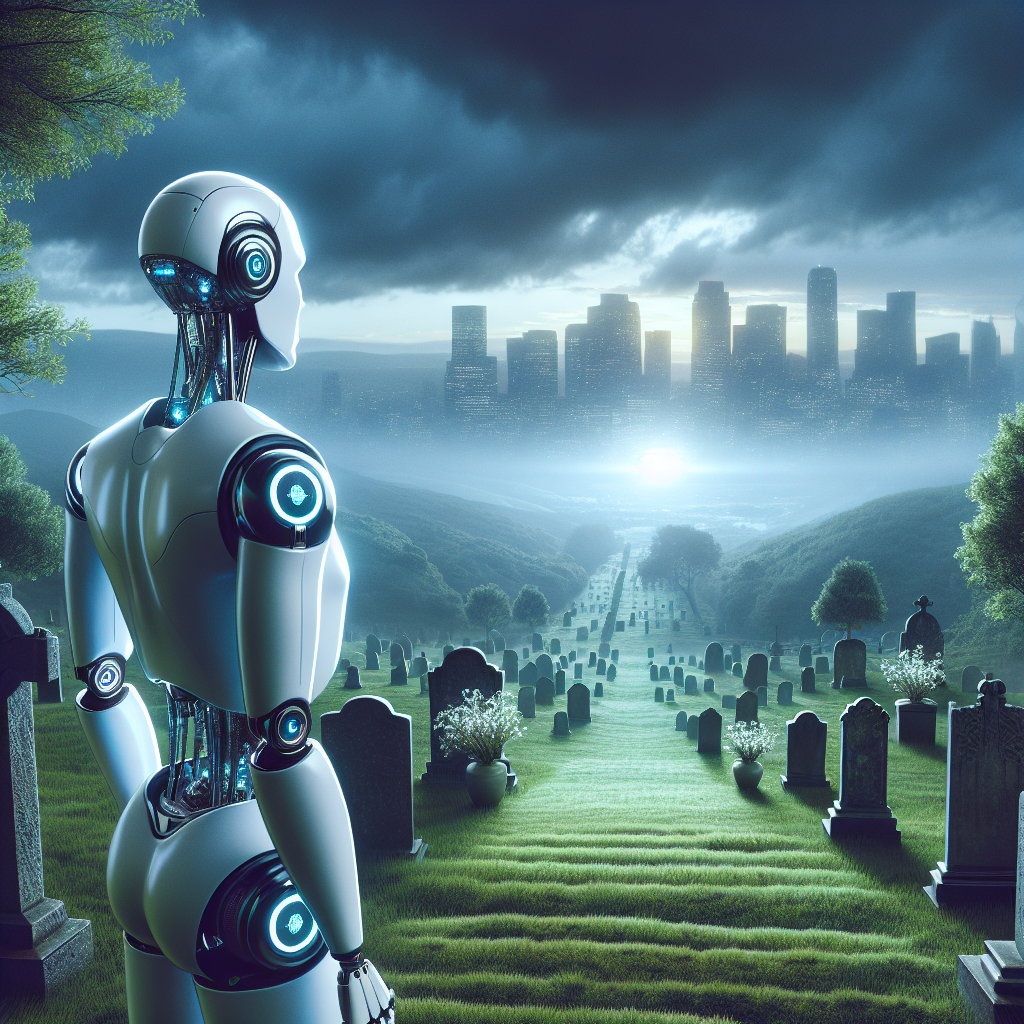
In a move that may redefine the phrase "resting in peace," a groundbreaking startup has announced plans to launch the world’s first robotic funeral director, with a pre-IPO investment round poised to raise a staggering $1.2 billion. Set to go public in the second half of 2026, the company anticipates a market entry that promises to automate the already sensitive business of farewelling the dearly departed.
The Technology Behind the Tears
The company, aptly named "RoboRequiem," leverages an innovative content authenticity infrastructure to ensure that each robotic interaction maintains a veneer of emotional resonance—because nothing says heartfelt goodbye like algorithms designed to simulate human grief.
"We’ve programmed our robots to recognize the various stages of mourning, allowing them to respond to bereaved families with the perfect blend of empathy and mechanical efficiency," said CEO Jane Smith, clearly a visionary in both the tech and, let’s face it, mildly absurd realms of contemporary innovation.
Market Context: Death Is a Growth Industry
As of 2025, the global funeral services market is projected to exceed $50 billion, with a compound annual growth rate (CAGR) of 4.5%. RoboRequiem’s entry into this sector offers a tantalizing glimpse into how technology might not only disrupt tradition but also drive significant returns for investors eager to capitalize on this somber yet lucrative field.
Industry analysts anticipate that robotic integration could reduce operational costs by upwards of 30%, but will it come at the expense of human connection? "If you think about it, people spend thousands on funeral services, so why not a little less on something that can’t cry?" mused financial analyst Tom White. One must appreciate the irony of investing in a company that promises to take the humanity out of humanity's most touching moments.
Investor Enthusiasm: Morbid or Marvelous?
The response from the investment community has been overwhelmingly positive, with funds racing to secure a stake in RoboRequiem. The prospect of a $1.2 billion pre-IPO valuation has investors clamoring for a chance to back a venture that embodies both technological advancement and the inescapable reality of death.
“We believe RoboRequiem represents the future of end-of-life services,” stated investor Martin Grey. “If we can automate the sadness, we can also monetize it.” It’s refreshing to witness a business model that so boldly aligns existential dread with profit motives.
Risks and Constraints: Not All Grieving Is Mechanical
However, the road to IPO is fraught with ethical landmines. Critics argue that a robotic funeral director could lead to a commodification of grief, stripping away the personal touches that families often cherish during their time of mourning. "Can a robot really understand the nuances of human sorrow?" questioned ethical analyst Sarah Kaplan. "The answer is likely as cold as the steel that makes up these machines.”
Additionally, regulatory hurdles loom large, particularly in states where funeral practices are tightly controlled. The licensing of robots to conduct funerals may prove to be a significant barrier, as lawmakers grapple with the implications of allowing machines to take on such a sacred role.
Conclusion: A Final Farewell to Tradition?
As RoboRequiem positions itself for a potentially world-altering launch, it raises profound questions about the intersection of technology and humanity. Will we embrace a future where our final farewells are dictated by algorithms and artificial intelligence? Or will we cling to the remnants of the human touch, even in our darkest hours?
In a market ripe for disruption, the only certainty is that the funeral industry may never look the same again—unless, of course, robots also start offering home-cooked meals in the mourning process, which would surely be the icing on the cake of our mechanized demise.
What's Your Reaction?
 Like
0
Like
0
 Dislike
0
Dislike
0
 Love
0
Love
0
 Funny
0
Funny
0
 Angry
0
Angry
0
 Sad
0
Sad
0
 Wow
0
Wow
0