


Clothing Rental Folds After 9 Years: Did We Truly Want It?
Singaporean fashion rental startup Style Theory concluded its 9-year journey last October, accompanied by a poignant letter from co-founder Raena Lim. All subscription services have ended. Borrowed clothes are to be kept without refunds for...
Editorial context: This article is part of Startup Korea's original market analysis coverage. It is written to explain startup trends, business model risks, and technology adoption signals for general information, not as investment advice.

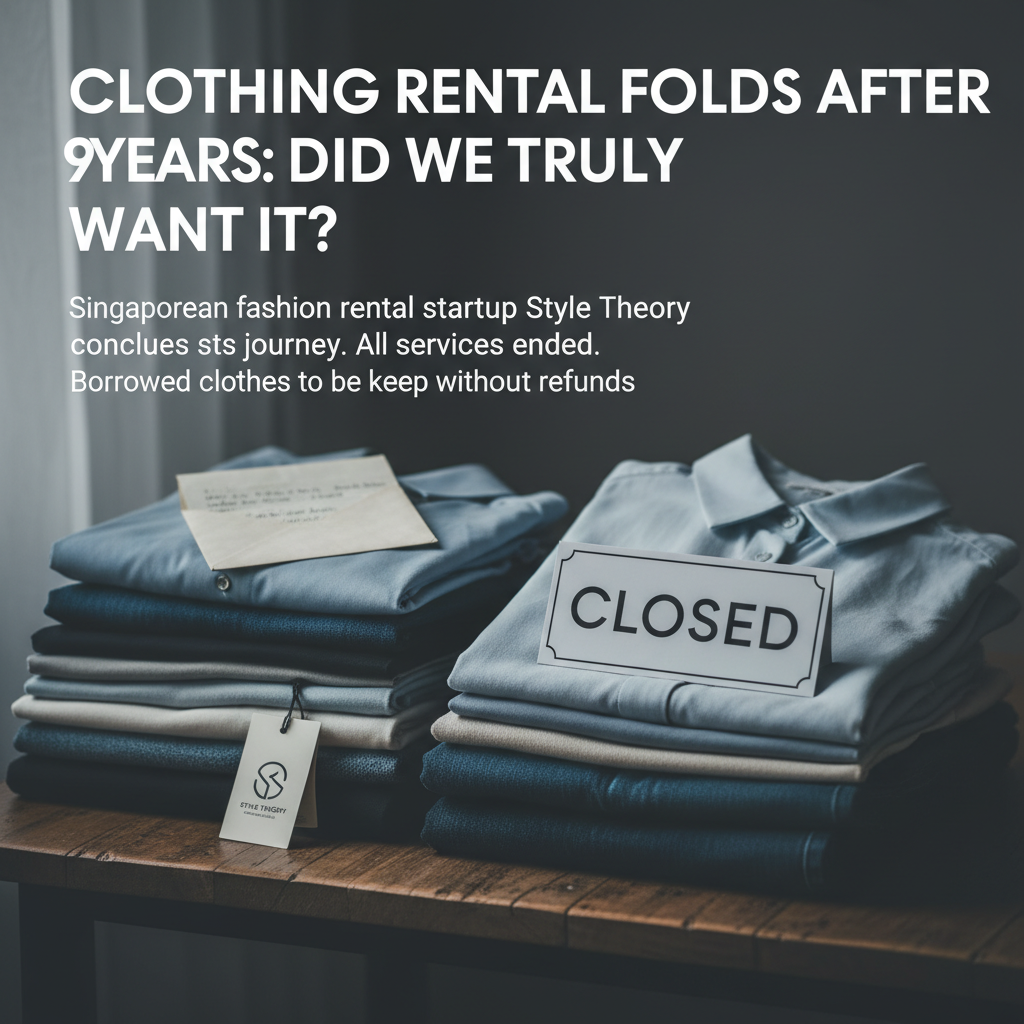
Singaporean fashion rental startup Style Theory concluded its 9-year journey last October, accompanied by a poignant letter from co-founder Raena Lim. All subscription services have ended. Borrowed clothes are to be kept without refunds for unused periods, bags are to be returned, and payments to consignment sellers have moved to liquidation procedures.
Style Theory, which began in 2016 with the vision of a "wardrobe in the cloud" and emerged as a leading player in Southeast Asia by attracting $15 million from SoftBank in 2019, faced escalating operating costs and the withdrawal of key investors. However, beneath this lies a fundamental question: "Did we truly want to rent clothes?"
The paradox of fashion rental was clear. Each time a customer rented an item, variable costs such as laundry, repair, and delivery fees were incurred, and the more enthusiastic the customer, the greater the burden on the company. While economies of scale were expected, the structure was such that deficits deepened with increased turnover. Even attempts like second-hand resale were rendered powerless by the plummeting demand due to the pandemic and remote work. Similar to the failure of Rent the Runway in the U.S., logistics and management costs were a fundamental problem, irrespective of market size.
Unlike high-value items with low usage frequency or temporary need, such as cars or wedding dresses, daily wear rental fell into an economic trap. A monthly subscription fee of 200,000 won could become more expensive than owning moderately priced clothes, and the rented clothes were not one's own. For those who could afford high-end brands, rental was a "compromise," and rational customer behavior (focused rental of expensive clothes) only exacerbated the company's losses. Ultimately, the narrow niche of "wanting to experience expensive clothes but lacking the money to buy them" was insufficient to sustain the company. In Korea, only models that pivoted to high-value, temporary demand, such as luxury second-hand rentals, survived.
Investment capital was the "fuel" for growth, not the "oxygen" for cash flow. Expansion without unit economics validation became poison, and changes in the investment environment along with the withdrawal of key investors brought the company down. What remained after the grand vision were liquidation procedures and customer anger.
Even in an era where subscription economies for music, movies, and software are common, clothes were different. There was a clear boundary, not "does it touch the body," but "does it make economic sense." Style Theory attempted to cross this boundary but could not overcome its limitations. The 9-year experiment proved that a structure where the company lost money as customers acted rationally and growth accelerated bankruptcy was a fundamental contradiction of the business model itself.
What's Your Reaction?
 Like
0
Like
0
 Dislike
0
Dislike
0
 Love
0
Love
0
 Funny
0
Funny
0
 Angry
0
Angry
0
 Sad
0
Sad
0
 Wow
0
Wow
0