




Venture Capital Trends in Gut Microbiome and Wearable Technology
By Startup Korea Research Desk | May 23, 2026 The intersection of health technology and consumer investment is gaining traction, particularly with recent developments in the gut microbiome and wearable technology sectors. A recent investment rou...

By Startup Korea Research Desk | May 23, 2026
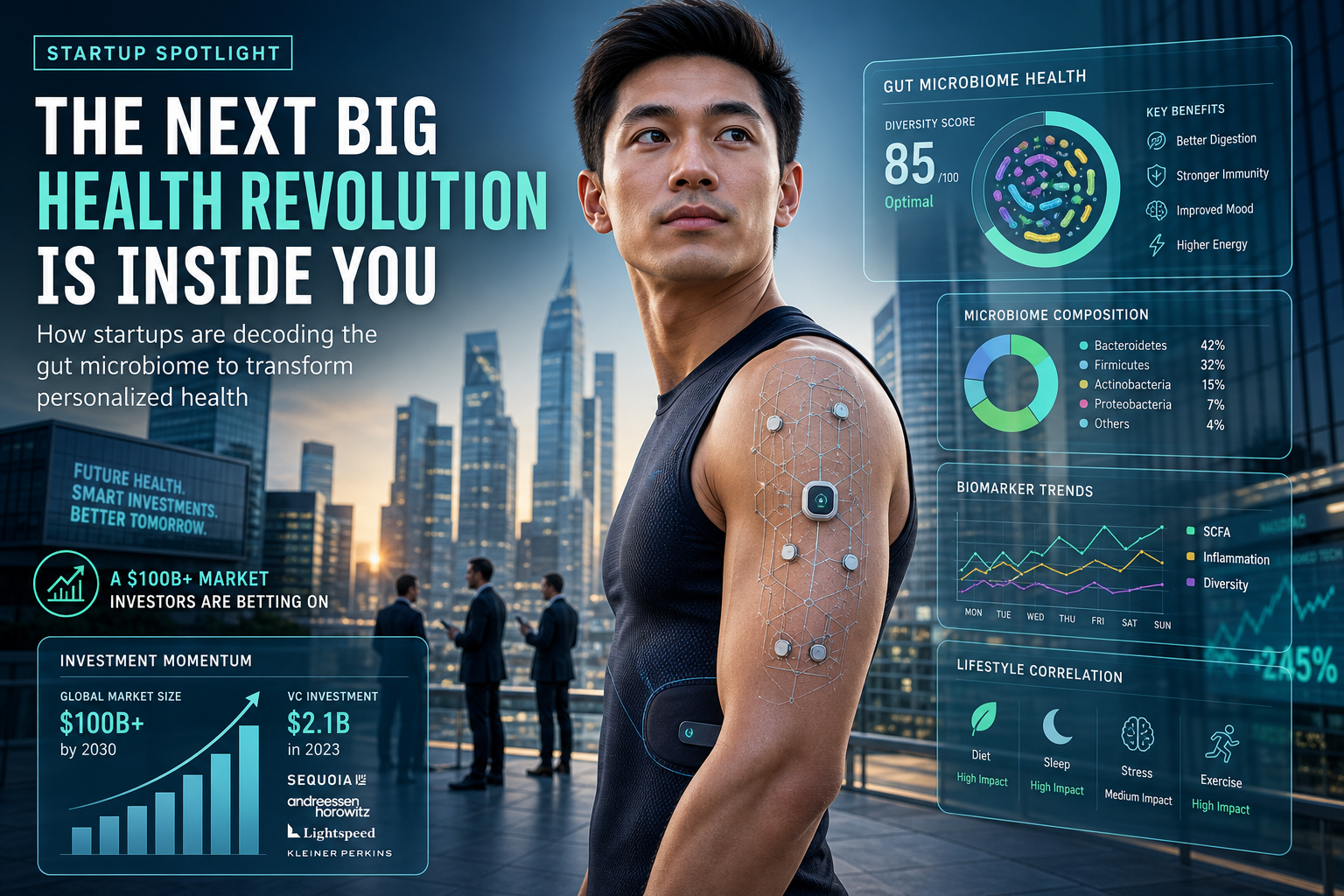
The intersection of health technology and consumer investment is gaining traction, particularly with recent developments in the gut microbiome and wearable technology sectors. A recent investment round has seen a consortium of venture capitalists allocate $300 million to a startup focused on integrating gut microbiome analysis with electronic skin sensor technology. This analysis seeks to explore the implications of such investments, the potential market trends, and the associated risks.
Understanding the Market Landscape
The gut microbiome market is projected to reach approximately $1.5 billion by 2026, driven by increasing consumer awareness of gut health and its impact on overall well-being. Concurrently, the wearable technology market, which includes electronic skin sensors, is expected to surpass $60 billion in the same timeframe. The convergence of these two sectors presents a unique opportunity for innovation and investment.
Business Model Viability
The startup in question aims to create a platform that enables users to monitor their gut health through a wearable device, potentially allowing for personalized health management. This model raises questions about the sustainability and scalability of such a business. The concept of investing in one's own health, particularly through monitoring gut microbiomes, is novel and could appeal to health-conscious consumers. However, the practical application of this model remains to be fully validated.
Adoption Risks and Market Acceptance
While the idea of personalized health monitoring is appealing, several risks could hinder widespread adoption. First, there is the challenge of consumer education; many potential users may not fully understand the benefits of gut microbiome analysis or how it relates to their health. Additionally, the accuracy and reliability of wearable sensors must be established to gain consumer trust.
Moreover, the regulatory landscape for health-related technologies is complex. Startups in this space must navigate compliance with health regulations, which can vary by region. Any missteps in this area could lead to significant setbacks, both financially and reputationally.
Investor Diligence and Market Trends
Investors are increasingly drawn to health tech innovations, particularly those that offer a blend of personal health management and investment potential. However, due diligence is critical. Investors should assess the technological feasibility of the product, the expertise of the founding team, and the startup's ability to execute its business model effectively.
Market trends indicate a growing interest in personalized health solutions, which could support the startup's positioning. However, investors must remain cautious of overhyped narratives that may not align with actual market demand. A thorough understanding of consumer behavior and market dynamics will be essential for success.
Founder Strategy and Vision
The founders of this startup must articulate a clear vision that resonates with both consumers and investors. Effective communication of the product's value proposition, along with a robust marketing strategy, will be crucial in differentiating the startup from competitors. Additionally, establishing partnerships with healthcare professionals and institutions could enhance credibility and facilitate user adoption.
Conclusion
The recent investment in a startup focusing on gut microbiome and wearable technology reflects a broader trend in the venture capital landscape, where health and technology converge. While the potential for innovation is significant, the path to market acceptance is fraught with challenges. Stakeholders must navigate consumer education, regulatory compliance, and technological reliability to capitalize on this emerging market.
Editor's note: This analysis is original market analysis and not investment advice.
What's Your Reaction?
 Like
0
Like
0
 Dislike
0
Dislike
0
 Love
0
Love
0
 Funny
0
Funny
0
 Angry
0
Angry
0
 Sad
0
Sad
0
 Wow
0
Wow
0