


The Rise of Humanity in a Machine: Unmanned Stores Now Powered by 'Human Touch' Engines
By StartupKorea Business Desk | Apr 13, 2026 The Merger of Man and Machine: A Startup's Vision for RetailIn an unprecedented leap for the grocery sector, the Silicon Valley startup, HumaniTech, has unveiled its latest innovation: the Human...

By StartupKorea Business Desk | Apr 13, 2026
The Merger of Man and Machine: A Startup's Vision for Retail
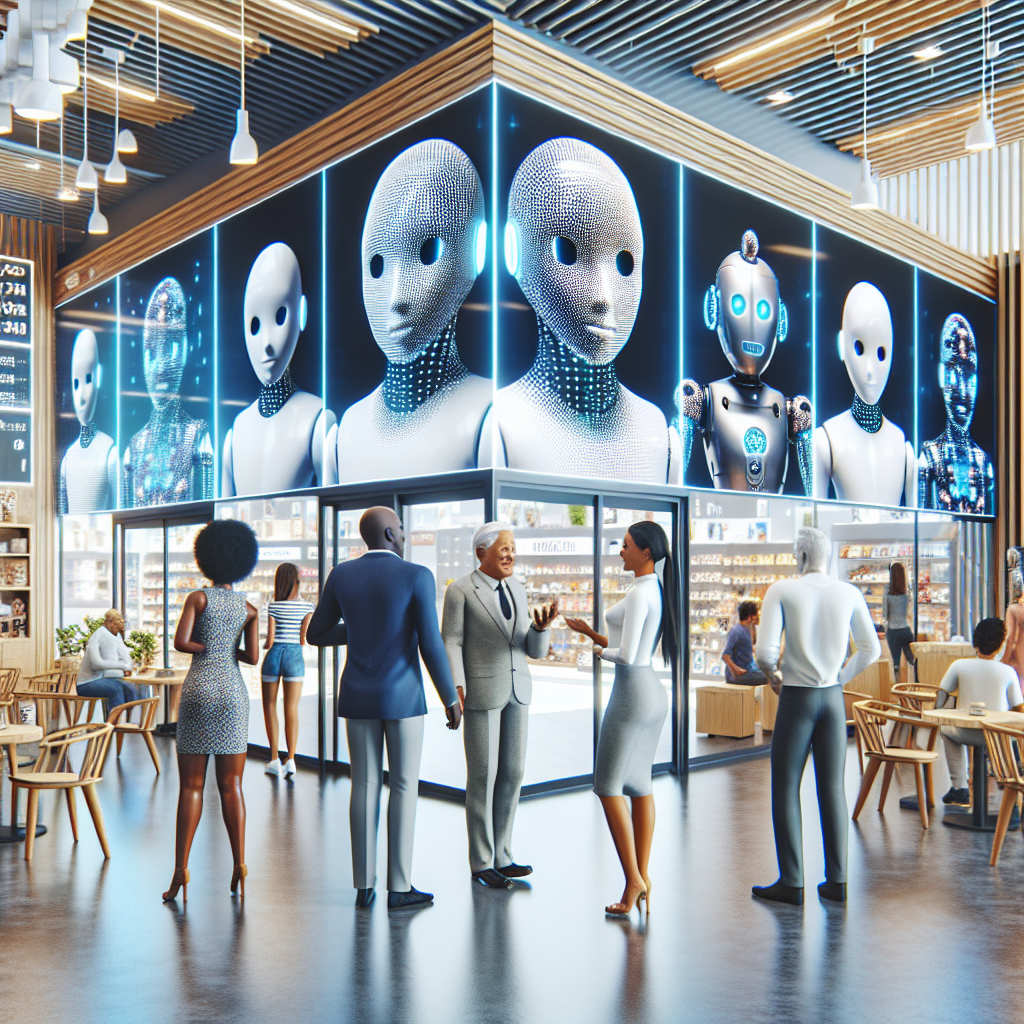
In an unprecedented leap for the grocery sector, the Silicon Valley startup, HumaniTech, has unveiled its latest innovation: the Human Touch Engine, a digital forensics automation engine designed to infuse emotional intelligence into unmanned retail stores. With an initial investment of $10 million secured from venture capitalists, the company aims to redefine consumer interaction by injecting a semblance of humanity into a shopping experience traditionally dominated by cold, calculating machines.
Why Now? The Timing of Touch
As the pandemic pushed consumers towards contactless shopping solutions, HumaniTech has identified a unique opportunity. “The cold embrace of a self-checkout machine is leaving customers feeling less than satisfied,” said CEO Sylvia Hartman. “We’re here to ensure that even our machines can offer a smile—without needing an actual human being.”
Market Context: A Love Story Between Convenience and Emotion
The unmanned store market has seen exponential growth, with projections indicating a staggering 30% annual increase over the next five years. As of 2025, it is expected to reach $25 billion, driven by consumer demand for convenience and efficiency. However, the glaring absence of human interaction has left a void that startups like HumaniTech are eager to fill—albeit with pixels and algorithms.
- Projected market growth: 30% annually
- 2025 market size: $25 billion
- Initial investment: $10 million
Investors Show ‘Human’ Interest
Investors are visibly intrigued by the prospect of a machine that not only rings up purchases but also offers platitudes. “We believe that the market is ripe for an emotional reboot,” stated venture capitalist Marcus Lin. “Why settle for a robotic checkout when you can have an AI that tells you your hair looks great today?”
The Ironic Risks of Emotional Automation
However, the path to robotic empathy is fraught with challenges. Critics have raised eyebrows at the notion of a machine attempting to mimic human emotions. “This is the tech equivalent of a dating app for robots,” quipped analyst Jane Foster. “Will they be swiping right on the latest avocado toast trends?”
Furthermore, legal and ethical implications of emotional AI are yet to be fully understood. The possibility of machines misinterpreting social cues could lead to unintended consequences, such as automated apologies for out-of-stock items, or even worse, unsolicited relationship advice.
Counterarguments: The Limitations of Touch
Despite the allure of emotionally intelligent machines, some experts argue that the essence of retail lies in genuine human interaction. “The idea that we can replace a warm smile with code is a bit delusional,” noted economist Linda Ramirez. “Consumers often crave a connection that a programmed engine simply cannot provide.”
As HumaniTech’s trial period approaches, the question remains: can a digital forensics engine with a flair for emotional mimicry truly meet the evolving needs of consumers? Or is this yet another venture into the realm of absurdity, where the human touch is just a clever marketing ploy?
Conclusion: Humanity or Hubris?
While HumaniTech’s venture into the realm of humanizing machines brings a fresh take on the future of unmanned stores, the intersection of technology and humanity may still be a bridge too far. As consumers continue to navigate a post-COVID world, the demand for emotional connection remains ever-present, leaving us to ponder if the Human Touch Engine is the future of retail or simply a high-tech ruse.
What's Your Reaction?
 Like
0
Like
0
 Dislike
0
Dislike
0
 Love
0
Love
0
 Funny
0
Funny
0
 Angry
0
Angry
0
 Sad
0
Sad
0
 Wow
0
Wow
0