


The Emerging Market for Space Debris Management: Trends and Opportunities
The Emerging Market for Space Debris Management: Trends and Opportunities By Startup Korea Research Desk | May 25, 2026 The increasing concern over space debris has opened new avenues for innovation and investment in the realm of sustainable com...

The Emerging Market for Space Debris Management: Trends and Opportunities
By Startup Korea Research Desk | May 25, 2026
The increasing concern over space debris has opened new avenues for innovation and investment in the realm of sustainable commerce. As the global community becomes more aware of the environmental impact of space exploration, startups focusing on the upcycling of space debris are gaining traction. This analysis delves into the current market trends, potential business models, and the challenges that entrepreneurs and investors may face in this nascent sector.
Market Overview
The global market for space debris management is projected to reach approximately $2.6 billion by 2030. This growth is driven by the rising number of satellites and other objects in orbit, which have led to an increase in space debris. As of 2023, there are over 36,000 pieces of debris larger than 10 cm orbiting Earth, with many more smaller fragments posing risks to operational satellites and future space missions.
Trends in Sustainable Commerce
In recent years, there has been a marked shift in consumer preferences towards sustainable products. The U.S. sustainable products market is expected to grow to $150 billion by 2025, indicating a strong demand for eco-friendly alternatives. This trend is not limited to terrestrial products; the concept of upcycling space debris aligns with the growing consumer interest in sustainability and ethical consumption.
Business Models in Space Debris Upcycling
Startups in this sector are exploring various business models to capitalize on the upcycling of space debris. Some potential approaches include:
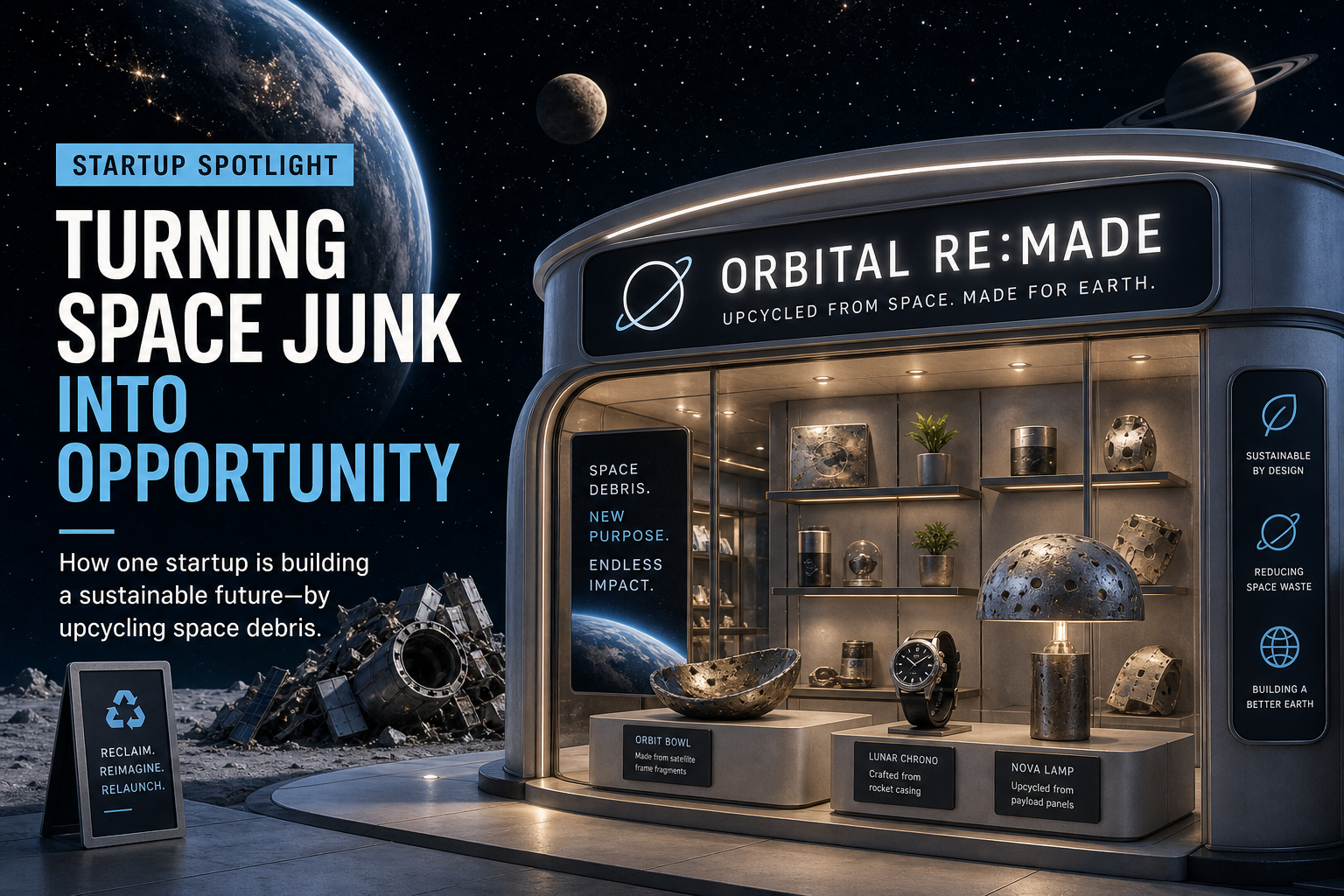
- Product Development: Creating consumer goods from upcycled materials, such as jewelry, art, or home decor items, which can be marketed as unique and environmentally friendly.
- Carbon Tracking Technology: Implementing technology that tracks the carbon footprint of products made from space debris, appealing to environmentally conscious consumers.
- Partnerships with Space Agencies: Collaborating with governmental and private space entities to facilitate the collection and processing of debris.
- Educational Initiatives: Developing programs to raise awareness about space debris and its environmental impact, potentially creating additional revenue streams through workshops and seminars.
Investment Landscape
The interest from venture capitalists in the space debris management sector is indicative of the potential for high returns. Investors are increasingly looking for opportunities that not only promise financial gains but also align with sustainable practices. The unique nature of upcycling space debris presents a compelling narrative that can attract funding.
However, due diligence is essential. Investors must assess the technological feasibility of proposed solutions, the regulatory landscape governing space activities, and the competitive dynamics within the industry. Startups must also demonstrate a clear path to profitability, as the novelty of their products may not guarantee market acceptance.
Challenges and Risks
While the prospects for upcycling space debris are promising, several challenges must be addressed:
- Regulatory Hurdles: The legal framework surrounding space debris management is still evolving. Startups must navigate complex regulations that govern space activities and debris mitigation.
- Technological Feasibility: The processes required to collect, process, and upcycle space debris are still in their infancy. Significant investment in research and development will be necessary to create viable products.
- Market Acceptance: Educating consumers about the value and safety of products made from space debris will be crucial for market penetration.
Strategic Considerations for Founders
For entrepreneurs entering the space debris upcycling market, strategic planning is essential. Founders should focus on building a strong brand that emphasizes sustainability and innovation. Engaging with stakeholders, including space agencies, environmental organizations, and potential consumers, will be vital in establishing credibility.
Additionally, leveraging technology to enhance product transparency and sustainability can differentiate offerings in a crowded market. As consumer awareness of environmental issues continues to grow, startups that can effectively communicate their value proposition will be better positioned for success.
Conclusion
The market for space debris management and upcycled commerce represents a unique intersection of sustainability and innovation. As this sector evolves, it holds the potential to not only address the pressing issue of space debris but also to create new economic opportunities. Entrepreneurs and investors who navigate the challenges with diligence and creativity may find themselves at the forefront of a transformative industry.
Editor's note: This article is original market analysis and does not constitute investment advice.
What's Your Reaction?
 Like
0
Like
0
 Dislike
0
Dislike
0
 Love
0
Love
0
 Funny
0
Funny
0
 Angry
0
Angry
0
 Sad
0
Sad
0
 Wow
0
Wow
0