



Startups: 'Us' Over 'Me,' Success Hinges on Teamwork
Like the line, "I am not a singular entity," our identity transcends subjectivity and is the sum total of various forms existing in the memories of others. This applies just the same to founders. In the early stages of a startup, a founder...

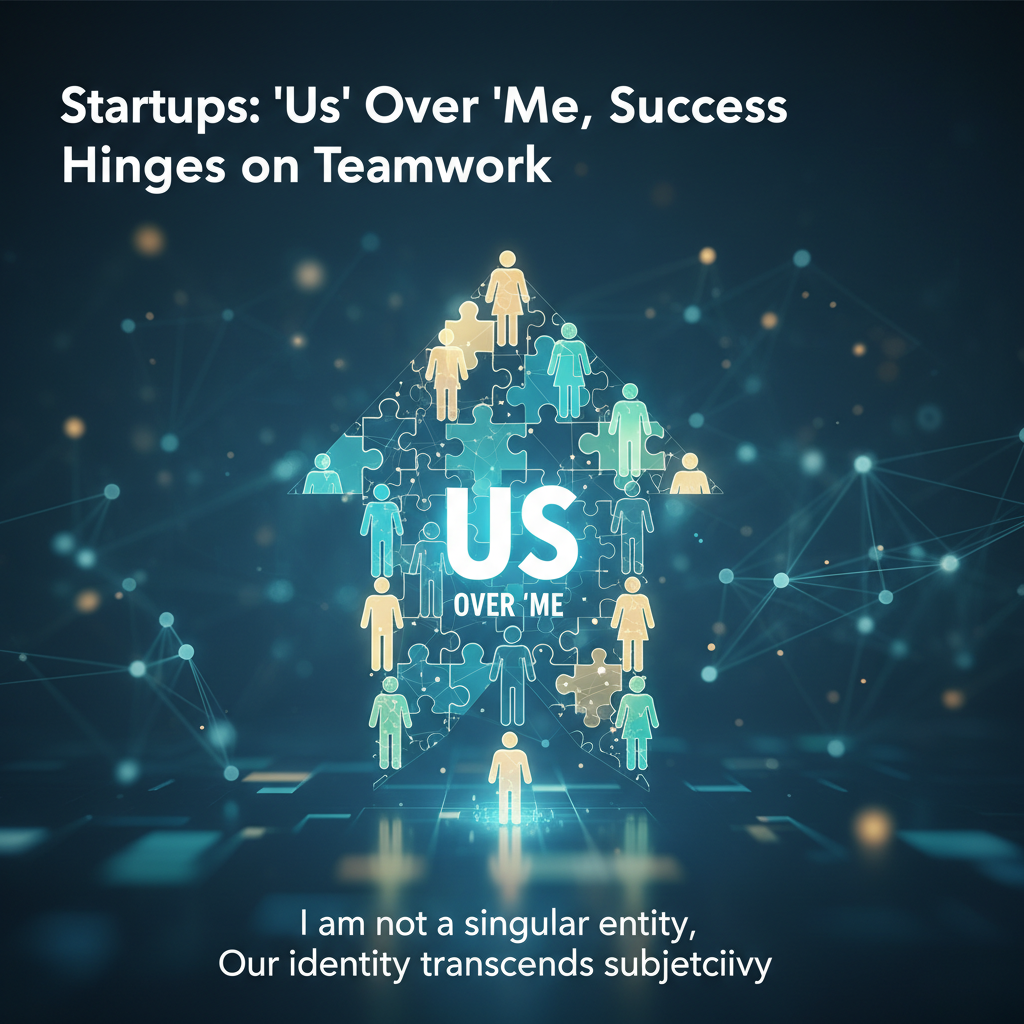
Like the line, "I am not a singular entity," our identity transcends subjectivity and is the sum total of various forms existing in the memories of others. This applies just the same to founders.
In the early stages of a startup, a founder is a simple being who, along with co-founders, acts as a 'builder' creating from 0 to 1. However, as the company grows, various stakeholders such as investors, employees, and customers emerge, and the founder faces multiple roles where they must simultaneously satisfy these conflicting expectations. In the process of choosing which 'self' to prioritize at each moment, the founder's intrinsic nature is revealed.
Some founders excel in the builder role of product development and early growth. In the organizational scale-up phase, they recognize their strengths and pass the baton to professional managers, leading the company further. Even after an exit, they might found another startup, repeating the 0-to-1 process, or transition to an investor role, providing support with an entrepreneurial perspective. Thus, founders go through multiple versions of themselves even along the axis of time.
Founders are often told they have "changed," but this is merely a natural growth process or the manifestation of latent aspects. Various facets such as early-stage builders, organizational leaders, and investors are ultimately components that constitute the complex entity known as a 'founder'. A founder is not singular; they are plural.
What's Your Reaction?
 Like
0
Like
0
 Dislike
0
Dislike
0
 Love
0
Love
0
 Funny
0
Funny
0
 Angry
0
Angry
0
 Sad
0
Sad
0
 Wow
0
Wow
0