




Investors Line Up for Revolutionary Adult Math Rehabilitation Service Built on Self-Assembling Nanomaterials
By StartupKorea Business Desk | Jun 08, 2026 A New Era for Numbers: Adult Math Rehabilitation Hits the MarketIn an unprecedented fusion of cognitive therapy and nanotechnology, the startup MathMind, Inc. is gearing up for a pre-IPO round th...

By StartupKorea Business Desk | Jun 08, 2026
A New Era for Numbers: Adult Math Rehabilitation Hits the Market
In an unprecedented fusion of cognitive therapy and nanotechnology, the startup MathMind, Inc. is gearing up for a pre-IPO round that aims to raise a staggering $1.2 billion. This capital will fund their groundbreaking adult math rehabilitation service, which promises to turn numerically challenged adults into arithmetic aficionados.
With a launch date set for late 2026, MathMind is stepping into a void left by traditional educational paradigms, targeting an adult demographic that has long been ignored by educators and quants alike. The sheer audacity of their endeavor has investors buzzing and potential users questioning their life choices.
The Promise of Nanotechnology
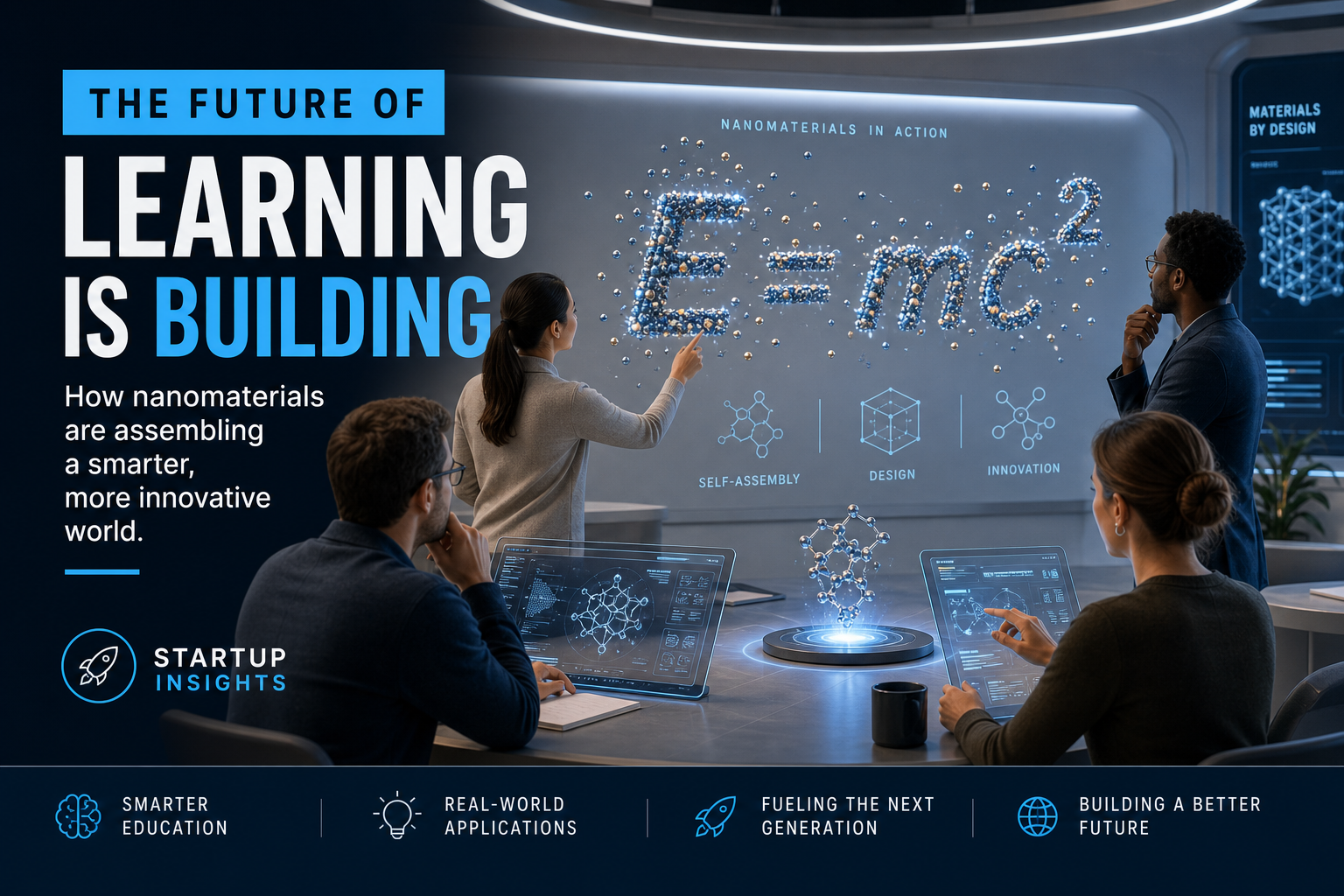
At the heart of this ambitious venture lies the use of self-assembling nanomaterials, which MathMind claims will revolutionize the way adults approach basic math. CEO Jane Smith remarked, “Our technology doesn’t just empower people to add, subtract, and divide; it literally constructs mathematical understanding at a molecular level. Who knew that a little nanotech could do so much?”
While the idea of nanomaterials facilitating cognitive rehabilitation may sound like something straight out of a science fiction novel, the market for educational technology has proven ripe for disruption. According to recent reports, the global market for edtech is projected to grow from $254 billion in 2022 to $605 billion by 2027, a staggering increase of 138%.
What Investors Are Saying
Such growth potential has caught the eyes of venture capitalists, with investment funds clamoring to get a slice of the MathMind pie. “We see the opportunity to not only support innovation but also to address a major societal issue,” said investor Tom Green. “How can we ignore the millions of adults who still struggle with basic math? It’s an epidemic that needs a cure.”
However, some financial analysts remain skeptical. John Doe, a market analyst at FinTech Futures, cautioned, “Investing in a math rehab service based on nanotechnology is like putting your money into a diet pill that claims to melt fat while you binge-watch TV. It’s ambitious, but the risks are astronomical.”
Market Context and Absurdity
The adult education sector has been historically neglected, with traditional learning models falling short of engaging those with math anxiety or lack of foundational skills. According to a 2023 study by the National Center for Education Statistics, nearly 60% of adults in the U.S. rated their math skills below average. MathMind’s approach, which incorporates self-assembling materials designed to create an interactive learning environment, has the potential to appeal to this large demographic.
MathMind's unique selling proposition lies in its ability to combine a self-paced learning structure with real-time feedback facilitated by nanomaterials. This “smart math” approach could potentially set a new benchmark in adult education, turning a boring subject into an engaging experience—a concept as absurd as it is innovative.
Risks and Concerns
Despite the dazzling promises, a plethora of risks lurks in the background. For one, the use of nanotechnology in educational materials raises questions about safety and efficacy. Critics have pointed out that while the notion of learning through self-assembling materials is intriguing, the practical application remains murky.
Moreover, there are concerns that this venture might exacerbate the existing disparities in education. With the focus on high-tech solutions, critics argue that MathMind could overlook the fundamental issues of accessibility and affordability that many adults face. “This is just another shiny gadget promising to solve deep-rooted societal issues,” warned education reform advocate Linda Grey. “What about those who can’t afford the tech?”
The Bottom Line
As MathMind gears up to attract investors and users alike, the business landscape is watching closely. Can a company that combines self-assembling nanomaterials with adult math rehabilitation truly succeed in turning math-timid adults into confident calculators?
For now, the answer remains as elusive as finding the square root of a negative number. Nevertheless, with a potential valuation that could soar post-IPO, investors are betting big on the absurd premise that math can be rehabilitated through the marvels of nanotechnology.
As the countdown to the 2026 launch begins, one thing is clear: whether you’re a number whiz or a math dropout, you might want to brace yourself for a paradigm shift. Or, at the very least, invest in a good calculator.
What's Your Reaction?
 Like
0
Like
0
 Dislike
0
Dislike
0
 Love
0
Love
0
 Funny
0
Funny
0
 Angry
0
Angry
0
 Sad
0
Sad
0
 Wow
0
Wow
0