





From Climate Refugees to High-Tech Wearables: The Start-Up You Didn't Know You Needed
By StartupKorea Business Desk | Apr 18, 2026 Start-Up Aims to Bridge Climate Refugees with Wearable Tech: A $80 Million Bet on the AbsurdIn a surprising twist on the age-old tale of survival, a new start-up has secured an astonishing $80 mi...

By StartupKorea Business Desk | Apr 18, 2026
Start-Up Aims to Bridge Climate Refugees with Wearable Tech: A $80 Million Bet on the Absurd
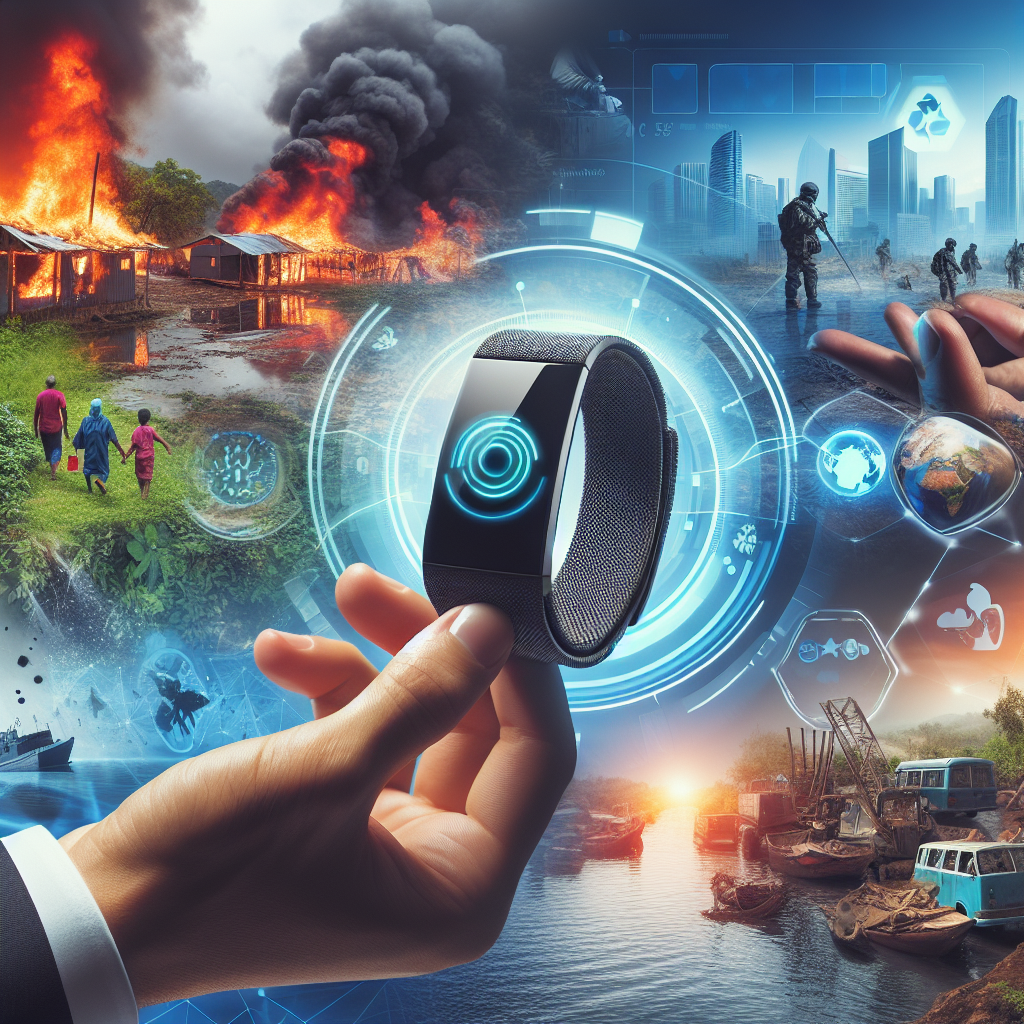
In a surprising twist on the age-old tale of survival, a new start-up has secured an astonishing $80 million in angel investment for a platform designed to settle climate refugees using cutting-edge wearable technology. Known as RefugeeWear, this audacious initiative seeks to alleviate the plight of those displaced by climate change while simultaneously capitalizing on the latest trend in fashion tech.
The Venture Behind the Venture
RefugeeWear, founded by the enterprising Maxine Green, is set to launch its pilot program later this year. The platform aims to provide climate refugees with smart wearable devices that not only track their location but also record their memories, presumably to be shared later in a heartwarming TikTok montage.
"Our goal is to blend humanitarian aid with the latest in consumer technology. Why rebuild communities when you can wear your memories as a fashion statement?" Green quipped during an exuberant press conference.
Market Context: A Perfect Storm of Investment and Desperation
The timing for such a venture could not be more serendipitous—or absurd. According to a recent report from the Global Displacement Forum, climate change is expected to displace over 200 million people by 2050. This alarming statistic has prompted investors to seek innovative solutions, such as RefugeeWear, whose business model hinges on selling the idea of 'memory wearables' to both refugees and the guilt-ridden affluent.
Market analysts are watching closely, with projections indicating that the wearable technology market is set to reach $62 billion by 2025, a number only eclipsed by the collective guilt of every upper-middle-class American who has scrolled through their feed and felt the urge to contribute positively to society.
Investors Jump on Board: A Leap of Faith or a Leap of Absurdity?
The $80 million angel investment has garnered attention from a diverse group of backers, including venture capitalists who believe that the intersection of social impact and high-tech wearables is the next big thing. "Investing in RefugeeWear is not just about profits – it's about being part of the solution, even if the solution is bafflingly impractical," said investor James Altman, who sees the wearable tech space as a fertile ground for 'socially conscious' wealth generation.
Risks and Rewards: What Could Possibly Go Wrong?
However, critics are quick to point out the inherent risks in this model. Critics have raised eyebrows at the notion of commodifying the suffering of climate refugees, suggesting that wearing memories may not be the most effective means of empathy. Social analyst Rebecca Chen remarked, "It’s one thing to acknowledge the climate crisis; it’s another to fashion it into a trendy wearable. What’s next? AirPods that narrate your refugee journey in real-time?"
Furthermore, the effectiveness of the wearable technology remains untested, raising questions about privacy and the potential for data exploitation. Will these refugees simply become walking advertisements for guilt-ridden consumers?
The Opposition: A Mixed Bag of Delusion and Realism
While some hail RefugeeWear as a revolutionary solution, others see it as a misguided attempt to profit off human despair. The juxtaposition of high-tech wearables designed for those who have lost everything presents a unique ethical dilemma, as investors weigh the potential for profit against the moral implications of such a venture.
"RefugeeWear is perhaps the most audacious intersection of tech and humanitarianism I’ve ever seen," stated industry analyst Paul Jennings. "But the reality is, no device can replace the need for genuine, sustainable solutions to climate displacement. It feels more like a tech-savvy band-aid than a solution."
Conclusion: Navigating the Absurdity of Modern Solutions
As RefugeeWear prepares to roll out its pilot program, the broader implications of this venture remain to be seen. Can a wearable device that records memories truly offer solace to those who have lost their homes? Or is this yet another example of the tech industry trying to solve problems it may not fully understand?
In the end, one thing is clear: the intersection of climate change, technology, and investment has never been more absurdly rich with potential. As we navigate these turbulent waters, perhaps the most significant lesson is that when it comes to humanitarian efforts, a little absurdity goes a long way—especially if it's wrapped in a sleek, techy exterior.
What's Your Reaction?
 Like
0
Like
0
 Dislike
0
Dislike
0
 Love
0
Love
0
 Funny
0
Funny
0
 Angry
0
Angry
0
 Sad
0
Sad
0
 Wow
0
Wow
0