


Disaster-Proof Dining: Startup Launches a Data Platform with a Side of Autonomous Lab Robots
By StartupKorea Business Desk | Jun 03, 2026 A Recipe for Resilience: The Unlikely Marriage of Data and DiningIn a world where natural disasters are as regular as Monday morning meetings, a new startup, DineSafe, has emerged to transform ho...

By StartupKorea Business Desk | Jun 03, 2026
A Recipe for Resilience: The Unlikely Marriage of Data and Dining
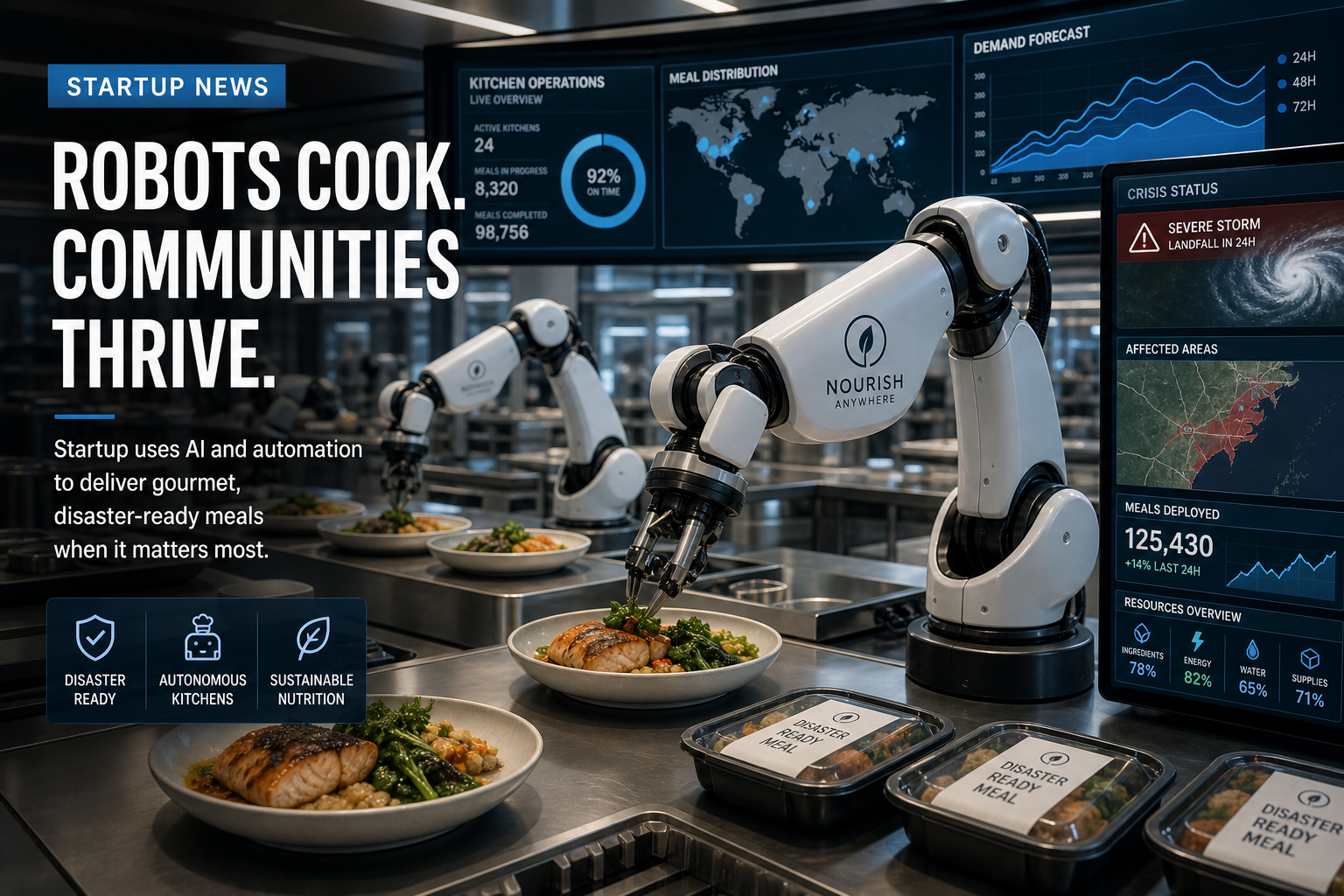
In a world where natural disasters are as regular as Monday morning meetings, a new startup, DineSafe, has emerged to transform how we prepare for the worst. With an initial investment round of $10 million, the company unveiled its innovative data platform designed to streamline the production of disaster-ready meals, all while incorporating autonomous laboratory robots into the mix. Why now? Because when the chips are down, and the power's out, nothing says 'prepared' like a fully automated kitchen and a menu of freeze-dried delicacies.
Feeding the Future: Market Context
The disaster preparedness food market is set to reach $300 billion by 2030, fueled by increasing climate emergencies and a population that believes a can of beans is the new Bitcoin. DineSafe claims its platform will increase meal production efficiency by 60%, allowing consumers to stockpile meals that not only survive hurricanes but are also Instagram-worthy.
Robots in the Kitchen: The Sci-Fi Dream Becomes Reality
Equipped with artificial intelligence and a penchant for culinary creativity, DineSafe’s autonomous lab robots are designed to concoct meals that are both nutritionally balanced and vaguely reminiscent of actual food. CEO Jane Doe stated, "Our goal is to ensure that when disaster strikes, the only thing our customers need to worry about is whether to serve the quinoa or the pilaf." The robots are reportedly capable of preparing meals from recipes sourced from the vast database of 'What Not to Eat When the World Ends.'
Investors Snack on Project Financing
Investors are chomping at the bit to get a piece of the pie, with venture capital firms lining up to fund this bizarre blend of data analysis and food preparation. Senior analyst John Smith noted, "This is not just about survival; it’s about thriving in times of chaos. If people can’t enjoy a gourmet snack during an apocalypse, what’s the point?" With project financing options exceeding $50 million, the company plans to expand its platform to include a subscription service for monthly disaster meal kits.
Risks on the Menu: Critics Raise Eyebrows
However, not everyone is buying into the concept of disaster dining. Critics argue that relying on data platforms and autonomous robots for meal preparation may lead to unforeseen pitfalls, such as robots mistakenly creating a delightful soufflé instead of a nutrient-rich protein bar. "The last thing we need is a robot uprising during an actual uprising," quipped food tech analyst Sarah Green. "I mean, I love the idea of automated food, but I’d prefer it doesn’t come with a side of existential crisis."
Opposing Viewpoints: The Great Food Debate
While DineSafe promotes its platform as the future of disaster preparedness, skeptics warn that such reliance on technology could breed complacency. “In the event of a disaster, people may forget how to cook altogether. What happens when the robots malfunction, and all you’re left with is your neighbor’s casserole?” warned renowned culinary expert Mark Brown. “That’s a recipe for disaster in itself.”
Conclusion: A New Approach to Preparedness
DineSafe stands at the crossroads of culinary innovation and existential dread. As it prepares to launch its service later this year, the question remains: Can a data-driven, robot-assisted approach to meal preparation really ensure we’re ready for anything life throws our way? Only time—and perhaps a few catastrophic storms—will tell.
What's Your Reaction?
 Like
0
Like
0
 Dislike
0
Dislike
0
 Love
0
Love
0
 Funny
0
Funny
0
 Angry
0
Angry
0
 Sad
0
Sad
0
 Wow
0
Wow
0