




Analyzing the Potential of Self-Healing Materials in the Startup Ecosystem
By Startup Korea Research Desk | May 22, 2026 The advancement of technology has consistently driven innovation across various sectors, yet the emergence of self-healing materials represents a particularly intriguing frontier. These materials, ca...

By Startup Korea Research Desk | May 22, 2026
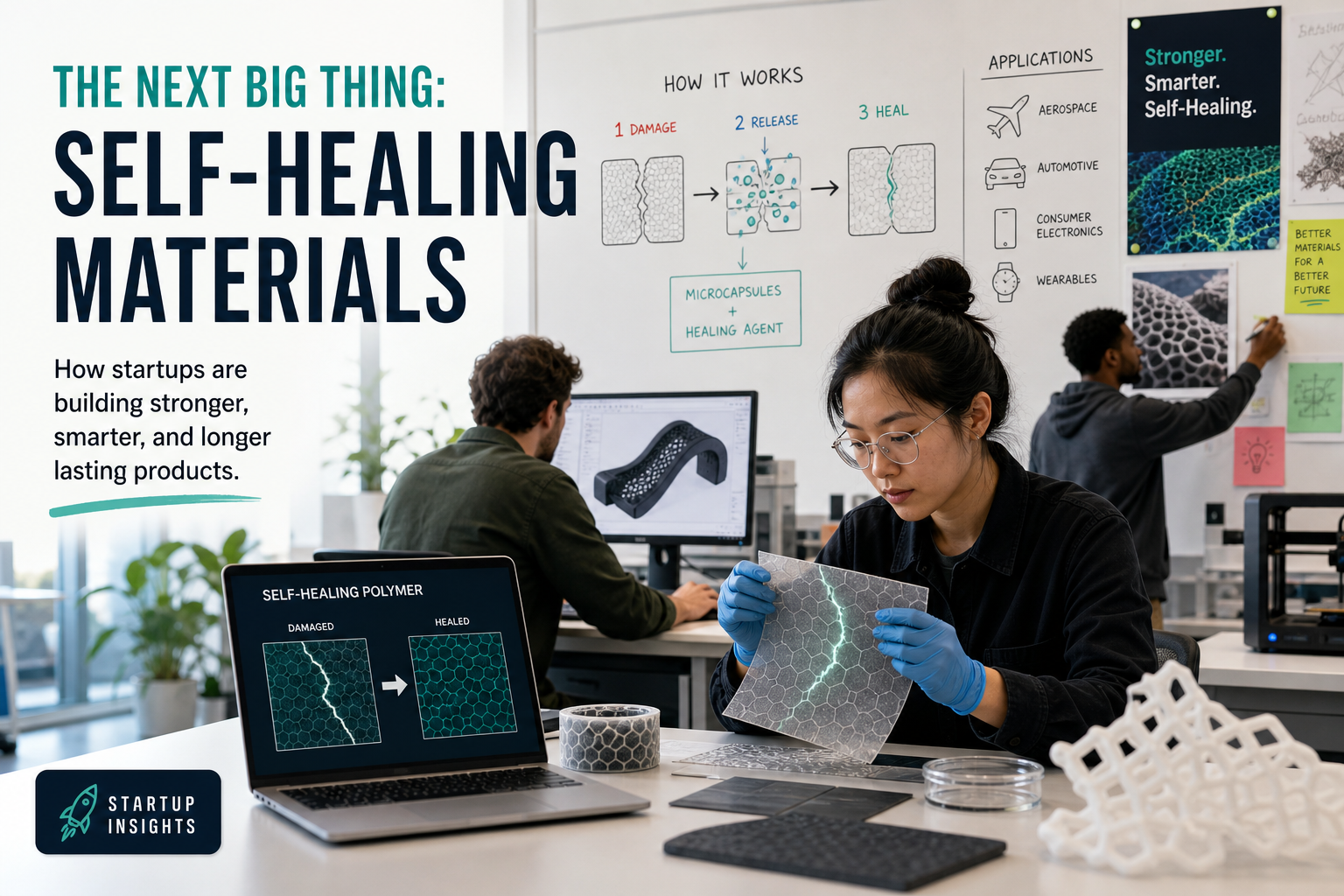
The advancement of technology has consistently driven innovation across various sectors, yet the emergence of self-healing materials represents a particularly intriguing frontier. These materials, capable of autonomously repairing damage, have the potential to transform industries ranging from construction to consumer electronics. This analysis explores the market dynamics, business models, adoption risks, and strategic considerations surrounding self-healing materials, particularly in light of recent developments from emerging startups.
Market Dynamics: Growth Opportunities and Projections
The global market for self-healing materials is experiencing significant growth, with projections indicating an increase from $1.4 billion in 2022 to approximately $4.5 billion by 2027. This growth represents a compound annual growth rate (CAGR) of around 27%. Such figures highlight the increasing interest from both consumers and industries in sustainable and durable materials. As environmental concerns rise, the appeal of products that can self-repair and extend their lifecycle becomes more pronounced.
Business Models: Innovation and Sustainability
Startups entering the self-healing materials space are adopting various business models to capitalize on this trend. Some focus on direct-to-consumer sales, targeting industries that prioritize sustainability and durability. Others may pursue B2B partnerships, supplying self-healing materials to manufacturers in sectors such as automotive, aerospace, and electronics.
For instance, a startup might develop a self-healing polymer that can be integrated into smartphone cases or automotive components. By emphasizing the long-term cost savings and environmental benefits of using self-healing materials, these companies can position themselves as leaders in a market increasingly driven by sustainability.
Adoption Risks: Challenges in Implementation
Despite the promising outlook, the adoption of self-healing materials is not without challenges. One significant risk is the technological maturity of these materials. Many self-healing technologies are still in the experimental phase, and their practical applications may not yet meet the rigorous standards required by industries such as aerospace or healthcare.
Moreover, the cost of developing and producing self-healing materials can be high, potentially limiting their accessibility to larger companies with substantial R&D budgets. Startups must navigate these challenges carefully, ensuring that their products not only deliver on their promises but also remain economically viable.
Investor Diligence: Evaluating Opportunities
Investors are increasingly drawn to the self-healing materials sector, attracted by the potential for high returns in a rapidly growing market. However, due diligence is critical. Investors should assess the technological feasibility of a startup's offerings, the scalability of their business model, and the competitive landscape.
Furthermore, understanding the regulatory environment is essential, as self-healing materials may face scrutiny regarding safety and efficacy, particularly in sensitive applications. Investors must balance the excitement of innovation with a pragmatic evaluation of the risks involved.
Founder Strategy: Vision and Execution
For founders in the self-healing materials space, a clear vision and robust execution strategy are vital. This includes not only developing innovative products but also effectively communicating their value proposition to potential customers and investors. Founders should focus on building a strong brand that resonates with the growing consumer demand for sustainability and durability.
Additionally, establishing partnerships with established companies can provide startups with the necessary resources and market access to scale their operations. Collaborations with research institutions can also enhance credibility and accelerate product development.
Conclusion: The Future of Self-Healing Materials
As the market for self-healing materials continues to expand, startups operating in this space must navigate a complex landscape of opportunities and challenges. By focusing on sustainable business models, addressing adoption risks, and executing effective strategies, these companies can position themselves for success in a transformative market.
Editor's note: This analysis is original market analysis and not investment advice.
What's Your Reaction?
 Like
0
Like
0
 Dislike
0
Dislike
0
 Love
0
Love
0
 Funny
0
Funny
0
 Angry
0
Angry
0
 Sad
0
Sad
0
 Wow
0
Wow
0