
Startup Promises Parental Peace of Mind: Automated AI Check-Ins for the Millennial Generation—Is This What We Really Need?
By StartupKorea Business Desk | Apr 01, 2026 AI-Driven Peace of Mind: The Latest Startup Shakes Up ParentingIn an age where anxiety is as common as avocado toast, a new startup has taken parental automation to dizzying heights, announcing a...

By StartupKorea Business Desk | Apr 01, 2026
AI-Driven Peace of Mind: The Latest Startup Shakes Up Parenting
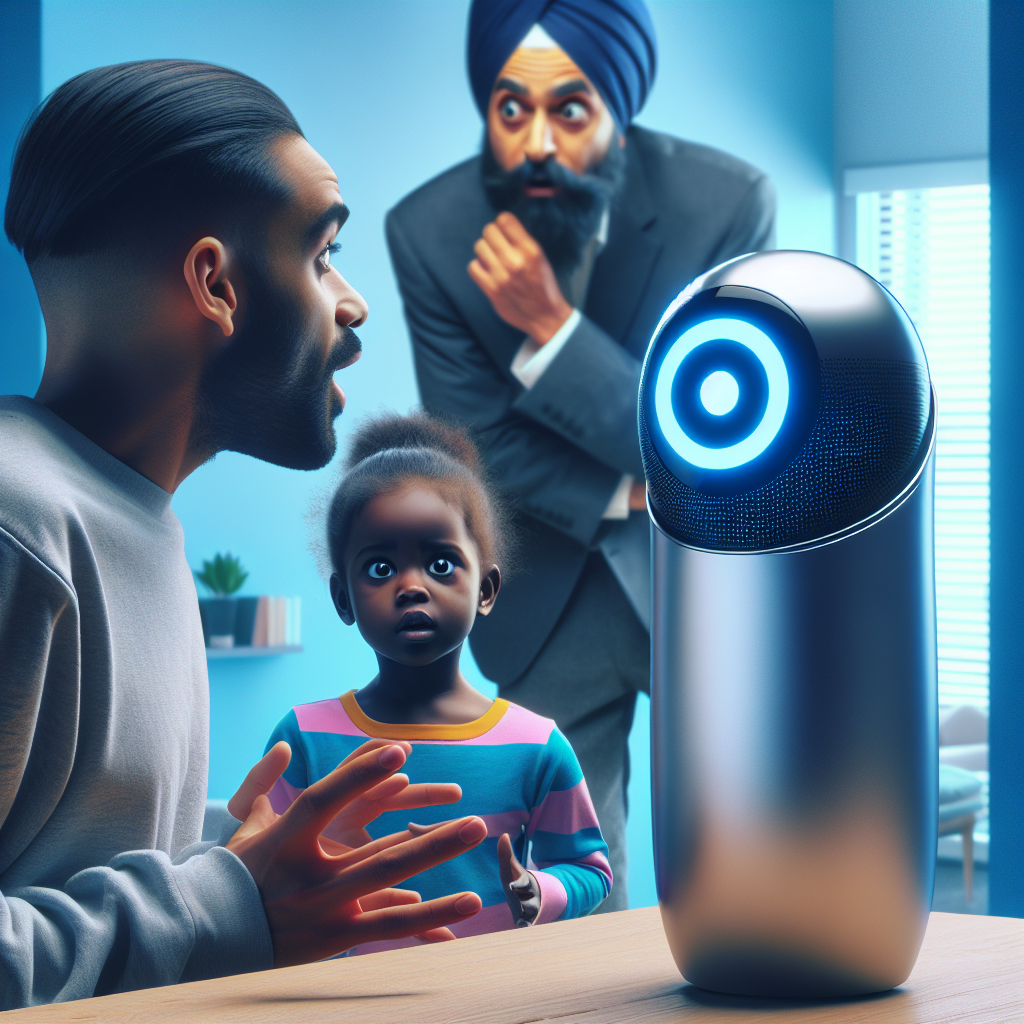
In an age where anxiety is as common as avocado toast, a new startup has taken parental automation to dizzying heights, announcing a pre-IPO funding round of 1.2 trillion won ($1 billion) to support its AI-driven communication platform. This innovative solution promises to check in on children, sending automated messages to parents designed to replicate the warmth of a loving mother while minimizing the need for actual human interaction. Naturally, one must wonder: is this progress or just another manifestation of our increasingly disconnected society?
Behavioral Economics Meets Parenting
The startup, dubbed "Parental AI", employs a behavioral economics experiment platform to determine just how much parental comfort can be squeezed from a few lines of code. Their algorithms reportedly analyze the emotional responses of users and adjust communication dynamics to foster a sense of connection—without any of that tiring 'face-to-face' nonsense.
“We aim to reduce parental anxiety by making automated communication feel personal,” explained CEO Jane Doe, who described herself as a verified “helicopter parent” before founding the company. “Why call every night when an AI can just text ‘Everything’s fine!’ with a digital smiley face?”
A Market Awash with Tech-Savvy Parents
Market analytics firm TechnoMetrics suggests that the demand for such services is rising. Reports show that over 64% of American parents express anxiety about their children's safety when not in their immediate vicinity. This presents a fertile ground for tech companies wishing to harvest parental fears and transform them into revenue.
“Investors are hungry for startups that can blend technology with emotional needs,” commented investment analyst John Smith. “If it alleviates even a sliver of parental worry, it’s bound to attract interest.”
What’s at Stake?
However, not everyone is on board with this brave new world of emotionally detached parenting. Critics argue that the rise of AI check-ins risks replacing genuine human connection with algorithmic convenience, a point poignantly articulated by sociologist Betty Bright. “We’re outsourcing parenting to machines; soon, we’ll have emotional robots before we have emotional maturity,” she said, shaking her head in disbelief.
The growth potential is tantalizing, yet so are the risks. A recent survey indicated that 57% of tech-savvy parents were concerned about their children’s emotional development in an age where digital interactions overshadow physical ones. Are we, in our quest for efficiency, neglecting the very essence of parenting?
The Financial Landscape: A Cautionary Tale
Investment in AI technology is projected to reach $500 billion globally by 2025, with a significant portion expected to flow into parenting-related applications. However, experts urge caution. The pre-IPO valuation of 1.2 trillion won may be a textbook example of the market’s irrational exuberance.
- Current market size for parental tech: $30 billion
- Projected growth rate: 15% annually
- % of parents using technology for child safety: 70%
“Savvy investors need to question whether the existing market is ripe for yet another round of AI ‘solutions’,” warned analyst Lisa Green. “After all, the last thing we need is for our children to be raised by a series of poorly programmed bots.”
Conclusion: A Brave New Parenting World?
As Parental AI gears up for its funding round, the startup may embody both the hopes and fears of a generation. In a world where parenting often feels like a high-stakes game, will AI be our greatest ally or our most insidious adversary? Only time—and perhaps a few awkward text conversations—will tell.
What's Your Reaction?
 Like
0
Like
0
 Dislike
0
Dislike
0
 Love
0
Love
0
 Funny
0
Funny
0
 Angry
0
Angry
0
 Sad
0
Sad
0
 Wow
0
Wow
0