



Revolutionizing Urban Design: Meet the Startup Using Microfactories to Redesign Cities—One Angel Investment at a Time
By StartupKorea Business Desk | Feb 20, 2026 Startup Launches Ambitious Eco-Platform for Citizen-Driven Urban RedesignIn a stunning development that could either revolutionize urban living or send city planners back to their drawing boards,...

By StartupKorea Business Desk | Feb 20, 2026
Startup Launches Ambitious Eco-Platform for Citizen-Driven Urban Redesign
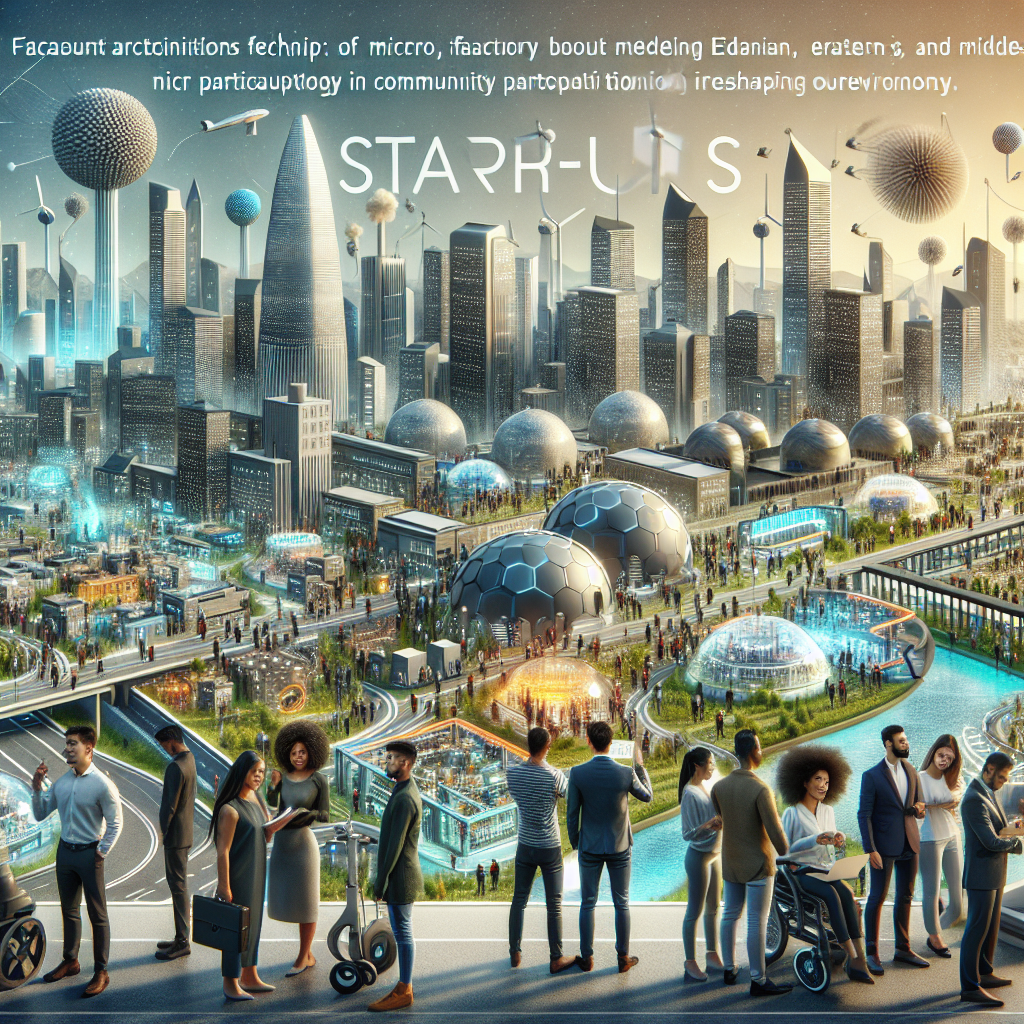
In a stunning development that could either revolutionize urban living or send city planners back to their drawing boards, a new startup has emerged with an audacious plan to leverage microfactory technology for citizen engagement in urban redesign. The company, dubbed CityMorph, secured an impressive 8 billion won in angel funding this week, aiming to capitalize on a growing trend of participatory urban development.
A Leap into the Microfactory Future
CityMorph's platform promises to empower citizens to actively partake in the redesign of their own neighborhoods, using a combination of innovative digital tools and microfactory production capabilities. “What better way to engage the community than by letting them build something in their own backyard?” mused CEO Jane Smith, possibly while contemplating the merits of DIY urbanism over traditional planning processes.
This investment comes at a time when urban centers grapple with issues ranging from housing shortages to climate change. According to recent data from the Urban Institute, cities are facing a staggering 20% increase in demand for affordable housing over the next decade, making CityMorph’s model both timely and tantalizingly absurd.
The Allure of Investment in Urban Innovation
The startup's angel round has attracted a range of investors, eager to back what might be the next big thing in urban development. “This is a rare opportunity to get in on the ground floor of something that could either be a blueprint for the future or a blueprint for chaos,” joked investor Mark Johnson, who seemed to be wrestling with the vicissitudes of optimism and skepticism inherent in startup culture.
With 8 billion won raised, CityMorph plans to roll out its platform across multiple cities, allowing citizens to submit designs, vote on proposals, and even contribute to the construction of these projects via their local microfactories. Clearly, there’s nothing like a little community chaos to inspire civic pride.
Market Context and Growth Opportunities
The urban redesign market, while still in its infancy, is projected to reach a staggering 300 trillion won by 2030, reflecting a 15% CAGR driven by the demand for sustainable and citizen-centric urban planning. As cities look to innovate, CityMorph’s approach stands as a beacon of hope—or a warning sign—depending on whom you ask.
“This is a market ripe for disruption, and CityMorph is positioning itself as the harbinger of that disruption,” noted industry analyst Kevin Liu. “But it’s a double-edged sword; if the designs are impractical, we could see a surge in urban ghost towns where the only inhabitants are the confused citizens wondering how their dreams of a floating park turned into a concrete jungle.”
Risks and Controversies Surrounding Citizen-Driven Design
However, the company is not without its critics. Opponents argue that this approach could lead to a disjointed urban landscape, where citizen whims override professional planning expertise. “It’s one thing to engage the public; it’s another to let them architect their own utopia,” stated urban planning professor Dr. Emily Clarke. “What happens when the neighborhood decides that giant rubber ducks should be the focal point of their park?”
Furthermore, concerns loom about the feasibility of microfactories themselves. These small-scale production units, while theoretically efficient, come with their own set of complexities and regulatory challenges. Will city ordinances allow for a mass production of artisanal lamp posts? Only time will tell.
The Future of Urban Living: A Paradox?
As CityMorph sets its sights on transforming urban landscapes into participatory playgrounds, the question remains—can a startup truly redesign cities through the whims of their citizens? Or are we simply ushering in a new era of public art projects gone awry?
In the world of urban innovation, where the lines between practicality and absurdity blur, CityMorph stands as both a cautionary tale and a promising venture. Whether it will succeed in fostering community engagement or simply create a patchwork of impractical designs remains to be seen.
- Investment: 8 billion won
- Projected market size: 300 trillion won by 2030
- Expected growth rate: 15% CAGR
As this narrative unfolds, investors, citizens, and urban planners alike will be watching closely—because in the world of city redesign, the only constant is change—and perhaps the occasional rubber duck.
What's Your Reaction?
 Like
0
Like
0
 Dislike
0
Dislike
0
 Love
0
Love
0
 Funny
0
Funny
0
 Angry
0
Angry
0
 Sad
0
Sad
0
 Wow
0
Wow
0