
Is Your Evening Energy Level the Next Big Investment? Meet the AI Predicting Post-Work Fatigue
By StartupKorea Business Desk | Mar 19, 2026 The Dawn of Fatigue Forecasting: A Startup's Bold Venture into Energy ManagementIn a move that has left both investors and productivity enthusiasts scratching their heads, a new startup has emerg...

By StartupKorea Business Desk | Mar 19, 2026
The Dawn of Fatigue Forecasting: A Startup's Bold Venture into Energy Management
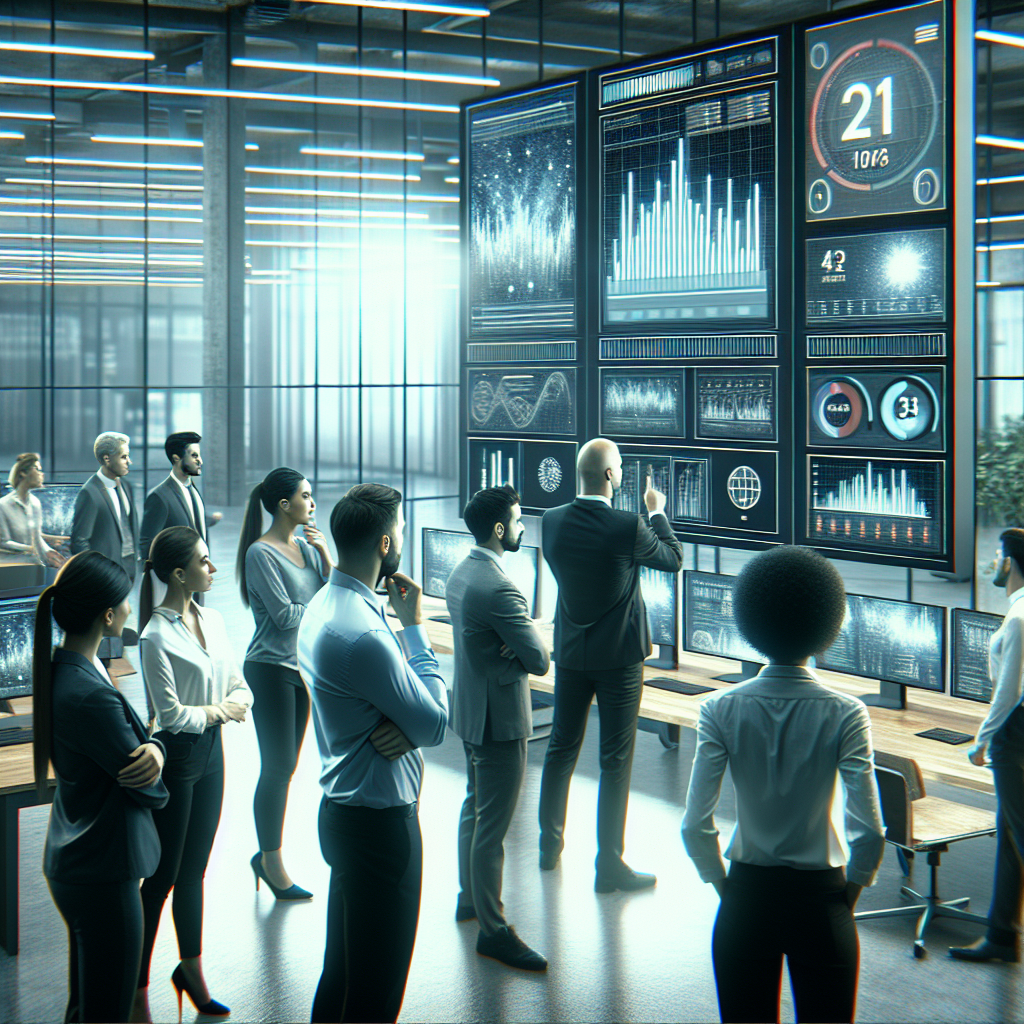
In a move that has left both investors and productivity enthusiasts scratching their heads, a new startup has emerged with a rather ambitious goal: to develop an AI-driven tool that predicts the energy levels of employees after a long day at work. Dubbed 'EnergyPredictor,' this platform is combining the latest in API autonomous design with a sprinkle of workplace wellness—because who doesn’t want a crystal ball for their post-9-to-5 fatigue?
Investors Line Up for the Next Big Thing in Post-Work Monitoring
After securing $10 million in seed funding from notable VCs, including the infamous venture fund 'Sleepy Capital,' EnergyPredictor's CEO, Zachary Loomis, proclaimed, "This isn’t just about predicting fatigue; it’s about revolutionizing how we think of work-life balance. Imagine knowing exactly how much energy you’ll have after a 12-hour slog at the office!" If that statement doesn’t scream 'please invest in my startup,' we don't know what does.
According to market research by the International Institute of Overly Optimistic Forecasts (IIOOF), the wellness tech market is set to reach an astounding $200 billion by 2027, spurred on by increasing awareness of mental health and the looming specter of burnout. EnergyPredictor, with its audacious claim of achieving 95% accuracy in fatigue prediction through its proprietary algorithms, is betting on a slice of that pie.
An API Engine for Your Exhaustion: How Does It Work?
At the heart of this venture lies its API autonomous design engine, ingeniously designed to aggregate data from various sources: calendar events, weather conditions, and even your average caffeine intake. It will then generate a fatigue score—akin to a credit score, but instead of determining your eligibility for loans, it’ll help you decide between that Netflix binge or an early night’s sleep.
But the brilliance of this system lies in its simplicity: users can input their work schedule, and voilà—the AI spits out a precise energy level forecast. Loomis adds, "Our goal is to make sure you know whether to hit the gym or just hit the couch. After all, how else will you know if you should tackle that post-work project or embrace the art of couch potato-ing?"
Risks and Skepticism: Can Data Really Predict Human Energy?
However, amidst the hype and euphoric investment responses, some analysts remain skeptical. Claire Donovan, a tech analyst at The Realist Group, remarked, "While the desire to quantify feelings is commendable, can we trust an algorithm to understand the complexities of human energy levels? What happens when the AI predicts a burst of energy on a Friday evening, and you find yourself still stuck at work?"
The concept of predicting human behavior through data is a minefield of potential pitfalls. Critics point out that the vast array of variables impacting post-work energy—from personal life stressors to the last-minute workload—could render any algorithm less reliable than a weather forecast.
Project Financing: The New Gold Rush?
With the startup now seeking an additional $50 million in project financing to expand its beta testing to corporations nationwide, debates on the viability of investing in fatigue prediction technology continue to brew. Loomis, ever the optimist, stated, "Companies are already investing in employee wellness initiatives. Why not invest in the next logical step: predicting how drained employees will feel? It’s like a crystal ball for office morale!"
In an economy where businesses are rapidly pivoting to prioritize employee well-being, the question remains whether EnergyPredictor will be the next unicorn or another overhyped venture. The internal struggle of investing in a startup that aims to predict when you’ll be too tired to care is a dilemma many investors are now grappling with.
Conclusion: A Future of Predictive Fatigue?
As companies scramble to enhance productivity while keeping their employees rested, the rise of AI fatigue prediction may just be the absurd innovation we didn’t know we needed. Whether it will lead to less burnout, more couch time, or simply more confusing data points remains to be seen.
As we navigate this new frontier, one thing’s for sure: the journey of EnergyPredictor is bound to be as unpredictable as an employee’s energy level on a Monday morning.
What's Your Reaction?
 Like
0
Like
0
 Dislike
0
Dislike
0
 Love
0
Love
0
 Funny
0
Funny
0
 Angry
0
Angry
0
 Sad
0
Sad
0
 Wow
0
Wow
0