
Is Your AI Assistant Nagging You? Meet the New Startup That Promises to Guilt You into Action
By StartupKorea Business Desk | Mar 24, 2026 A New Dawn for Procrastination: AI Nagging Services Take Center StageIn a world where smart devices are increasingly capable of offering unsolicited advice, a new startup has taken it upon themse...

By StartupKorea Business Desk | Mar 24, 2026
A New Dawn for Procrastination: AI Nagging Services Take Center Stage
In a world where smart devices are increasingly capable of offering unsolicited advice, a new startup has taken it upon themselves to elevate nagging to a fine art. Launching in March 2026, the AI Nagging Service, founded by tech mogul Jane Smith, has already secured $15 million in funding to develop a network of AI bots designed to personally remind users about all the things they would rather forget—like paying bills, hitting the gym, or calling their mother.
The Urgency of Nagging
With procrastination rates skyrocketing during the pandemic, the timing could not be more perfect. As households juggle remote work and the allure of Netflix, the average American now takes an estimated 84 days longer to accomplish tasks than they did pre-2020. “Our AI doesn’t just remind you; it understands your behavioral patterns and knows precisely how to guilt-trip you into action,” Smith explained, her eyes gleaming with enthusiasm.
A Flood of Data: The Tech Behind the Nagging
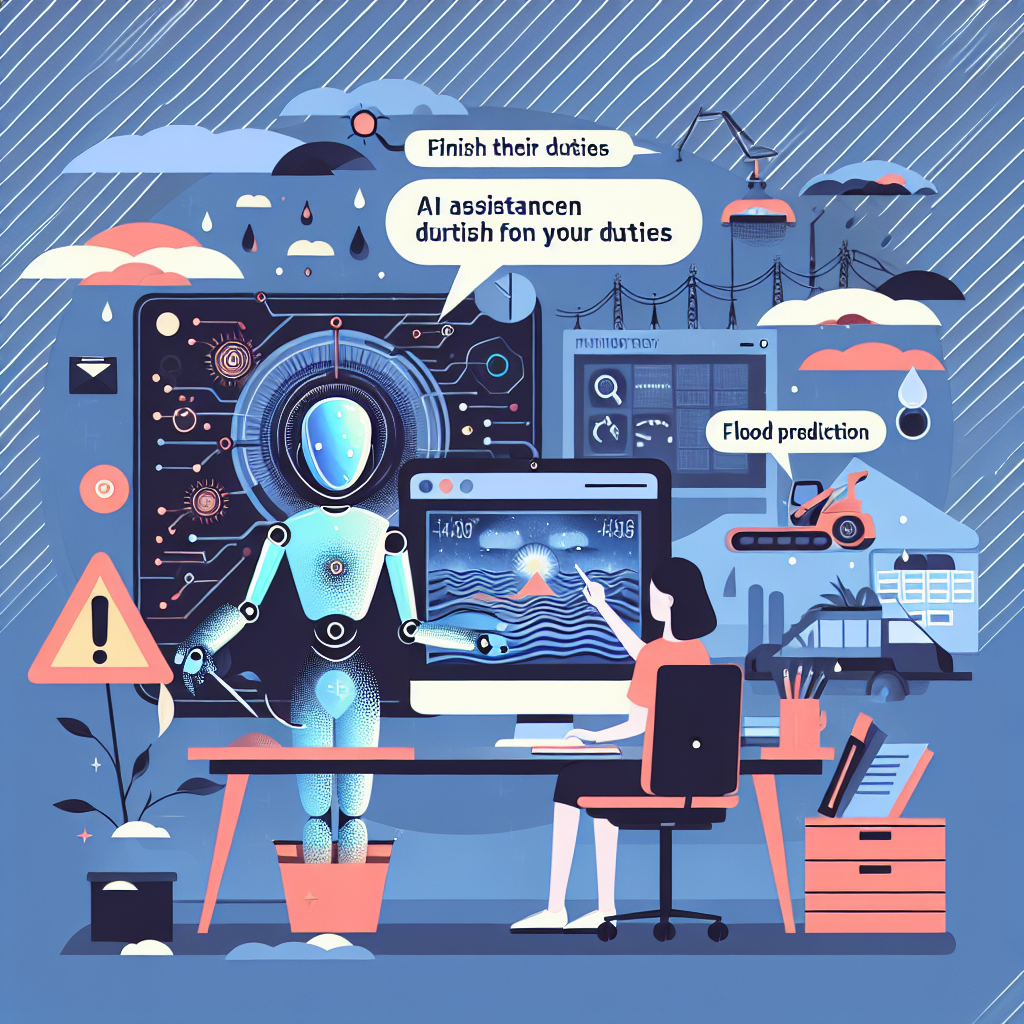
In a surprising twist, the firm has integrated flood prediction sensor networks into their AI platform, claiming that monitoring real-time environmental conditions can help tailor nudges that resonate with users’ emotional states. “We’ll send you a notification about your overdue tasks while reminding you that heavy rainfall could flood your basement. Talk about motivation!” quipped lead developer Mark Johnson.
Investors Dive into the Nonsense
While many might meet this concept with skepticism, investors are jumping into the fray. Venture capitalists have poured in funding, not just for the AI nagging service but also for its ambitious flood prediction tech, which could save lives—though the nagging might not be as life-saving. “We see this as the future of behavioral finance; it’s not just about managing money, it’s about managing people’s lives,” stated investor Lila Chen, adding a touch of gravity to the otherwise lighthearted narrative.
Market Context: A Guilt Trip Worth Taking?
As of late 2025, the market for AI-assisted technologies was valued at approximately $190 billion, with expectations to reach $500 billion by 2028. The nagging niche of this sector remains largely untapped, with analysts predicting a demand surge as remote work solidifies itself into company culture.
- Estimated procrastination costs Americans $200 billion annually
- AI market projected growth: 162% over the next three years
- Investor interest in behavioral tech increasing 37% year-on-year
Risks and Constraints: A Double-Edged Sword
Despite the exciting potential, there are inherent risks in monetizing human behavior. Critics argue that AI nagging could lead to burnout or rebellion against technology. “When your digital assistant starts sounding like your mother, it might be time to unplug,” cautions Dr. Emily Carter, a behavioral economist. “We need to tread carefully; the line between helpful and harmful is razor-thin.”
Opposing Viewpoints: Is Nagging Really Necessary?
Moreover, there is a growing chorus questioning the ethical implications of using AI for nagging. Some industry experts believe this reflects a fundamental flaw in personal responsibility. “If you need an AI to remind you to pay your bills or call your mother, maybe you need to rethink your priorities,” stated tech analyst Rob Wilkins, who may or may not have been projecting his own procrastination issues.
Conclusion: The Future is Nagging
As the AI Nagging Service prepares its launch, the world awaits with bated breath—or perhaps with a sense of impending dread. With an innovative approach that mixes behavioral science with tech wizardry, it seems the only thing we can truly count on is that we will never be free from the judgment of our devices. Whether this new venture will lead to improved productivity or just more stress remains to be seen, but one thing is for sure: the future will certainly come with a side of guilt.
What's Your Reaction?
 Like
0
Like
0
 Dislike
0
Dislike
0
 Love
0
Love
0
 Funny
0
Funny
0
 Angry
0
Angry
0
 Sad
0
Sad
0
 Wow
0
Wow
0