



Elderly-Friendly Robots: The Future of Care or Just a Tech-Savvy Gimmick? $300M Investment Pours In
By StartupKorea Business Desk | Mar 09, 2026 Robots to the Rescue: $300 Million to Redefine Elderly CareIn a bold move that may or may not redefine the future of elder care, the newly minted startup, RoboCare Interface Lab, announced a stag...

By StartupKorea Business Desk | Mar 09, 2026
Robots to the Rescue: $300 Million to Redefine Elderly Care
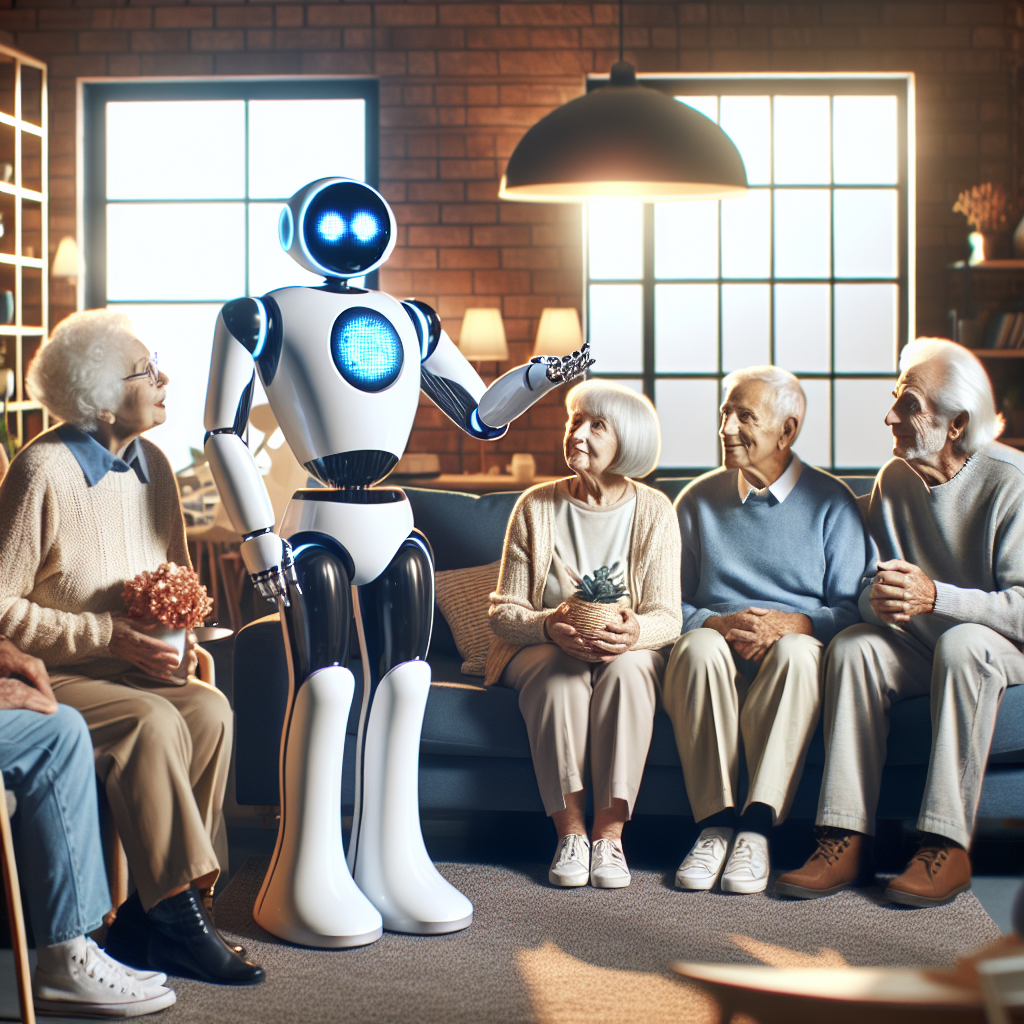
In a bold move that may or may not redefine the future of elder care, the newly minted startup, RoboCare Interface Lab, announced a staggering $300 million strategic investment today. This investment from a consortium of forward-thinking venture capitalists aims to elevate the prospects of elderly-friendly robots equipped with state-of-the-art BLE-UWB hybrid tracking technology. Why now? Perhaps because nothing says "I care" quite like a robot hovering over your grandmother while ensuring she doesn’t wander off into the wild unknown of her living room.
The Investment Landscape: A Gold Rush or a Red Herring?
The infusion of $300 million is poised to make RoboCare a leading player in a burgeoning market projected to reach $10 billion by 2030, according to Market Research Group. Investors seem to be convinced that connecting seniors with robots is the key to happiness, or at least a viable alternative to human interaction. As Bob D. Clever, RoboCare's CEO, stated, "We’re not just selling robots; we’re selling peace of mind. Plus, who wouldn’t want a robot to remind them to take their pills?"
Technology: The BLE-UWB Hybrid Tracking Marvel
Equipped with BLE-UWB hybrid tracking capabilities, RoboCare's robots are designed to monitor the movements of elderly users with pinpoint accuracy. This technology promises to ensure that seniors will never again lose their way—unless, of course, they decide to embark on a spontaneous adventure to the kitchen. Analysts are divided on the effectiveness of such technology, with some declaring that it’s the future and others arguing that it's just another excuse for a tech company to collect data on the average senior’s snack habits.
Market Context: Navigating the Tech-Driven Elderly Care Sector
With the global population of seniors projected to reach 1.5 billion by 2050, the market for elderly care solutions is ripe for disruption. In 2023 alone, investment in health-tech startups targeting the elderly surged by 35%, signaling a healthy appetite for innovation. But is a robot really the answer? Or is this just a high-tech band-aid on a deeply rooted societal issue? As investment analyst J. T. Worthington puts it, "Investors are betting on technological progress, but are we ready to hand over our loved ones to robots that might just malfunction at the wrong moment?"
Risks and Constraints: When Tech Meets Touch
While the allure of a robot caretaker is undeniable, stakeholders must grapple with a range of risks. From potential technical failures to public skepticism regarding robots as caregivers, the landscape is fraught with challenges. Not to mention, the notion of a robot telling Grandma to sit down and stop knitting could bring family dynamics to a boiling point. "The idea is charming, but let’s not forget that robots don’t come with emotional intelligence," cautions Rita F. Analyst, a seasoned observer of the tech startup scene.
Opposing Viewpoints: Is the Future of Care Human or Machine?
Critics of the robotic revolution argue that the introduction of technology could lead to increased isolation among seniors. The charm of human interaction may still reign supreme, as emotional bonds cannot be replaced by cold circuits. As local eldercare advocate, Helen A. Heartstrings notes, "We need more human caregivers, not fewer. Robots might help, but they can’t replace the warmth of a human touch." The debate raises a critical question: as we invest in robot caregivers, are we inadvertently devaluing human connection?
Conclusion: A New Era of Elder Care or a Fading Fad?
As RoboCare Interface Lab prepares to roll out its fleet of elderly-friendly robots, the industry will be watching closely. Will these bots usher in a new era of care, or will they become just another tech fad lost in the annals of Silicon Valley history? Only time will tell, but for now, investing $300 million in a robot that may or may not remind your grandmother of her bingo night seems like a gamble worth taking. After all, who wouldn’t want a robot friend, even if it does misinterpret “dinner time” as “dance time”?
What's Your Reaction?
 Like
0
Like
0
 Dislike
0
Dislike
0
 Love
0
Love
0
 Funny
0
Funny
0
 Angry
0
Angry
0
 Sad
0
Sad
0
 Wow
0
Wow
0