




The Tiny Town Logistics: How AI-Powered Supply Chains Are Making Mergers More Absurd Than Ever
By StartupKorea Business Desk | Jun 06, 2026 Tiny Town Logistics: A Grand Idea or Just Small Talk?In a world where the giants of industry grapple with supply chain issues, a new startup named Tiny Town Logistics has emerged from the shadows...

By StartupKorea Business Desk | Jun 06, 2026
Tiny Town Logistics: A Grand Idea or Just Small Talk?
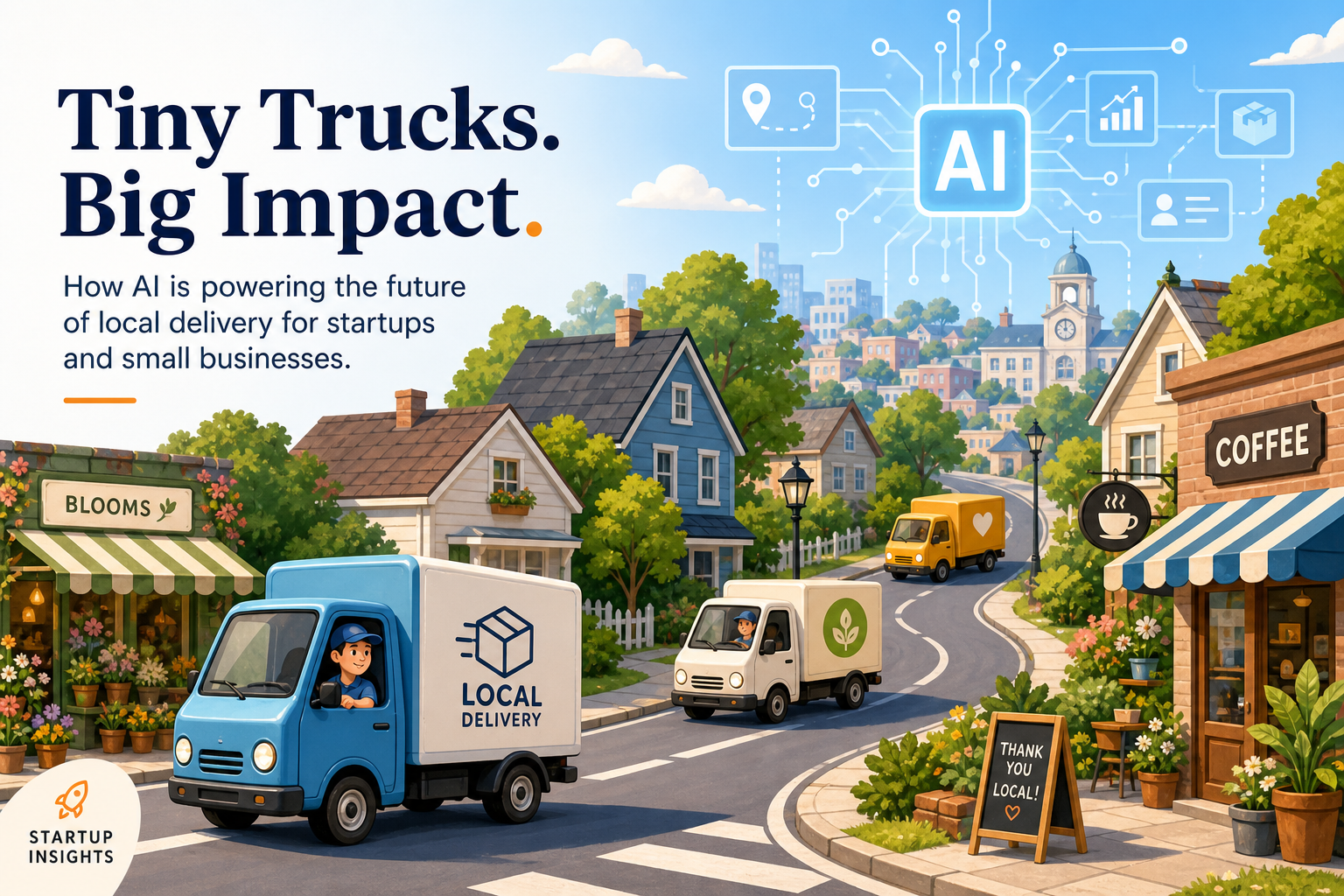
In a world where the giants of industry grapple with supply chain issues, a new startup named Tiny Town Logistics has emerged from the shadows. The company recently secured a $50 million investment to launch its ultra-small logistics networks, aimed at solving the problem of last-mile delivery through the power of supply chain risk prediction AI. Yes, you read that right—AI that predicts when your package will be late, effectively transforming the customer experience into a thrilling game of ‘Will It Arrive Today?’
Why Now?
With traditional logistics facing unprecedented challenges—think clogged ports, labor shortages, and, of course, a global pandemic that has fundamentally altered consumer behavior—investors are scrambling to back the next big solution. “It’s about time someone took a localized approach. After all, why rely on complex networks when you can just throw tiny trucks at every neighborhood?” said Tiny Town’s CEO, Emily West.
The Numbers Behind the Madness
The logistics industry is projected to grow at a robust rate of 10% annually, reaching a staggering $12 trillion by 2025. With a keen focus on micro-level logistics, Tiny Town is positioning itself to capture a small but lucrative segment of this market. “We aim to disrupt the logistics space by bringing operations down to the village level, where every postman can become a mini-entrepreneur!” added West, sounding eerily like she just stepped out of a TED Talk.
Investors Throwing Caution to the Wind
The recent $50 million in funding has sparked interest from various venture capitalists who see the appeal of cross-border mergers as well. “Merging logistics across borders allows us to capitalize on emerging markets, leveraging localized knowledge,” stated Julian Huang, an investment analyst at TechGrowth Capital. “What could possibly go wrong?”
Risks? What Risks?
Of course, no business venture is without its risks. The absurdity of predicting supply chain disruptions using AI raises eyebrows among seasoned analysts. “It’s like using a crystal ball to predict the weather—sure, it might work sometimes, but when it doesn’t, you’re left with wet socks,” quipped industry expert Sarah Larkin.
Moreover, the concept of creating micro-logistics networks is fraught with complications. Building a network of tiny delivery trucks may sound charming, but it raises questions about efficiency and scalability. “Localized approaches are lovely in theory, but in practice, they often devolve into the chaos of everyone having their own delivery person who doesn’t know how to use Google Maps,” warned supply chain consultant Mark Rodriguez.
Opposing Viewpoints: Is Bigger Really Better?
While some stakeholders applaud the upstart’s innovative spirit, others argue that there’s a reason larger logistics companies exist. The economies of scale achieved by industry giants like Amazon and FedEx are tough to match, regardless of how many neighborhood delivery enthusiasts one can rally. “It’s hard to beat a company that can deliver a package in two hours while you’re still figuring out where your tiny truck parked,” noted Larkin.
The Future of Micro Logistics
Despite its inherent risks, Tiny Town Logistics is betting on the charm of small-town America and the allure of AI-driven insights. As the company prepares to roll out its pilot program, industry watchers are on the edge of their seats, waiting to see if the grand idea of tiny logistics networks will soar or flounder.
For now, investors and consumers alike remain intrigued. After all, who wouldn’t want to be part of a logistics revolution where your next package might be delivered by the neighbor’s kid in a bright orange truck? As West succinctly puts it, “We’re not just delivering packages; we’re delivering smiles—one tiny truck at a time.”
- Logistics industry projected to reach $12 trillion by 2025
- Funding secured: $50 million
- Annual growth rate: 10%
- Potential market segment: micro-level logistics
What's Your Reaction?
 Like
0
Like
0
 Dislike
0
Dislike
0
 Love
0
Love
0
 Funny
0
Funny
0
 Angry
0
Angry
0
 Sad
0
Sad
0
 Wow
0
Wow
0