




The Intersection of Flood Prediction and Agricultural Robotics: Market Trends and Investment Insights
The Intersection of Flood Prediction and Agricultural Robotics: Market Trends and Investment Insights By Startup Korea Research Desk | Apr 30, 2026 In recent years, the agricultural sector has witnessed a significant transformation driven by tec...

The Intersection of Flood Prediction and Agricultural Robotics: Market Trends and Investment Insights
By Startup Korea Research Desk | Apr 30, 2026
In recent years, the agricultural sector has witnessed a significant transformation driven by technological advancements. Among the most promising innovations are agricultural robotics and flood prediction technologies, which are increasingly being integrated to address the challenges posed by climate change. This analysis explores the current market trends, the viability of business models, potential adoption risks, and the implications for investors in this evolving landscape.
Market Trends: A Growing Demand for Technological Solutions
The agriculture industry is undergoing a technological renaissance, with a notable shift towards automation and data-driven decision-making. According to recent reports, agricultural robotics sales have experienced a remarkable growth rate of 25% over the past year. This surge reflects a broader trend where farmers are seeking innovative solutions to enhance productivity and mitigate risks associated with unpredictable weather patterns.
Simultaneously, the flood prediction market is gaining traction, driven by increasing climate variability and the need for proactive risk management. Projections indicate that the flood prediction technology market could reach a valuation of $5 billion by 2030. This growth is fueled by the demand for accurate forecasting tools that can help farmers make informed decisions about crop management and resource allocation.
Business Model Viability: Merging Technologies for Enhanced Efficiency
Startups that are at the intersection of flood prediction and agricultural robotics are positioning themselves to capitalize on these converging trends. By integrating real-time flood alerts with autonomous farming solutions, these companies aim to provide farmers with a comprehensive toolset for managing their operations more effectively.
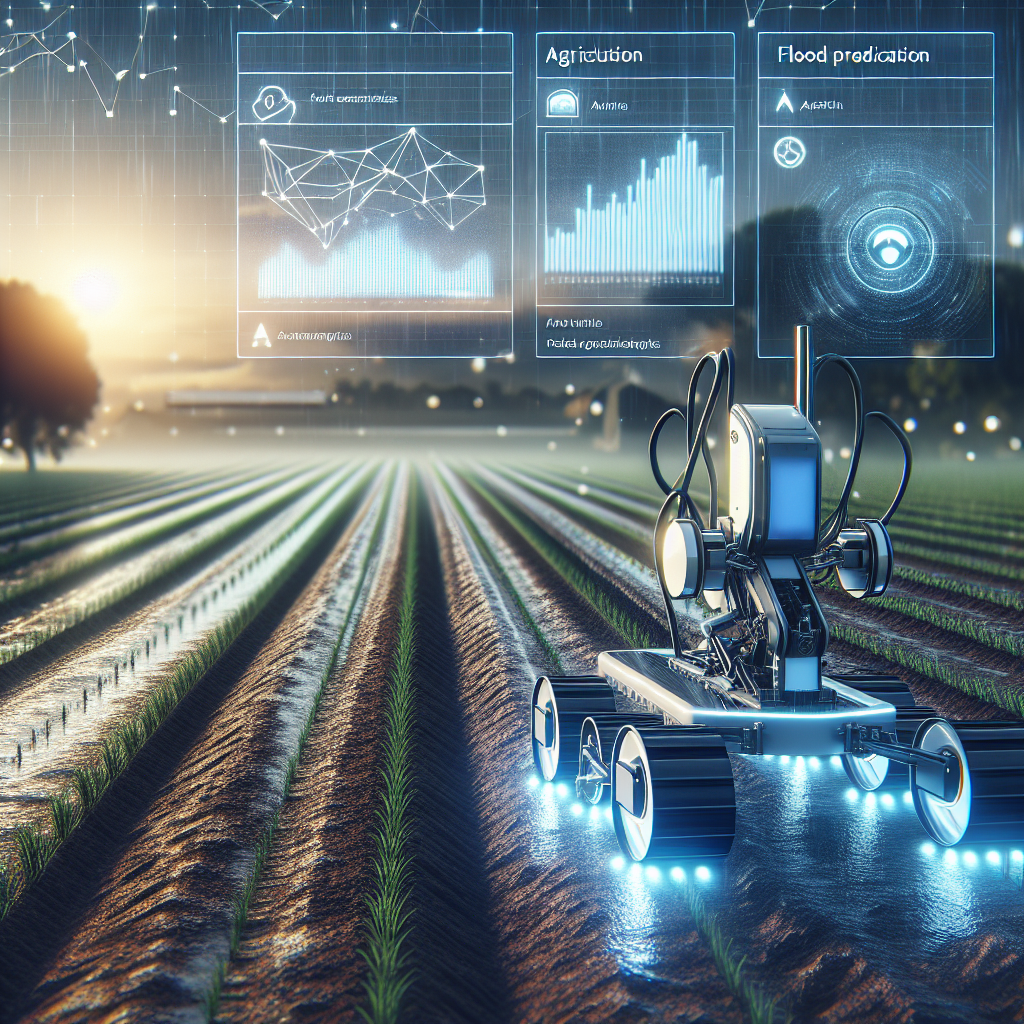
For instance, the development of autonomous farming robots equipped with flood prediction capabilities could allow farmers to automate irrigation processes, optimize planting schedules, and reduce crop losses due to flooding. This dual functionality not only enhances operational efficiency but also aligns with the growing consumer demand for sustainable farming practices.
However, the success of these business models hinges on several factors, including technological reliability, user adoption, and the ability to demonstrate clear value propositions to farmers. Startups must ensure that their solutions are not only innovative but also practical and easy to implement within existing agricultural frameworks.
Adoption Risks: Navigating Challenges in the Agricultural Sector
While the potential for growth in this sector is substantial, several adoption risks must be considered. Farmers, particularly those in traditional agricultural settings, may be hesitant to adopt new technologies due to concerns about cost, complexity, and the reliability of these systems. Additionally, the integration of flood prediction technology into farming practices requires a cultural shift in how farmers approach risk management.
Moreover, the agricultural sector is characterized by diverse operational environments, which can complicate the deployment of standardized technological solutions. Startups must be prepared to address these challenges by providing robust support and education to facilitate the transition to automated systems.
Investor Diligence: Evaluating Opportunities in a Competitive Landscape
As interest in agricultural technology continues to grow, investors are increasingly drawn to startups that promise significant returns. However, due diligence is essential to navigate the competitive landscape effectively. Investors should assess the scalability of the business model, the strength of the founding team, and the startup's ability to adapt to market demands.
Furthermore, understanding the regulatory environment and potential barriers to entry is critical for evaluating the long-term viability of these startups. Investors must also consider the broader economic factors that could impact the agricultural sector, including commodity prices, trade policies, and climate-related challenges.
Conclusion: A Promising Yet Cautious Outlook
The intersection of flood prediction and agricultural robotics presents a compelling opportunity for innovation in the agricultural sector. As startups explore this convergence, they must navigate the complexities of technology adoption while demonstrating clear value to farmers. With the right strategies in place, these companies could play a pivotal role in shaping the future of agriculture amidst the challenges posed by climate change.
Editor's note: This analysis is original market research and should not be construed as investment advice. Investors are encouraged to conduct their own research and consult with financial professionals before making investment decisions.
What's Your Reaction?
 Like
0
Like
0
 Dislike
0
Dislike
0
 Love
0
Love
0
 Funny
0
Funny
0
 Angry
0
Angry
0
 Sad
0
Sad
0
 Wow
0
Wow
0