



The Future of Dining: Analyzing the SaaS Impact on Restaurant Management
The Future of Dining: Analyzing the SaaS Impact on Restaurant Management By Startup Korea Research Desk | May 17, 2026 The intersection of technology and the culinary arts is undergoing a significant transformation, driven by the rise of Softwar...

The Future of Dining: Analyzing the SaaS Impact on Restaurant Management
By Startup Korea Research Desk | May 17, 2026
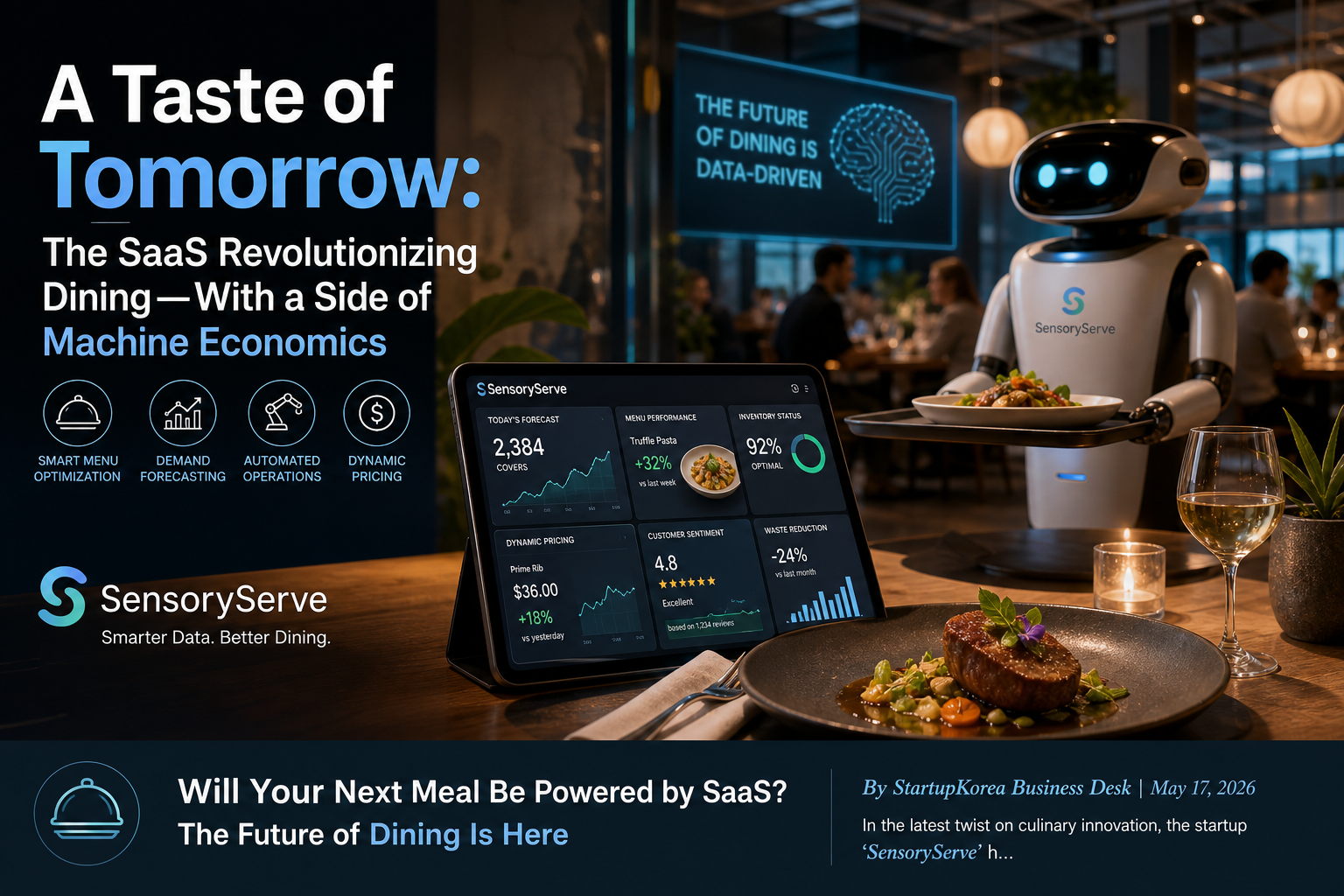
The intersection of technology and the culinary arts is undergoing a significant transformation, driven by the rise of Software as a Service (SaaS) solutions tailored for the restaurant industry. As dining experiences evolve, so too do the tools that support them. This analysis explores the current trends in SaaS applications for restaurant management, examining their potential benefits, challenges, and the implications for investors and entrepreneurs.
Market Trends in SaaS for Restaurants
The restaurant management sector is witnessing a notable shift towards digital solutions, with SaaS platforms gaining traction for their ability to streamline operations, enhance customer experiences, and drive data-driven decision-making. The anticipated compound annual growth rate (CAGR) of 25% in this sector underscores the growing confidence among investors and stakeholders in the viability of these technologies.
- Operational Efficiency: SaaS solutions are designed to automate various aspects of restaurant management, from inventory control to staff scheduling. By reducing manual tasks, restaurants can focus more on customer service and culinary innovation.
- Data Analytics: These platforms often come equipped with robust analytics capabilities, allowing restaurant owners to gain insights into customer preferences, sales trends, and operational bottlenecks. This data can inform menu adjustments and marketing strategies.
- Cost Management: SaaS applications can facilitate real-time pricing negotiations with suppliers, optimizing ingredient costs and reducing waste. This aspect is particularly appealing in an environment where margins are often tight.
Adoption Risks and Challenges
While the benefits of adopting SaaS solutions are compelling, there are inherent risks and challenges that restaurant operators must navigate. One primary concern is the potential over-reliance on technology for decision-making. As algorithms dictate aspects of menu design and ingredient sourcing, there is a risk that the artistry of cooking may be overshadowed by data-driven choices.
Moreover, the integration of these systems into existing operations can pose significant challenges. Restaurants must ensure that staff are adequately trained to utilize new technologies, which can require time and investment. Additionally, there may be resistance from employees who are accustomed to traditional methods of operation.
Investor Diligence in the SaaS Restaurant Sector
For investors, the burgeoning SaaS restaurant management market presents both opportunities and challenges. Diligence is essential when evaluating potential investments in this space. Key considerations include:
- Market Demand: Assessing the demand for SaaS solutions in various restaurant segments—fine dining, fast casual, and food trucks—can provide insights into potential growth areas.
- Technology Scalability: Investors should evaluate whether the technology can scale effectively as a restaurant grows, ensuring that it can handle increased data loads and operational complexities.
- Competitive Landscape: Understanding the competitive dynamics within the SaaS restaurant management sector is crucial. Identifying unique value propositions and differentiators can help investors make informed decisions.
Founder Strategies for Success
For entrepreneurs entering the SaaS restaurant management space, developing a clear strategy is vital. Founders should focus on building a product that not only meets the immediate needs of restaurant operators but also anticipates future trends. This involves:
- User-Centric Design: Ensuring that the platform is intuitive and easy to use will enhance adoption rates among restaurant staff.
- Continuous Innovation: Staying ahead of technological advancements and customer expectations is key. Regular updates and feature enhancements can keep the product relevant and competitive.
- Building Partnerships: Collaborating with industry stakeholders, such as suppliers and culinary experts, can enhance the value proposition and create a more comprehensive ecosystem.
Conclusion
The integration of SaaS solutions in the restaurant industry represents a significant shift towards data-driven management and operational efficiency. While the potential for growth is substantial, stakeholders must remain vigilant about the challenges and risks associated with this transition. By focusing on user experience, continuous innovation, and strategic partnerships, founders can position their companies for success in this evolving market.
Editor's note: This is original market analysis and not investment advice.
What's Your Reaction?
 Like
0
Like
0
 Dislike
0
Dislike
0
 Love
0
Love
0
 Funny
0
Funny
0
 Angry
0
Angry
0
 Sad
0
Sad
0
 Wow
0
Wow
0