



The Emergence of Health Coaching Robots: Analyzing Market Potential and Adoption Challenges
The Emergence of Health Coaching Robots: Analyzing Market Potential and Adoption Challenges By Startup Korea Research Desk | May 18, 2026 As the healthcare landscape continues to evolve, innovative technologies are increasingly being integrated...

The Emergence of Health Coaching Robots: Analyzing Market Potential and Adoption Challenges
By Startup Korea Research Desk | May 18, 2026
As the healthcare landscape continues to evolve, innovative technologies are increasingly being integrated into personal health management. Among these advancements, health coaching robots are gaining attention as potential tools for enhancing health behaviors, particularly among aging populations. This analysis delves into the market trends, business models, and challenges associated with the adoption of health coaching robots.
Market Trends in Health Technology
The global health market is projected to reach approximately $11.9 trillion by 2027, driven by an aging population and a growing emphasis on preventive healthcare. As part of this trend, health-tech startups are exploring various solutions to address the needs of individuals seeking to manage their health more effectively. Health coaching robots represent a novel approach, aiming to provide real-time support and motivation to users, particularly the elderly.
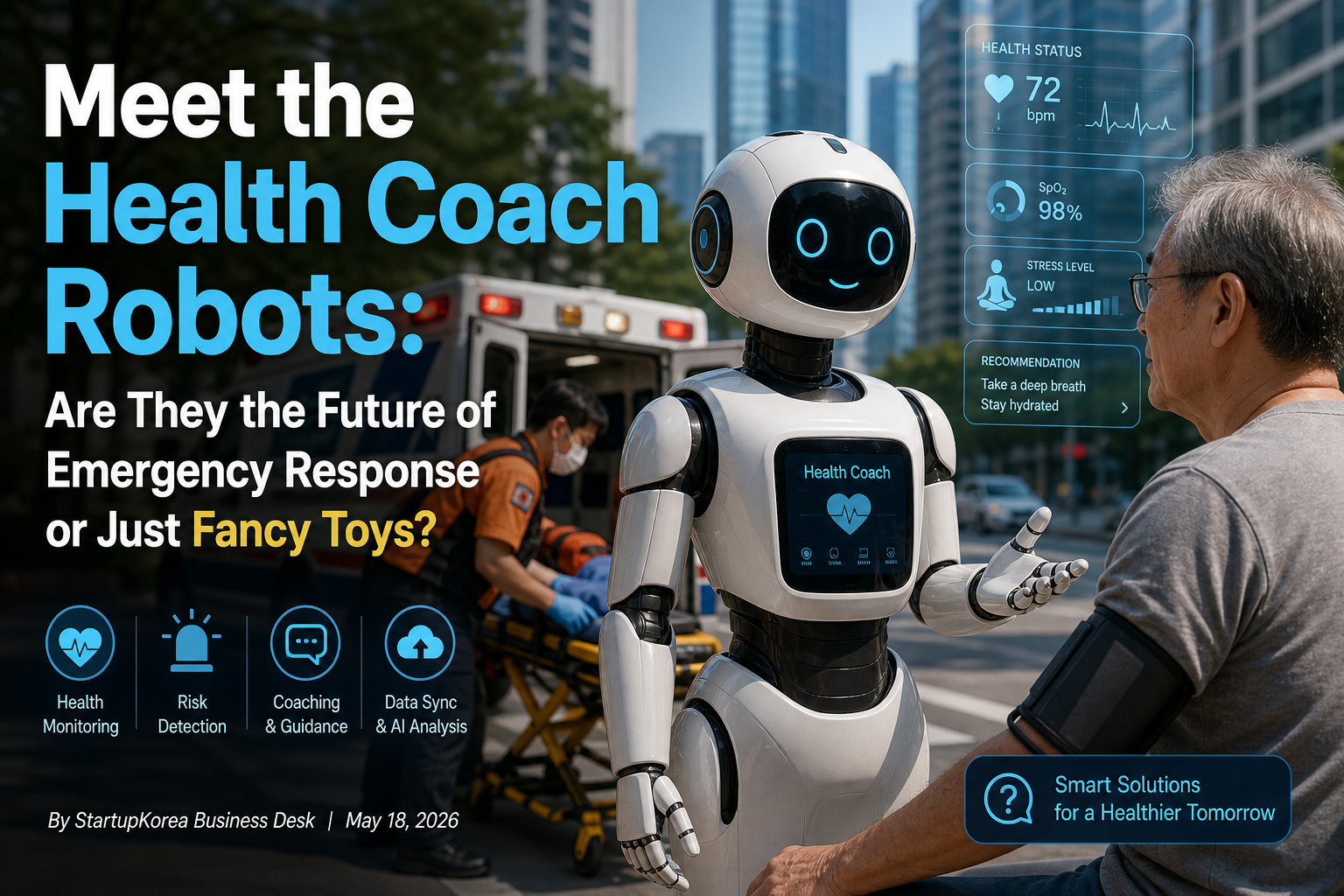
These robots are designed to monitor health behaviors, offer personalized coaching, and facilitate communication between users and their families. The integration of artificial intelligence and machine learning into these devices allows for tailored health recommendations and continuous monitoring, which can be particularly beneficial for individuals managing chronic conditions.
Business Model Considerations
Startups entering the health coaching robot market must develop robust business models that address both consumer needs and investor expectations. A successful model will likely involve a subscription-based service, where users pay a monthly fee for access to the robot's features, including health tracking, personalized coaching, and regular updates on health metrics.
- Value Proposition: The primary value proposition for health coaching robots lies in their ability to enhance health outcomes through consistent monitoring and personalized guidance. This can lead to improved adherence to health regimens and better overall health management.
- Market Differentiation: To stand out in a crowded market, companies must differentiate their products through unique features, such as advanced AI capabilities, user-friendly interfaces, and integration with existing health apps and devices.
- Partnership Opportunities: Collaborating with healthcare providers and insurance companies can enhance credibility and facilitate broader adoption. Such partnerships can also provide users with additional resources and support.
Adoption Risks and Challenges
Despite the promising potential of health coaching robots, several challenges may hinder widespread adoption. These include:
- Technological Acceptance: Older adults may be hesitant to embrace new technologies, particularly if they are not tech-savvy. Companies must invest in user education and support to facilitate adoption.
- Privacy Concerns: The collection and storage of personal health data raise significant privacy issues. Startups must ensure robust data protection measures are in place to build trust with users.
- Regulatory Hurdles: Navigating the regulatory landscape for health-related technologies can be complex. Companies must ensure compliance with health regulations and standards to avoid legal complications.
Investor Diligence and Market Viability
As investor interest in health-tech continues to grow, it is crucial for potential investors to conduct thorough due diligence before committing capital. Key factors to consider include:
- Market Demand: Assessing the actual demand for health coaching robots is essential. Investors should analyze market research data and consumer feedback to gauge interest and willingness to pay.
- Competitive Landscape: Understanding the competitive environment is vital. Investors should evaluate existing players in the market, their product offerings, and their market share.
- Financial Projections: Investors should scrutinize financial forecasts, including revenue models, customer acquisition costs, and projected growth rates to ensure the business is financially viable.
Strategic Considerations for Founders
For founders in the health coaching robot space, developing a clear and compelling strategy is critical. This includes:
- Customer-Centric Design: Focusing on user experience and feedback during the development process can lead to a more effective product that meets the needs of the target audience.
- Scalability: Building a scalable business model will be crucial for long-term success. Founders should consider how to expand their offerings and reach new markets.
- Continuous Innovation: Staying ahead of technological advancements and continuously improving the product will help maintain a competitive edge in the rapidly evolving health-tech landscape.
In conclusion, health coaching robots present a unique opportunity within the health-tech market, but their success will depend on addressing adoption challenges, developing sound business models, and ensuring investor confidence. As the market continues to grow, startups must remain agile and responsive to the needs of consumers and the complexities of the healthcare environment.
Editor's note: This analysis is original market research and should not be considered investment advice.
What's Your Reaction?
 Like
0
Like
0
 Dislike
0
Dislike
0
 Love
0
Love
0
 Funny
0
Funny
0
 Angry
0
Angry
0
 Sad
0
Sad
0
 Wow
0
Wow
0