



Analyzing the Rise of Chore Optimization Startups in the Smart Home Market
By Startup Korea Research Desk | May 15, 2026 Chore Optimization Takes Center Stage in the Age of Smart Homes The emergence of chore optimization startups reflects a significant trend in the smart home market, where technology is increasingly in...

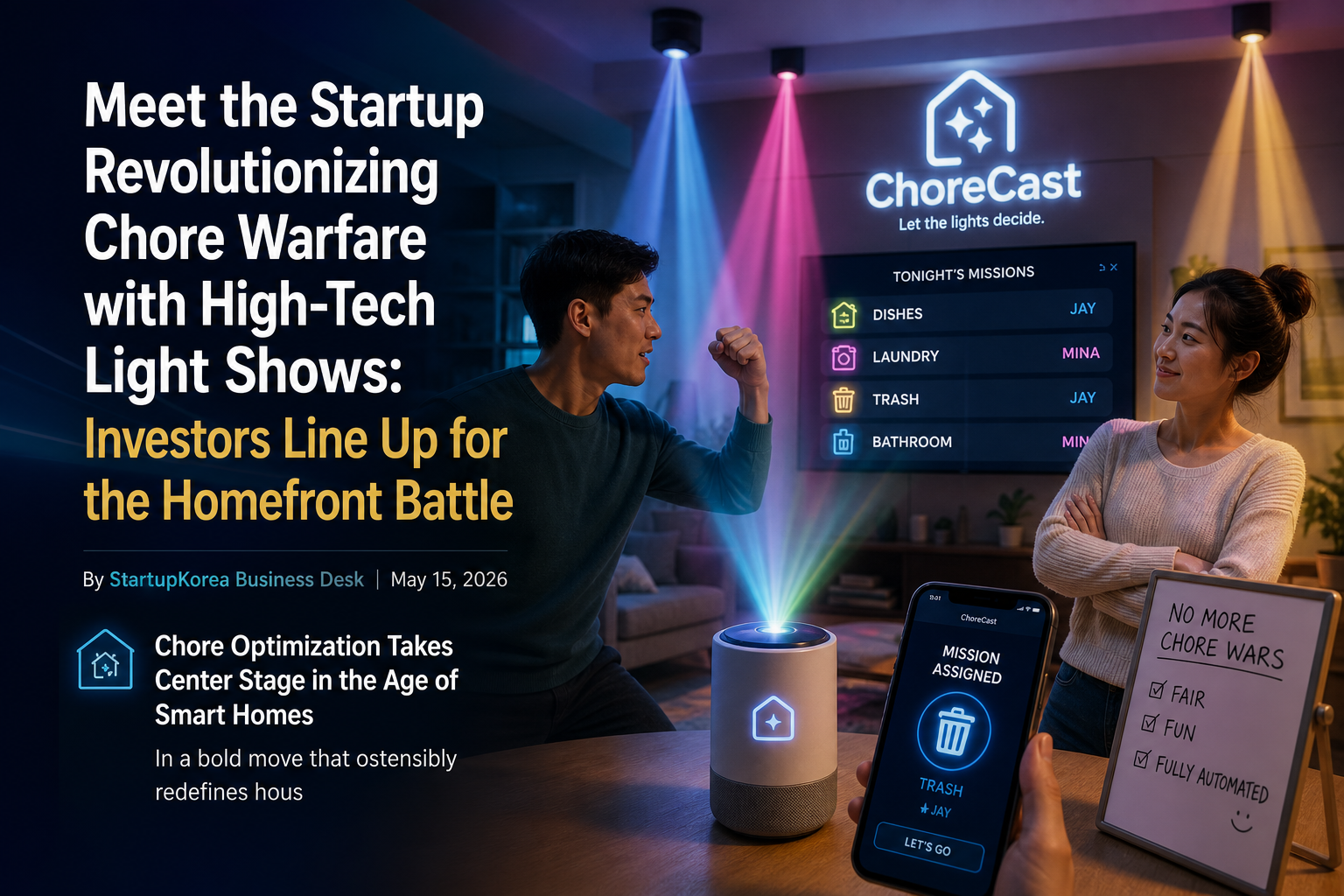
By Startup Korea Research Desk | May 15, 2026
Chore Optimization Takes Center Stage in the Age of Smart Homes
The emergence of chore optimization startups reflects a significant trend in the smart home market, where technology is increasingly integrated into daily household management. These startups are leveraging advanced algorithms and real-time data analytics to enhance family dynamics and streamline household responsibilities. The recent launch of a notable player in this space has drawn considerable attention from investors, signaling a robust interest in the intersection of technology and domestic life.
The Business Model
Chore optimization startups typically employ sophisticated algorithms that analyze various household factors, including family member moods, preferences, and environmental conditions. By doing so, they aim to assign chores in a manner that minimizes conflict and maximizes efficiency. This approach not only seeks to improve household harmony but also positions these companies as essential tools in the growing smart home ecosystem.
Market Growth and Investment Landscape
The investment landscape for home automation technologies is expanding rapidly, with projections indicating a compound annual growth rate (CAGR) of 24% over the next several years. This growth is driven by the increasing adoption of smart home devices, which are expected to surpass 600 million units sold globally by 2027. Investors are keenly aware of this trend, as the potential for profitability in the smart home sector continues to attract venture capital funding.
Adoption Risks and Challenges
Despite the promising outlook, several challenges could impede the widespread adoption of chore optimization technologies. Critics raise concerns about the implications of relying on algorithms to dictate family responsibilities, suggesting that such reliance could diminish emotional intelligence and interpersonal skills within households. The potential for technology to replace traditional parenting skills raises questions about the long-term societal impacts of these innovations.
Investor Diligence
For investors, due diligence is essential when evaluating startups in this niche. Key metrics to consider include:
- Projected revenue growth and market share
- Technological differentiation and scalability
- Consumer adoption rates and feedback
- Competitive landscape and potential barriers to entry
Understanding these factors will help investors gauge the viability of a startup's business model and its potential for long-term success in a rapidly evolving market.
Founder Strategy and Market Positioning
Successful founders in this space are likely to adopt strategies that emphasize user experience and integration with existing smart home ecosystems. By focusing on seamless functionality and addressing consumer pain points, these startups can position themselves as indispensable tools for modern households. Additionally, establishing partnerships with established smart home device manufacturers could enhance market reach and credibility.
Conclusion
The rise of chore optimization startups represents a significant shift in how households manage daily responsibilities. As technology continues to permeate domestic life, the potential for innovation in this area remains vast. However, stakeholders must remain vigilant about the ethical implications and societal impacts of these advancements. The future of chore optimization will depend on balancing technological benefits with the preservation of essential human interactions.
Editor's note: This is original market analysis and not investment advice.
What's Your Reaction?
 Like
0
Like
0
 Dislike
0
Dislike
0
 Love
0
Love
0
 Funny
0
Funny
0
 Angry
0
Angry
0
 Sad
0
Sad
0
 Wow
0
Wow
0