
The Rise of AI Virtual Employees: The Absurdity of Hiring Digital Doppelgängers for Real Jobs
By StartupKorea Business Desk | Jun 05, 2026 Virtual Employees: The Future of Work or Just a Digital Mirage?In a move that has many scratching their heads and rolling their eyes, the startup sector is witnessing an unprecedented rush toward...

By StartupKorea Business Desk | Jun 05, 2026
Virtual Employees: The Future of Work or Just a Digital Mirage?
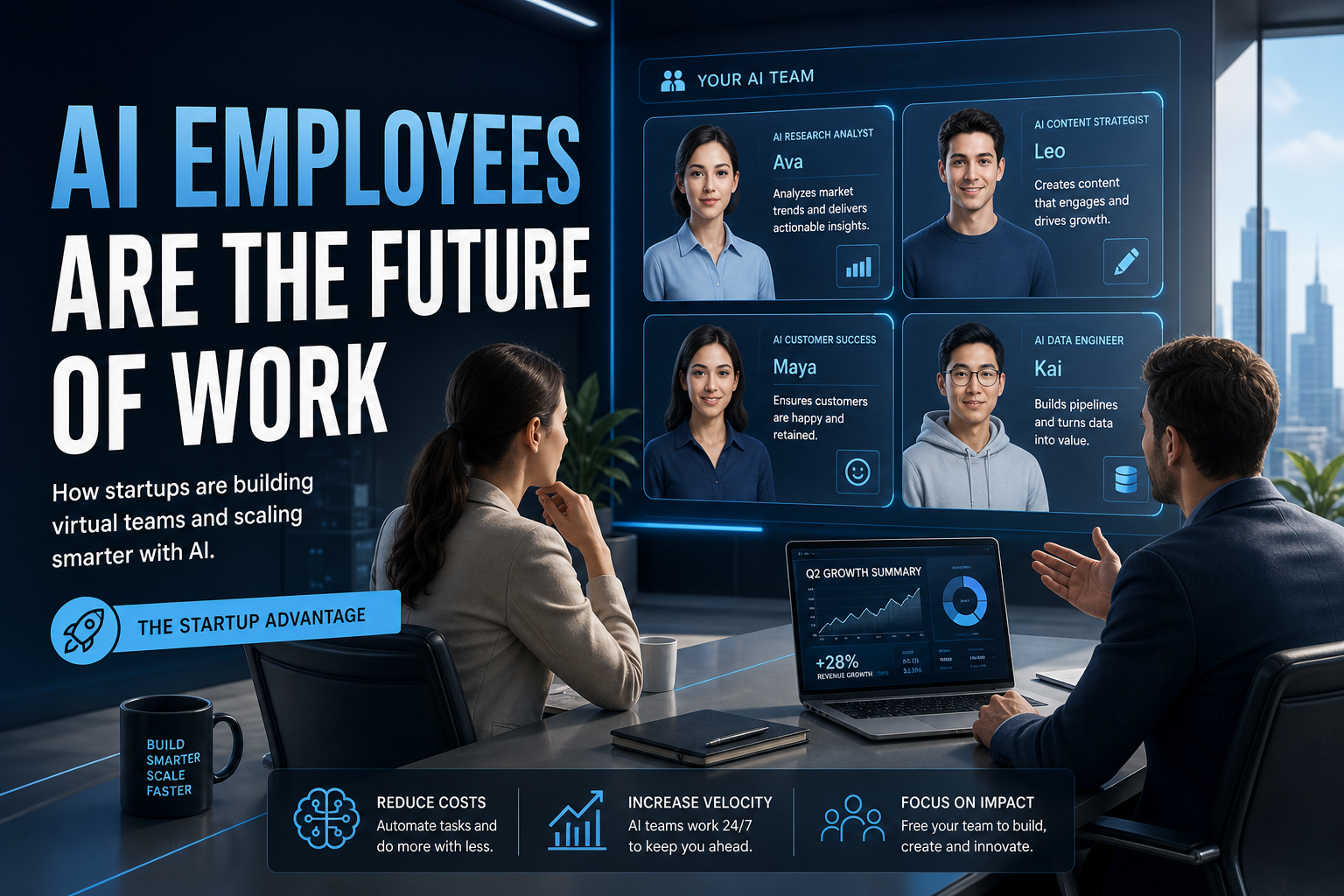
In a move that has many scratching their heads and rolling their eyes, the startup sector is witnessing an unprecedented rush towards AI virtual employee deployment. With investments in this bizarre niche skyrocketing to $2.5 billion in 2026 alone, companies are now asking, ‘Why hire a person when you can hire a program that looks like one?’
Introducing the Digital Twin Modeling Engine
At the heart of this virtual workforce revolution is the digital twin modeling engine, an astonishing technological innovation that allows firms to craft nearly indistinguishable digital replicas of human employees. It’s almost as if tech entrepreneurs decided that the only thing better than a productive worker is a productive worker that doesn’t need coffee breaks or health insurance.
A Market on the Rise
The market for virtual employees is projected to expand by 300% over the next three years, driven by a combination of increasing labor costs and a fascination with the digital realm. Analysts predict that by 2029, over 50% of client-facing roles could be occupied by these high-tech simulacra, in what one industry expert dubbed 'the great corporate swap.'
Stakeholders Weigh In
CEO of FutureWork, Julia Primrose, stated, “Our virtual employees have a 98% satisfaction rate—mostly because they don’t have feelings.” Meanwhile, venture capitalist Barry Mintz noted, “Investing in these digital doppelgängers is like betting on a horse that’s already crossed the finish line, except the horse is a sophisticated algorithm.”
Opposing Viewpoints: The Human Element
Despite the optimism, not everyone is convinced that AI virtual employees are the panacea for inefficiency. Labor expert Dr. Eleanor Stokes warns, “This trend minimizes the complexities of human interaction. A virtual employee can’t empathize, and let’s face it, they can’t take a lunch break and pretend to care about small talk.”
Project Financing: The Numbers Behind the Madness
With project financing in the AI virtual employee sector hitting new heights, the question arises: Is this a sustainable investment? A recent report by the Startup Finance Association revealed that 70% of investors are betting on the long-term potential of these digital employees, despite the inherent risks.
- Projected market growth: 300% by 2029
- 2026 investment total: $2.5 billion
- Estimated digital employee satisfaction rate: 98%
Risks and Constraints
While the allure of AI virtual employees is tempting, the risks cannot be ignored. The technology is still in its infancy, and the complexity of human behavior is notoriously difficult to mimic. Furthermore, data privacy concerns raise ethical questions about how much personal information these ‘employees’ can manage—and who is watching.
The Final Word
As the lines between reality and simulation blur, one must wonder: Are companies truly investing in human-like productivity, or are they simply hiring the shiny, less expensive versions of their workforce? For now, the answer remains as elusive as the perfect AI employee.
What's Your Reaction?
 Like
0
Like
0
 Dislike
0
Dislike
0
 Love
0
Love
0
 Funny
0
Funny
0
 Angry
0
Angry
0
 Sad
0
Sad
0
 Wow
0
Wow
0