


Tech Startup Launches 'Git Commit Emotion Analysis Tool' – Because Who Needs Real Feelings Anyway?
By StartupKorea Business Desk | Jun 30, 2026 The Great Emotional Awakening of Code: Startup Unveils Git Commit Emotion Analysis ToolIn an era where emotional intelligence is increasingly championed in boardrooms, a new startup has taken a b...

By StartupKorea Business Desk | Jun 30, 2026
The Great Emotional Awakening of Code: Startup Unveils Git Commit Emotion Analysis Tool
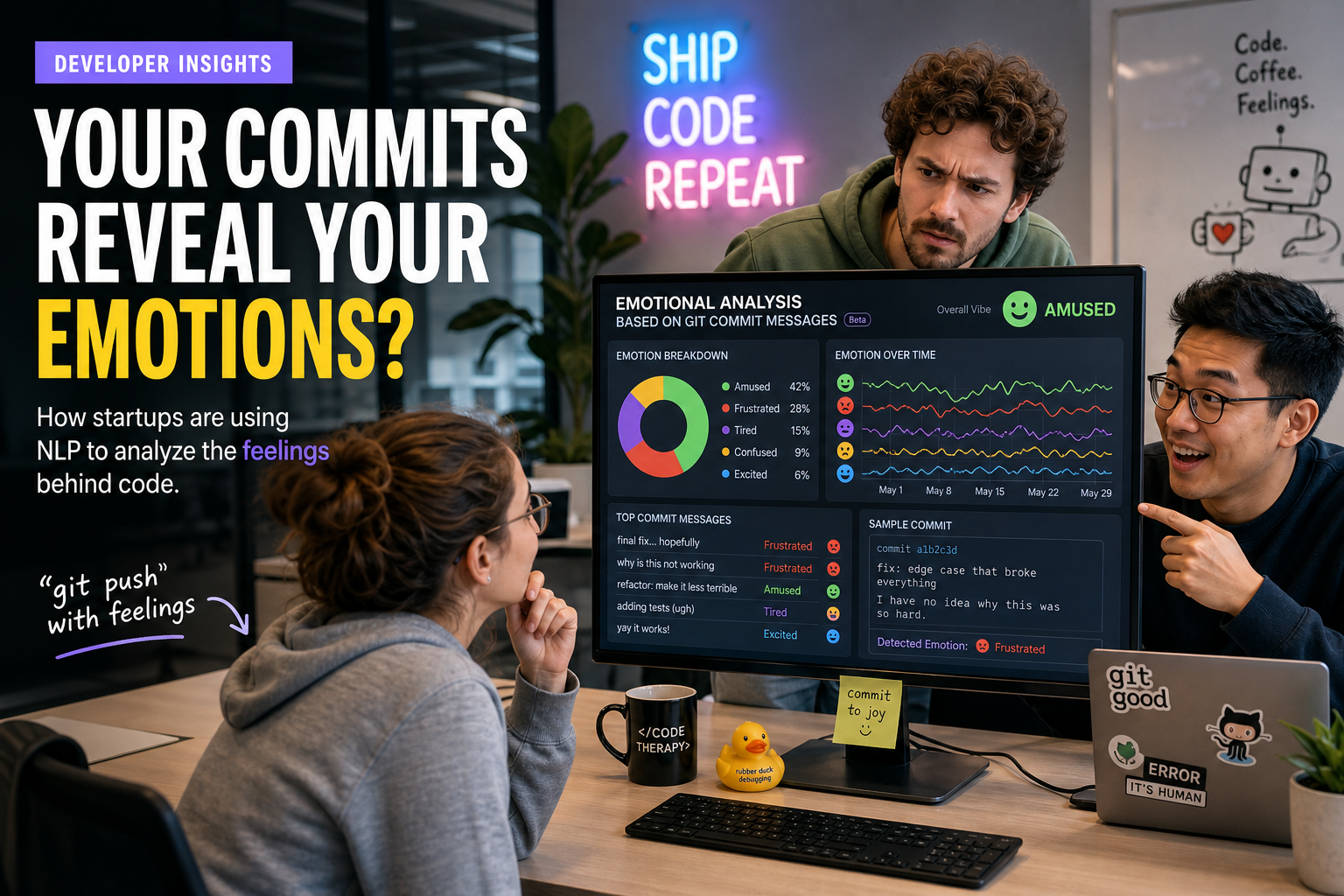
In an era where emotional intelligence is increasingly championed in boardrooms, a new startup has taken a bizarre leap into the emotional realm of code. As of June 30, 2026, CodeMood Inc. has announced the launch of its groundbreaking 'Git Commit Emotion Analysis Tool,' designed to assess the emotional states of developers through their commit messages. This highly-anticipated tool is reportedly already attracting attention from foreign sovereign wealth funds, eager to invest in the emotional future of programming.
Investors See Dollar Signs in Developers' Feelings
While the stock market wobbles on the precipice of reality, CodeMood has secured an impressive $50 million in investment from the Global Fund of Feelings (GFF), a sovereign wealth fund dedicated to enhancing emotional analytics in technology. The GFF's spokesperson, Miranda Luvgood, stated, "We believe that understanding the emotional depths of code can unlock new levels of productivity and happiness in the tech industry. If we can quantify sadness in a commit log, imagine the possibilities for HR departments!"
By analyzing the emotional nuances embedded in commit messages, CodeMood aims to refine the data—because who wouldn't want to know if their code is feeling blue? The autonomous data refining system, aptly named AI-Refine, promises to sift through endless lines of code, translating developers' emotions into actionable insights. In a world where feelings are quantified, understanding code may soon become more emotional than a soap opera.
Market Context: Riding the Emotional Wave
The emotional analytics market is projected to grow from $20 billion in 2025 to $40 billion by 2030, as companies increasingly recognize the value of emotional insights. As work-from-home culture continues to normalize, organizations are searching for new ways to engage their remote employees. Analysts predict that CodeMood's innovative approach could disrupt traditional HR metrics, which have long relied on surveys that people half-heartedly fill out on Monday mornings.
- Global emotional analytics market size: $20 billion (2025)
- Projected market size: $40 billion (2030)
- Investment from GFF: $50 million
The Risks of Overanalyzing Emotions
However, the euphoria surrounding CodeMood’s launch is not without its skeptics. Renowned analyst, Linda Grump, warns that while the idea of correlating commit messages with emotions may sound innovative, it risks oversimplifying the complexities of human feelings. "The thought that we can quantify sadness in code is ludicrous. What’s next? A mood ring for our software?" she questioned, raising a valid point about the potential pitfalls of conflating emotional states with productivity.
Moreover, the startup faces challenges related to privacy concerns. As developers' emotional states are put under the microscope, questions arise about the ethical implications of such analysis. Critics argue it could lead to emotional exploitation, where companies may inadvertently pressure employees to produce happy commits, thereby stifling genuine expression.
Opposing Viewpoints: The Joy of Being Genuine
As the tech world spirals into a frenzy of data-driven emotions, some industry veterans advocate for a return to genuine human interaction. Ted Pensive, a former CTO, commented, "We don’t need algorithms to tell us our developers are overwhelmed. How about just asking them? It’s called conversation, and it’s free!" This sentiment resonates in a time when the human touch is often lost in the pursuit of technological efficiency.
While the promises of CodeMood and its emotional analysis tools may dazzle the venture capitalists of Silicon Valley, one must wonder whether we are sacrificing genuine connection for the allure of data. After all, when your code is feeling blue, one has to ask: what do the developers really feel?
The Emotional Future: A Balancing Act
As we embrace this emerging trend, the startup's fate will hinge on its ability to navigate the fine line between innovation and absurdity. With emotions firmly and inexplicably entangled in the world of code, it seems we're just a commit away from an entirely new frontier of understanding—and perhaps misunderstanding—what it truly means to 'feel' in the workplace.
What's Your Reaction?
 Like
0
Like
0
 Dislike
0
Dislike
0
 Love
0
Love
0
 Funny
0
Funny
0
 Angry
0
Angry
0
 Sad
0
Sad
0
 Wow
0
Wow
0